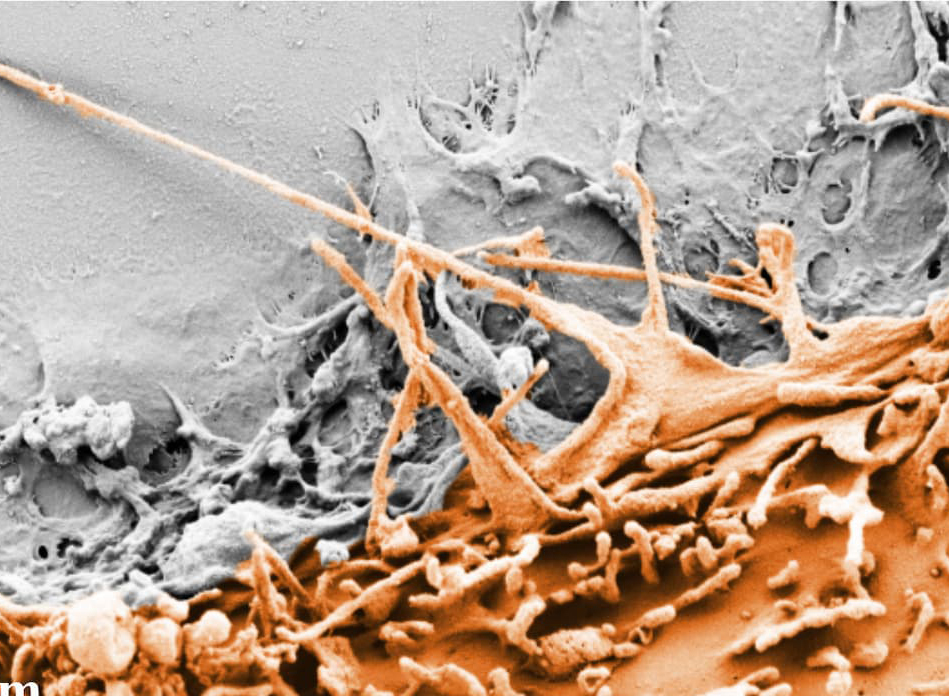
Cells travel through the body both individually and in collective groups during development, in wound healing and in diseases, such as cancer. New research from WashU McKelvey Engineering shows that cells can sense even the smallest defects, or micro-injuries, in the surface below that which they are traveling and stall long enough to begin the healing process.
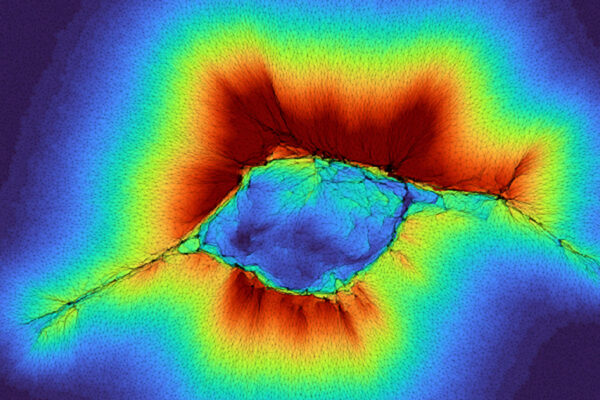
Amit Pathak, a professor of mechanical engineering and materials science, and members of his lab, including Hannah Zmuda, who earned a doctorate in biomedical engineering from McKelvey Engineering in 2025, found that the tiny feet on the leading edge of a group of cells can sense a defect of only a few microns in a membrane below the surface of the extracellular matrix, which supports cell growth and provides structure when tissues regenerate. Their results were published July 31 in Cell Reports.
Pathak said the findings show the importance of studying how multiple extracellular cues, including protein types, stiffness and osmotic conditions, alter subcellular mechanics and multicellular collective migration. Better understanding these independent influences will increase knowledge of basic biological processes in wound healing, development and tumor invasion, he said.
Read more on the McKelvey Engineering website.