
New building blocks expand functions of photonic chips
McKelvey Engineering researchers Sang-Hoon Bae and Lan Yang collaborated to establish a framework for heterogeneous integrated photonic chips, enabling multiple functions on a single chip with greater freedom to combine materials and design devices.

WashU study could help manage air quality near power plants
WashU McKelvey Engineering’s Chi Li received a grant from NASA to fine-tune a tool that will be used to understand how weather and atmospheric conditions evolve over time.
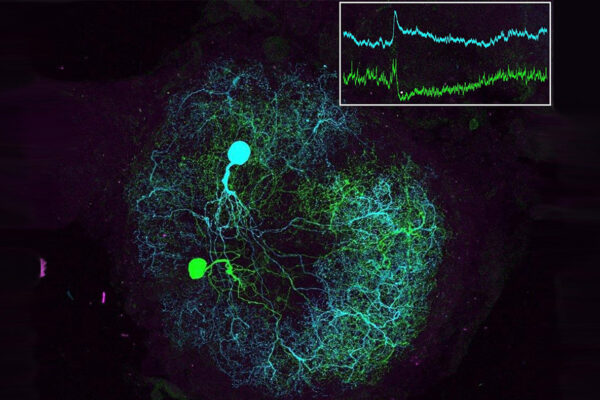
What a locust can teach us about how neuromodulators alter odor processing
Researchers at WashU McKelvey Engineering studied how neuromodulators alter odor processing in locusts.
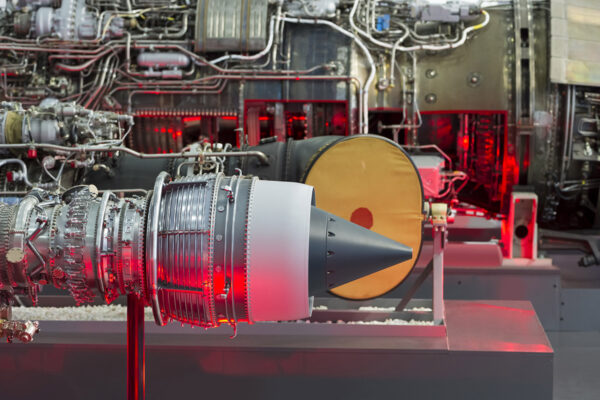
WashU-led team wins $4M DARPA grant to improve fuel injector design
Research led by WashU McKelvey Engineering’s James Friend aims to crack the code of atomization for future aircraft engines.
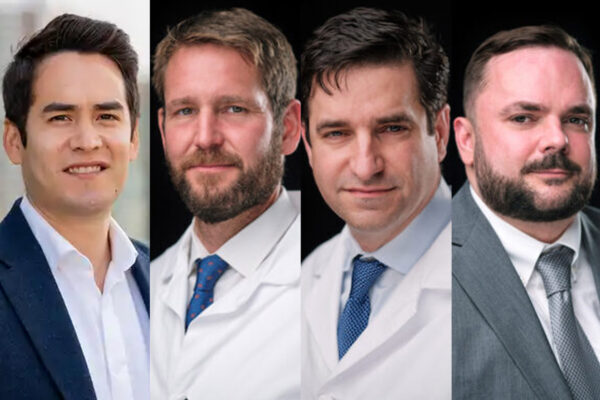
Can brain signals help turn spinal stimulation on only when it’s needed?
Biomedical engineer Ismael Seáñez along with collaborators from WashU Medicine will study the effects of delivering transcutaneous spinal cord stimulation only when the person intends to move, thanks to a three-year $400,000 grant from the Craig S. Neilsen Foundation.
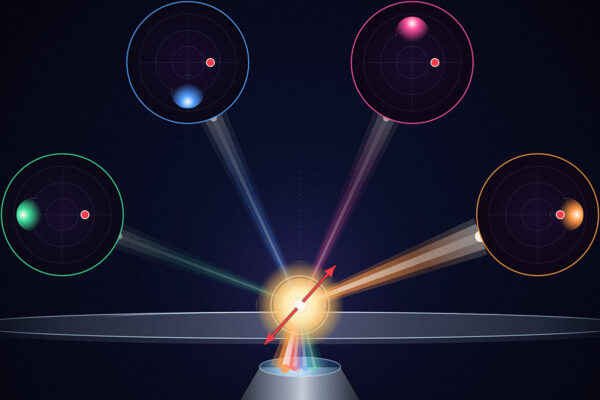
How light can reveal the hidden orientation of a single molecule
Recent work from researchers in the lab of Matthew Lew at WashU McKelvey Engineering found that polarized light patterns can improve how precisely microscopes measure the orientation of single molecules.

WashU research finds gaps in Google AI Overview citations, claims
With the advent of Google AI Overviews, Google has unprecedented editorial control over what users read and know, according to Jacob Montgomery, a WashU Arts & Sciences political scientist.
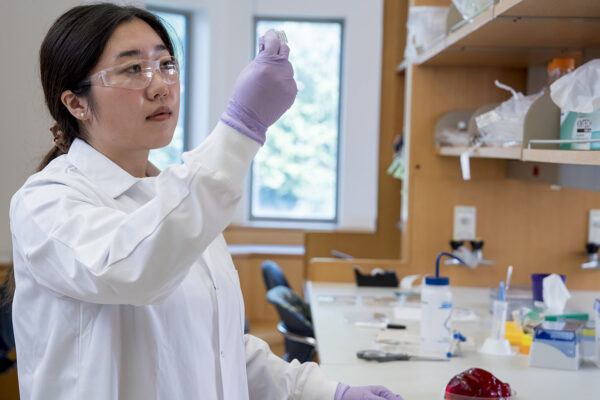
A unique solution for bioelectronics: collagen and cacao butter
Biomedical engineers at WashU McKelvey Engineering developed an additive manufacturing method using a 3D printer that builds bioelectronic materials from collagen and a polymer that can carry electrical signals, work that could ultimately improve the function of medical implants.
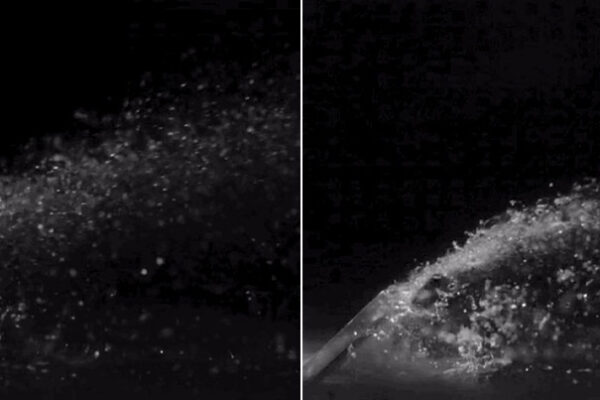
Ultrasound-fueled vapor may be key to fueling detonation-based propulsion engines
Mechanical engineers in James Friend’s lab at WashU McKelvey Engineering received a grant to use ultrasound to make fuel droplets smaller, overcoming some of the challenges of detonation-based propulsion engines.
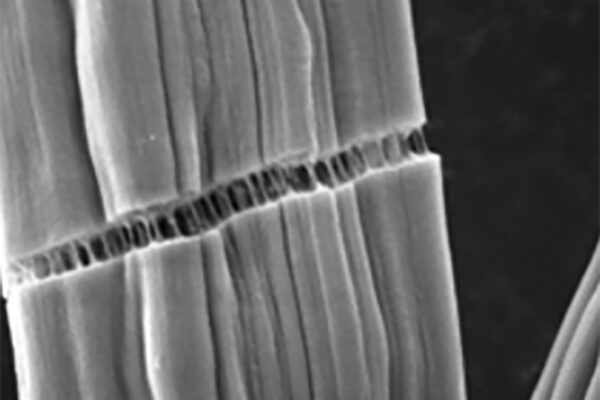
Clearing the way for renewable carbon fiber production
Researchers at the McKelvey School of Engineering developed a process to use waste materials in the production of carbon fiber, a key step to more sustainable manufacturing and stronger material design.
Older Stories