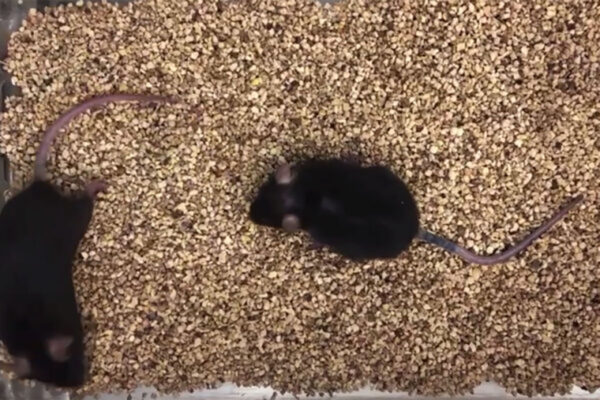
Open lines of communication between the body’s organs are important to health and often falter with age. A new study in mice by researchers at WashU Medicine shows how signals that travel from skeletal muscle to the brain and then activate brown fat and control core body temperature are weakened in elderly mice. The research suggests that finding ways to restore these signals could offer new opportunities to support healthy aging.
The study — led by Shin-ichiro Imai, MD, PhD, the Theodore and Bertha Bryan Distinguished Professor of Environmental Medicine in the Department of Developmental Biology at WashU Medicine — is published online in the journal Cell Metabolism.
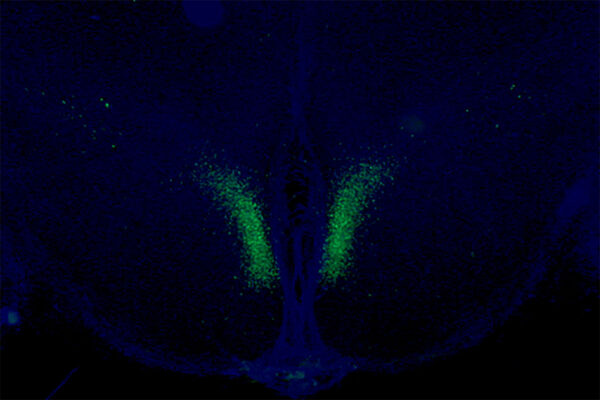
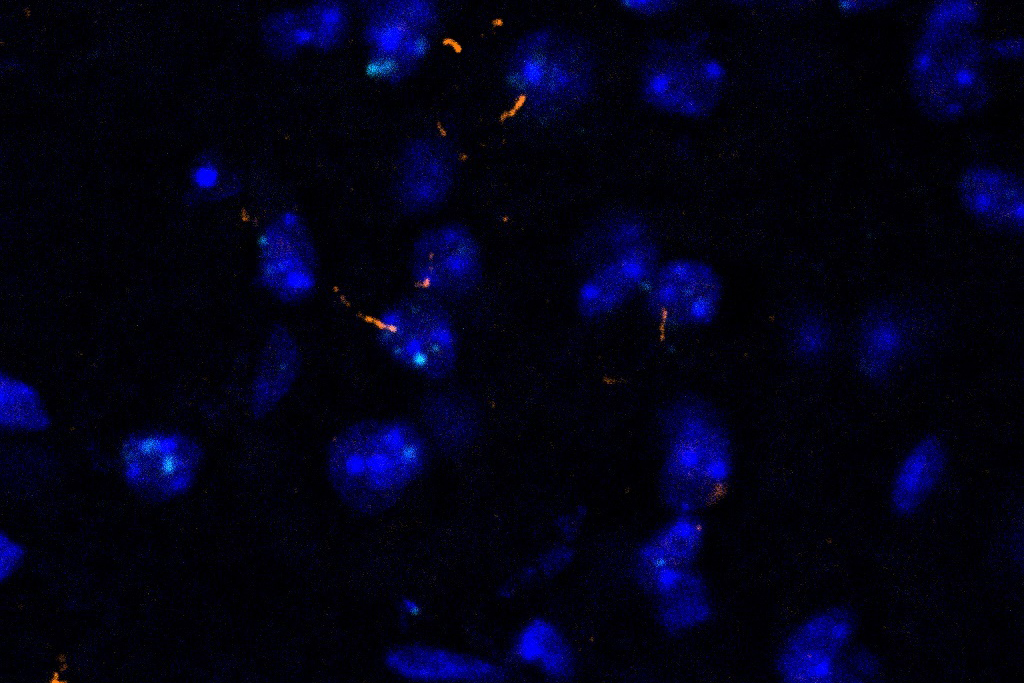
The researchers found that the skeletal muscle of mice releases an important molecule called mimecan that travels to the brain, where it activates specific neurons in the hypothalamus, which regulates many of the body’s core functions. Those neurons activate brown fat, a major regulator of core body temperature. Mimecan helps these brown fat-activating neurons by maintaining the length of their primary cilia, tiny structures on the cell surface that serve as a sort of antenna, helping the cells sense key signals. In older mice, skeletal muscle releases less mimecan than skeletal muscle in young mice, resulting in shorter cilia. This in turn dials down brain stimulation in the hypothalamus, reducing the signals to brown fat that control core body temperature.
Imai and first author Kentaro Mori, MD, PhD, who conducted this work as a postdoctoral researcher and then staff scientist in Imai’s lab and is now a team leader at the National Center for Geriatrics and Gerontology in Japan, showed that restoring levels of mimecan in older mice to those of young mice extended their lifespan.
Past work by the same group described a similar communication line between the hypothalamus and white fat tissue, which primarily stores energy. When healthy, this pathway causes white fat to release cellular fuel for use by the brain and other important organs. Maintaining the health of this signaling pathway in older mice also extended their lifespans.
Imai and his colleagues are continuing their work to understand how the brain, muscle and fat tissues communicate with one another. Since these signals deteriorate with age, finding ways to maintain these key communications could identify new ways to promote healthy aging.