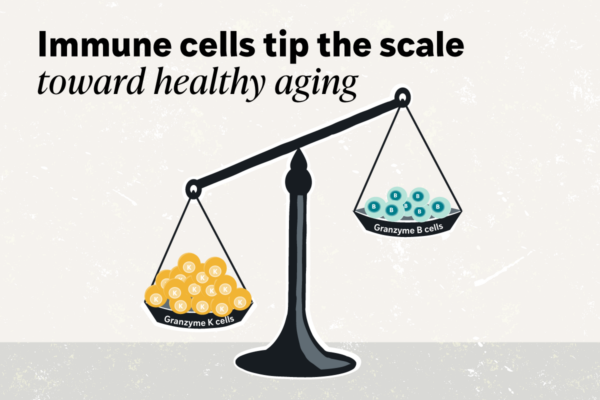
Immune cell map uncovers how individual aging trajectories diverge
WashU Medicine researchers have discovered that the ratio between two types of white blood cells can predict whether a person stays healthy as they age or faces an increased risk of disease.
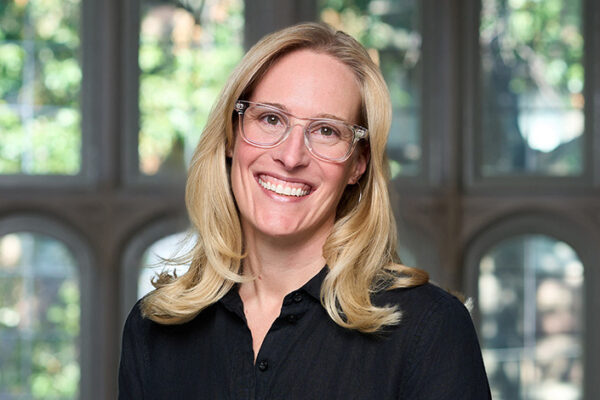
The future of queer gerontology
The Brown School’s Vanessa Fabbre discusses the field of queer gerontology and why supporting the researchers who study LGBTQ+ aging is an important part of the work.

Stress granules the focus of molecular, cellular basis of neurodegenerative diseases
WashU’s Rohit Pappu and Tanja Mittag at St. Jude received renewed research funding to continue foundational work in studying the basis of Alzheimer’s disease, ALS and frontotemporal dementia.

Housing may shape death risks for low-income older renters
For low-income older adults, where they live may affect how long they live, according to new research from Washington University in St. Louis.

Building better workplaces for an aging workforce
As Americans work longer than previous generations, employers have an opportunity to create workplaces that support employees of all ages, according to a new article by Cal Halvorsen, associate professor at the WashU Brown School.
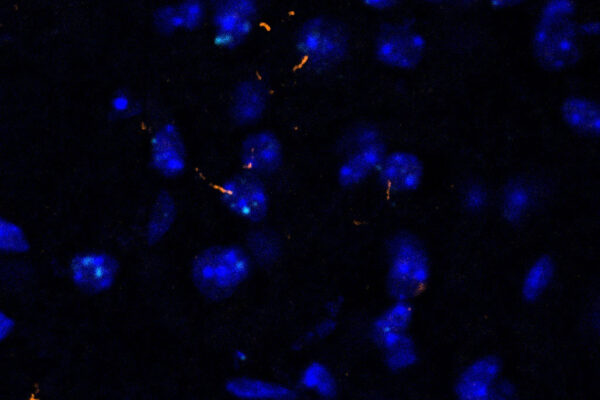
Skeletal muscle signals to brain, brown fat to control aging in mice
Studying mice, WashU Medicine researchers have identified communication signals linking skeletal muscle, the brain and brown fat tissue that play an important role in aging. Interventions in older mice that restore the signaling to that of young mice could promote healthier aging.

Faster aging in younger generations linked to rise in early-onset cancer
A new study led by researchers at WashU Medicine suggests that younger generations are aging biologically faster than their older counterparts. This faster biological aging (represented by the right red clock) was also linked to early-onset cancers.
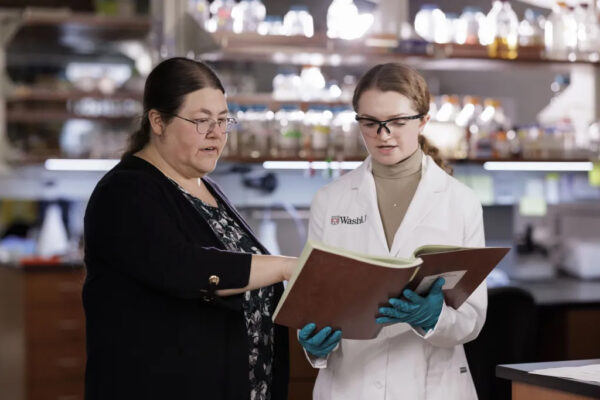
Engineering enzymes with potential against ALS and Parkinson’s disease
Researchers WashU devised a new high-tech method to generate an enzyme that can break down the misfolded proteins that cause neurodegenerative disease.
Özpolat receives MIRA grant renewal
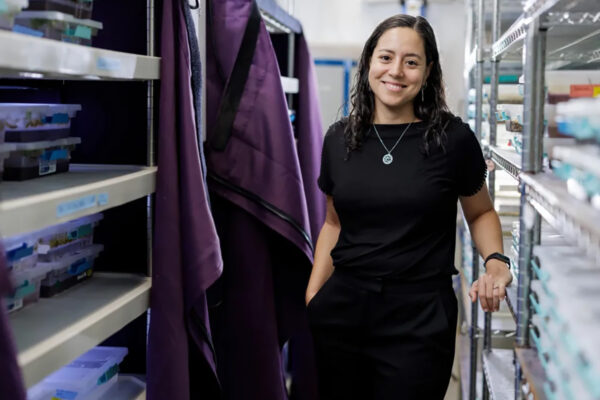
B. Duygu Özpolat, a biologist in Arts & Sciences, received a renewal of her Maximizing Investigators’ Research Award from the National Institutes of Health (NIH).
Tracking single red blood cells as they move through the brain
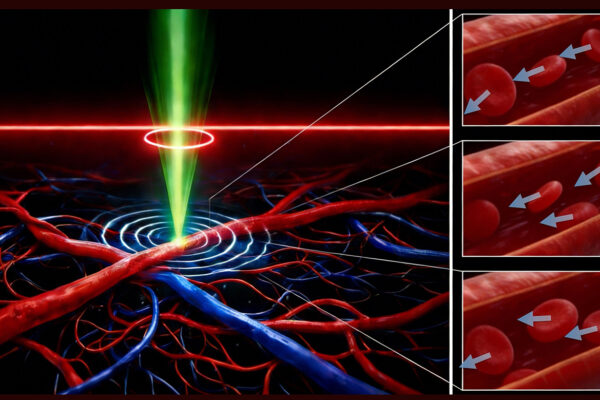
Super-resolution functional photoacoustic microscopy, a new technique developed at WashU, allows researchers to image blood flow and oxygenation at single-cell resolution. The research could provide insight into microvascular health and disease, such as stroke, vascular dementia and Alzheimer’s disease.
Older Stories