People with poor mental health report worse care worldwide
WashU researchers find adults struggling with their mental health face more unmet needs and less trust in health systems.
Global outbreaks may fuel violence against women — but most cases go unmeasured
At WashU Public Health, researchers highlight how outbreaks strain households and systems, revealing hidden risks for women and girls that data often fails to capture.
Public health student earns national cancer research fellowship
Isabella Welborn, a master’s student in public health at WashU, has won a Cancer Epidemiology Education in Special Populations fellowship from the City University of New York School of Medicine.
Power, Knowledge, and COVID-19
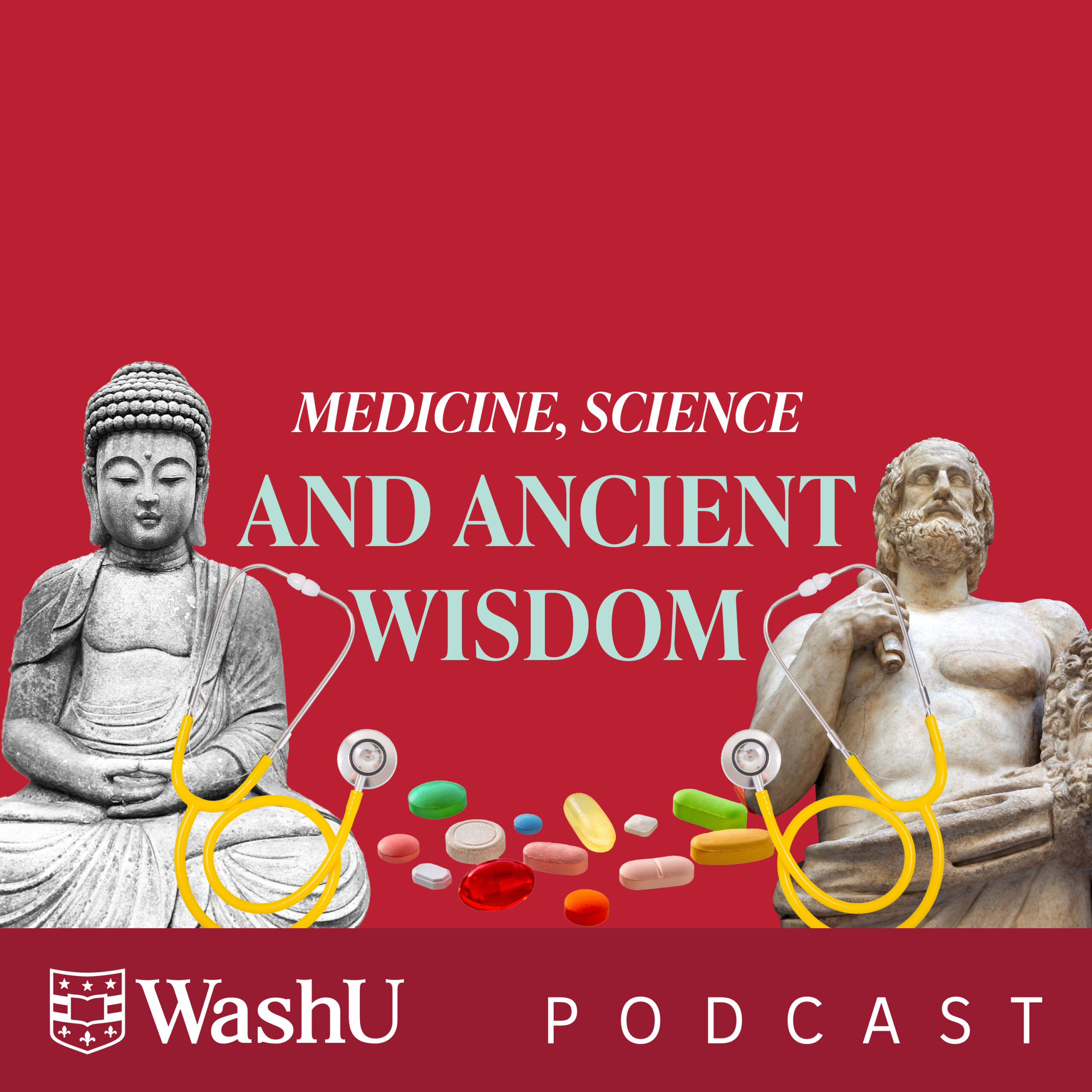
Did the scientific community’s response to the pandemic fall short of the reasoned pursuit of truth? Alex Broadbent of Durham University and Pieter Streicher of the University of Johannesburg—authors of a new book on science during the COVID moment—join WashU’s Sandro Galea to discuss what is still to be learned from the pandemic.
Alex Broadbent and Pieter Streicher
Class Acts: ‘Sri’ Gopalsamy Ramaswamy
At WashU, Sri Gopalsamy Ramaswamy combines public health and business to examine why care falls short — and how to design solutions that reach patients.
Public Health & Society major draws strong student interest
The Arts & Sciences-based program meets rising demand, combining rigorous interdisciplinary study with hands-on community experience, preparing students to tackle complex health challenges across fields.
Teaching Public Health
Volume Two
In an era shaped by the seismic effects of the COVID-19 pandemic and politically derived challenges, the second volume of “Teaching Public Health” offers a timely and essential contribution to the evolving field of public health education.
Myth vs. reality: Most Missouri Medicaid recipients already are working, WashU analysis shows
New data challenge assumptions, showing Missouri Medicaid recipients are largely employed — often in jobs without benefits, reflecting gaps in wages, coverage and rural access.
WashU poll: St. Louisans largely unaware of deadly opioids in school wastewater
Nearly 70% of Missouri schools tested showed traces of potent synthetic opioids, as a new iHeard poll finds most St. Louis residents are unaware of the threat.
The future of America’s health
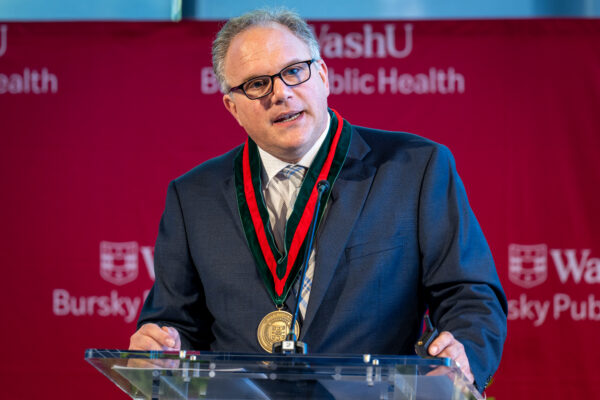
Shrinking public health funding, workforce shortages and misinformation are straining systems. A WashU forum explores how leaders can safeguard preparedness and sustain population health systems.
Older Stories