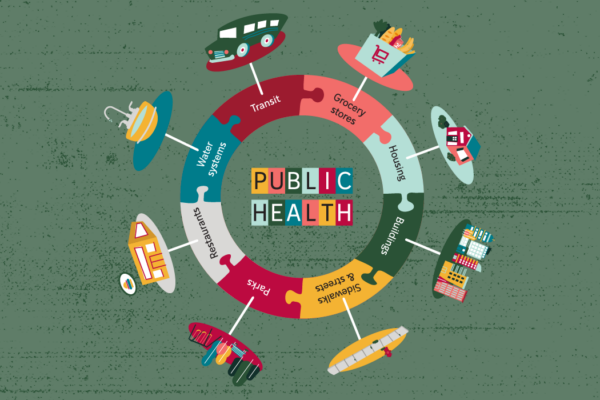
What’s in a sidewalk?
A graduate public health course examines the effects of built environments, from local crosswalks to global cityscapes.

Assistance needed in Aisle 1: What Missouri WIC families face
Bursky Public Health and Brown School teams surveyed nearly 2,900 participants and co-developed retailer training to boost nutrition access during pregnancy and early childhood.
The Future of Foreign Assistance and Global Health
In this episode of Ideas Matter, WashU’s Sandro Galea, dean of the Bursky School of Public Health, and former USAID civil servant Nicholas Enrich discuss how assisting other countries in maintaining public health protects safety and stability across the globe—including here in America.
Nicholas Enrich

How to navigate conflicting childhood vaccine guidance
Jennifer Layden of Bursky Public Health explains conflicting childhood vaccine guidance, drawing on her experience leading state outbreak responses and national vaccination efforts at the CDC.

Five trends shaping public health
From longer lives to eroding institutional trust, powerful forces are converging in ways that demand new approaches to protecting human health.
Why Global Health Research Matters for U.S. Health
What kind of return should we expect on an investment in global health? WashU’s Sandro Galea sits down with the University of Michigan’s Josh Ehrlich to discuss the reciprocity and interconnectedness of public health networks.
Josh Ehrlich

Rural Missouri faces an overlooked HIV burden
New WashU research highlights the importance of continuous HIV care as rural communities face added barriers to treatment, testing and prevention.
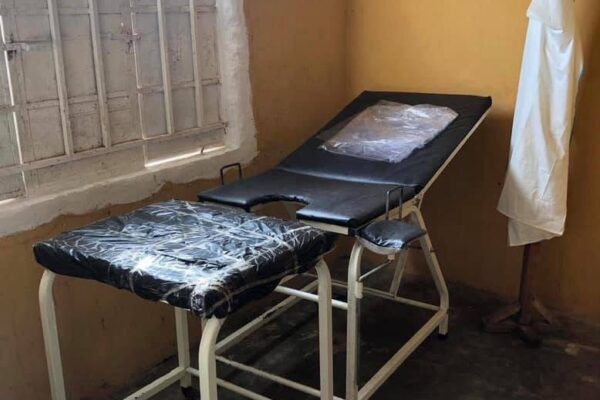
When fear becomes a public health risk
Researchers at WashU Bursky Public Health explain how trust, misinformation and disrupted care can shape health outcomes during infectious disease outbreaks worldwide.

Mental health, environment shape pregnancy sleep
Using machine learning, researchers at WashU Bursky Public Health identified the factors most strongly linked to poor sleep during late pregnancy.
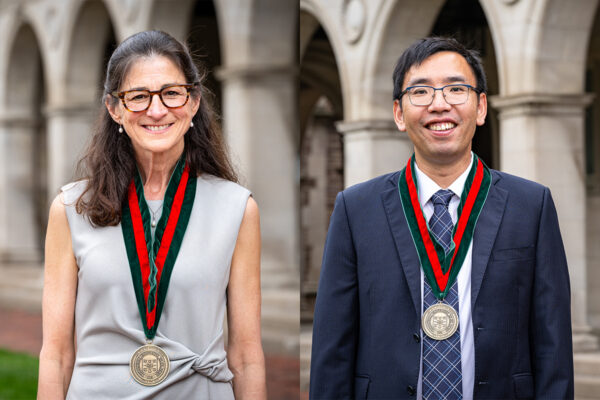
Bursky Public Health names first FARM distinguished professors
Nutrition scientist Lora Iannotti and engineer Feng Jiao become inaugural Lauren and Lee Fixel Distinguished Professors, advancing interdisciplinary solutions for food, agriculture and health.
Older Stories