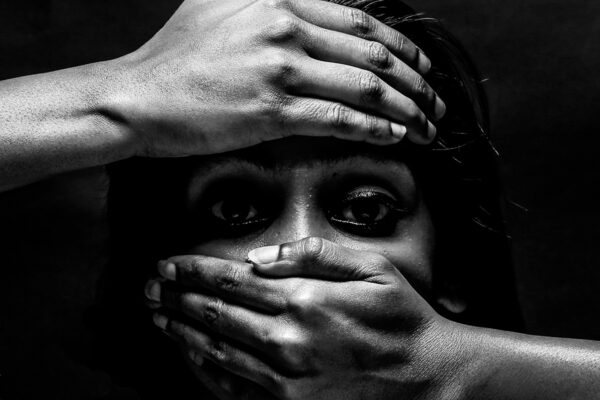
Violence against women and girls may increase during infectious disease outbreaks — as economic strain, isolation and disrupted services reshape daily life — yet those impacts remain largely unmeasured, according to researchers at Washington University in St. Louis School of Public Health.
A new study, “A Systematic Review of Infectious Disease Outbreaks and Violence Against Women and Girls: Changes in Magnitude, Mechanisms and Lessons for the Future,” was published May 5 in BMJ Global Health. The study finds that while outbreaks are known to increase risk factors for violence, there is no quantitative evidence on the scale of increased violence against women and girls during outbreaks other than COVID-19.
During the early months of the COVID-19 pandemic, reports from around the world suggested that violence against women and girls was rising during lockdowns — a pattern widely described as a “shadow pandemic,” prompting researchers to take a closer look.
Outbreaks reshape risk
Infectious disease outbreaks are becoming more frequent, driven in part by climate change, urbanization and land-use shifts that increase contact between people and animals.

Beyond the spread of disease, outbreaks disrupt economies, burden health systems and widen existing inequalities — conditions that can increase the risk of violence. Within households, pressures often intensify. Low- and middle-income countries are disproportionately affected, where these pressures intersect with fewer resources to respond.
But these broader social impacts are not typically captured in outbreak data.
“Outbreak response has historically prioritized infection rates, transmission and mortality over safety,” said study co-author Lindsay Stark, a professor of public health and co-director of the Center on Violence and Health. “That means we are often missing opportunities to prevent harm.”
The review was led by Stark and Ilana Seff, a research associate professor of public health at WashU, with co-authors from UNICEF, the University of California, Berkeley, and Fondation Botnar. The study reflects collaboration across academic, global health and philanthropic institutions.
The research team screened nearly 2,900 studies and analyzed 112 publications examining violence against women and girls during infectious disease outbreaks in low- and middle-income countries.
Evidence gap persists
The review highlighted a critical evidence gap: All quantitative studies that met the review’s criteria focused on COVID-19 — a striking finding given the number of major outbreaks in recent decades. No quantitative studies from other major outbreaks were eligible for inclusion. Most COVID-19 studies found that violence against women and girls increased during the pandemic’s first year.
“That absence of data is itself a key finding,” Stark said. “It means we are entering each new outbreak largely blind to its effects on women and girls.”
Even within COVID-19 research, the authors identified key limitations — including a primary focus on adult women, with far less attention to girls, and a reliance on proxy indicators such as hotline calls or clinic visits, which may underestimate true levels of violence. A decline in reported cases does not necessarily indicate reduced violence; it may reflect barriers to reporting or limited access to services.
The review focused specifically on women and girls because the forms of violence examined — including intimate partner violence, child marriage and sexual coercion — are shaped by gendered power dynamics that disproportionately affect them. While men and boys also can experience violence during outbreaks, the risks for women and girls often stem from different causes and lead to different outcomes. Combining all types of violence can hide those differences and make it harder to design effective responses.
Five drivers of risk
The researchers identified five key mechanisms that contributed to increased violence during outbreaks:

Income loss: Economic disruption emerged as the most consistent driver, with financial stress, frustration and shifting household roles sometimes escalating conflict and violence.
Movement restrictions: Lockdowns confined women with abusers and cut off access to social support.
Reduced access to services: School closures and disrupted healthcare increased risks such as child marriage, exploitation and early pregnancy.
Fear of infection: Perpetrators used fear of infection to control or isolate women.
Mistrust of health systems: Experiences with the health system during past outbreaks, such as Ebola, discouraged some survivors from seeking care. In one study, this mistrust persisted years later, affecting behavior during COVID-19.
These factors often overlapped, reinforcing one another — particularly under containment measures such as lockdowns, movement restrictions and service disruptions. Rather than acting independently, they combine to create conditions in which violence becomes more likely.
“Measures designed to control disease spread can have unintended consequences,” Seff said. “These pressures often build on one another — economic strain, isolation and stress don’t operate in isolation, and together they can significantly increase risk.”
Integrating prevention
The authors call for integrating monitoring of violence against women and girls into outbreak surveillance systems — including brief questions embedded in existing data collection — and for policymakers to assess risks when designing containment strategies.
Maintaining access to essential services — including schools or structured alternatives, healthcare, shelters and social support — is critical during crises, along with scaling up remote support and training front-line providers to identify and respond to signs of violence.
The researchers say global health systems should act before the next outbreak by integrating violence prevention into preparedness plans; developing standardized ways to measure risk; and evaluating containment strategies for their broader effects.
Violence against women and girls, they argue, should be monitored with the same urgency as disease transmission.
“Public health responses must account for the broader social consequences of outbreaks,” Seff said. “Preventing violence against women and girls should be a core component of preparedness and response, not an afterthought.”