Catalysts that convert waste carbon dioxide into valuable products such as acetate are designed to run continuously on electricity for the conversion process. But electricity from renewable energy sources, such as solar or hydroelectric power, often runs intermittently, which can damage parts of the catalyst and reduce performance.
An international team of researchers, led by WashU McKelvey Engineering, found a method to control “powering down” the copper cathode to prevent damage while operating for up to 750 hours without any loss in performance and while reducing costs by about 25%. Results of their research were published July 8 in Nature Catalysis.
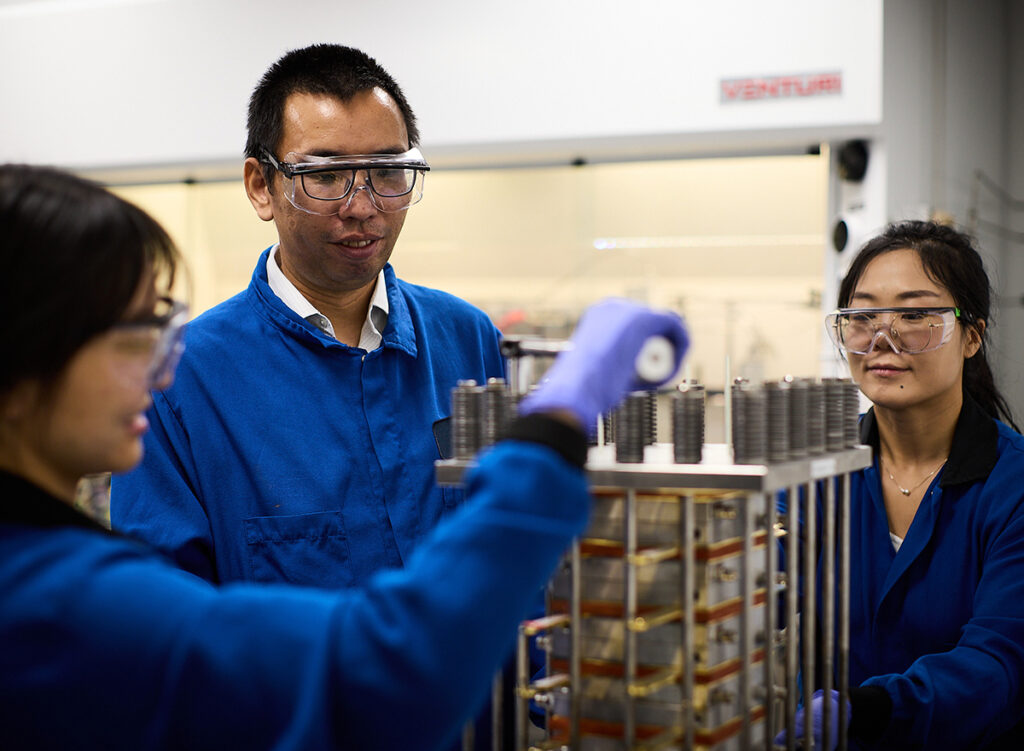
Much of the experimental work took place in the lab of Feng Jiao, the Lauren and Lee Fixel Distinguished Professor at McKelvey Engineering, led by Wanyu Deng, a formal postdoctoral researcher in Jiao’s lab, and Ahryeon Lee, a doctoral student in Jiao’s lab.
Jiao said the research was motivated by implementing the technology in different locations around the world that may use renewable energy sources.
Read more on the McKelvey Engineering website.