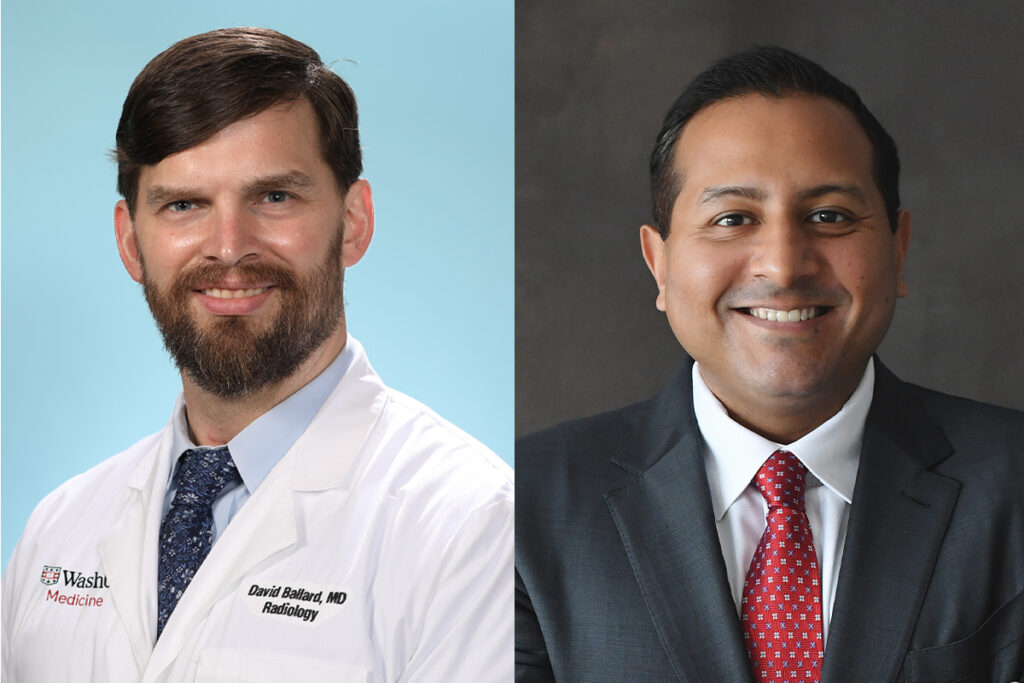
Parakkal Deepak, MBBS, MS, an associate professor of medicine in the Division of Gastroenterology, and David H. Ballard, MD, an assistant professor of radiology at the Mallinckrodt Institute of Radiology, both of Washington University School of Medicine in St. Louis, and Satish Viswanath, PhD, an associate professor in pediatrics and in biomedical engineering at Emory University, have been jointly awarded a nearly $3.2 million grant from the Leona M. & Harry B. Helmsley Charitable Trust. Their three-year project focuses on advancing the diagnosis and treatment of perianal fistulizing Crohn’s disease. This condition is a complication of inflammatory bowel disease in which abnormal tunnels, called fistulas, form between the anal canal and the surrounding skin.
Up to 40% of patients with Crohn’s disease develop perianal fistulas, which are difficult to manage due to their resistance to existing medical treatments. A barrier to treatment has been the lack of clear, standardized definitions for what constitutes improvement or healing of fistulas, even with the use of advanced MRI. This project seeks to validate new radiologic definitions for fistula improvement and response.
Using advanced computational approaches and artificial intelligence (deep learning) methods, the researchers will create software tools that can analyze MRI scans and detect subtle features that indicate how a fistula is changing and predict how it will respond to treatments. These innovations are expected to improve both clinical care for and research on perianal fistulizing Crohn’s disease, ultimately leading to better outcomes and quality of life for those affected by this challenging condition.