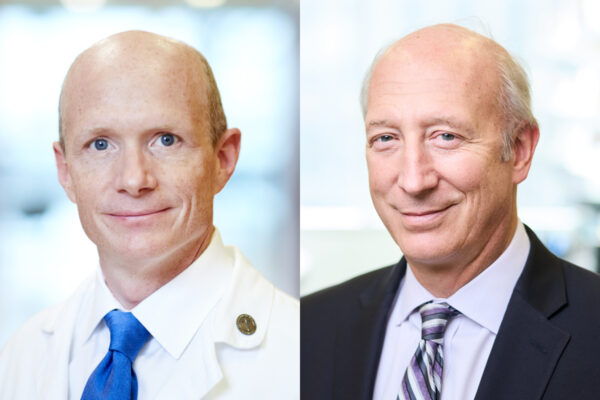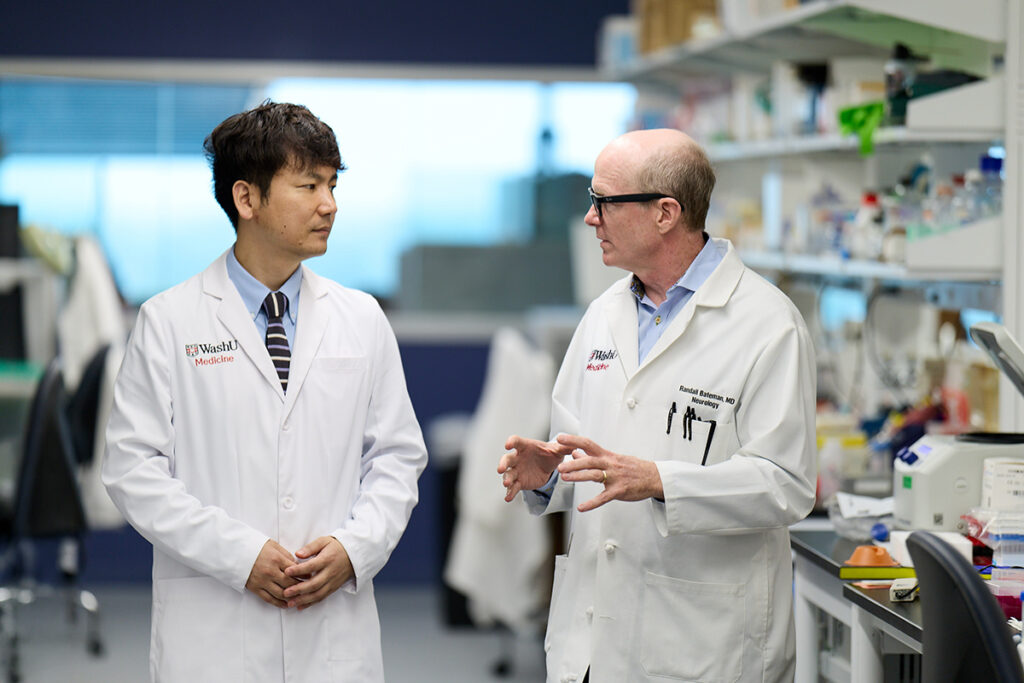
WashU Medicine researchers Randall J. Bateman, MD, and Kanta Horie, PhD, received the 2026 Jeffrey L. Morby Prize in recognition of their groundbreaking 2025 paper describing a blood test that not only detects Alzheimer’s disease but also reveals how far it has progressed.
Bateman, the Charles F. and Joanne Knight Distinguished Professor of Neurology, and Horie, a research associate professor of neurology, share the prize with collaborators Oskar Hansson, MD, PhD, and Gemma Salvadó, PhD, of Lund University in Sweden. Now in its third year, the annual Morby Prize is awarded by Cure Alzheimer’s Fund, a nonprofit that supports research on Alzheimer’s disease, to the senior and first authors of a recent scientific publication that transforms the fundamental understanding of the neurodegenerative condition and opens new paths to preventing, diagnosing or treating Alzheimer’s.
Bateman, Horie and their co-authors were recognized for their 2025 paper, published in Nature Medicine, showing that a specific fragment of tau protein in the blood, eMTBR-tau243, can reliably reveal the toxic tau tangles that drive Alzheimer’s symptoms — the first blood test able to do so. Levels of eMTBR-tau243 in the blood reflect tau tangle accumulation in the brain with 92% accuracy, and the test cleanly separates people with early-stage Alzheimer’s from those with advanced dementia and from people whose cognitive symptoms stem from other causes.
Until now, measuring tau tangles has required expensive brain PET scans that are rarely available outside major research centers.
The recognition marks the third consecutive year that WashU Medicine researchers have received the Morby Prize.
Read more on the WashU Medicine website.