When researchers test whether an antibiotic will work, they usually do so in a controlled laboratory environment. But when an infection happens inside the human body, things aren’t so clean and tidy. New research from WashU published in mBio, an American Society for Microbiology journal, found that even a slight change in acidity may dramatically shift how bacteria respond to treatment.
The study is centered around Klebsiella pneumoniae, a major cause of deadly infections and one of the world’s most antibiotic-resistant pathogens.
“We’re very rapidly approaching a point where antibiotic resistance is going to be a real problem. We have to work on ways of maximizing what we already have, making our arsenal of drugs more effective,” said Sarah Beagle, a staff scientist in biology in WashU Arts & Sciences and lead author on the study.
The work was co-authored with Petra Levin, the George William and Irene Koechig Freiberg Professor of Biology in Art & Sciences.
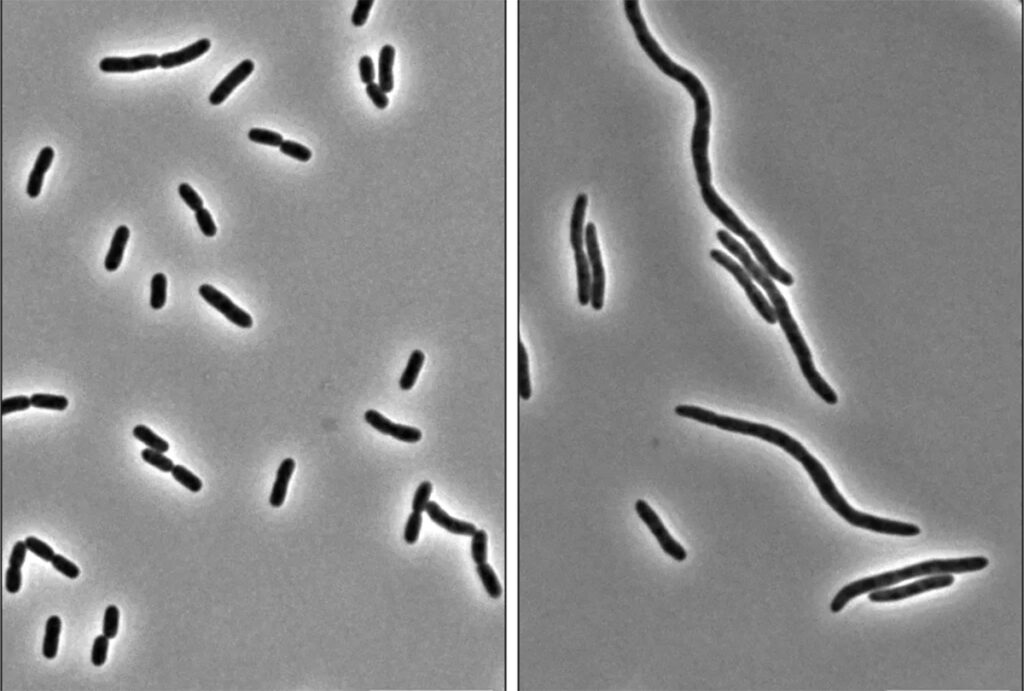
The researchers set out to learn what happens to antibiotic resistance when K. pneumoniae grows in mildly acidic conditions like those found in parts of the human body during an active infection. What they found was that when grown at a pH of 5, the bacterium became up to 64 times more resistant to beta-lactam antibiotics, the most widely prescribed treatment for infections.
Read more on the biology website.