
Kubanek receives One Mind Rising Star Award
WashU Medicine psychiatry researcher Jan Kubanek was recognized with the One Mind Rising Star Award for his work on applying ultrasound to map and modulate brain circuits involved in depression.

New research shows promise for treating hepatitis C in pregnancy
A study led by Laura Marks, MD, and Madeline McCrary, MD, of WashU Medicine, shows that an oral antiviral regimen can be used safely and effectively in pregnant patients with hepatitis C virus.
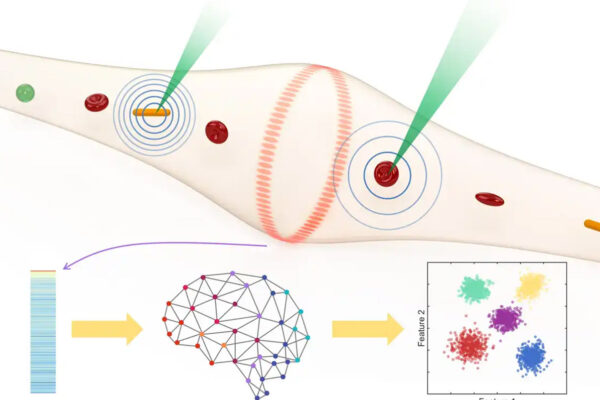
New sensor detects, classifies freely flowing particles without labels
WashU McKelvey Engineering’s Lan Yang and her team have developed a new sensing technique to detect nanoparticles.
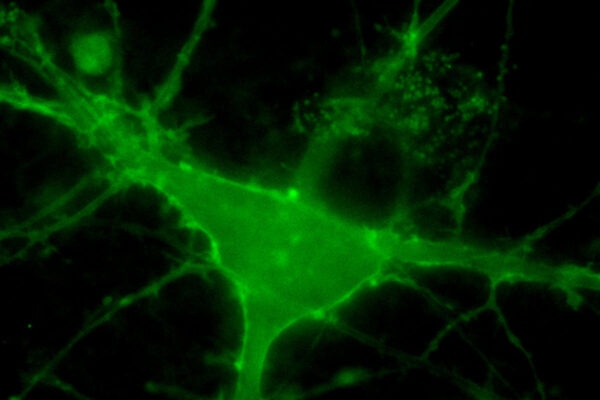
Brain cells regulate cholesterol to control neuron signaling
WashU Medicine researchers show in a new study that brain cells called astrocytes modulate the supply of cholesterol in the brain to help neurons communicate.

WashU study could help manage air quality near power plants
WashU McKelvey Engineering’s Chi Li received a grant from NASA to fine-tune a tool that will be used to understand how weather and atmospheric conditions evolve over time.

Promising target identified against chronic blood cancer
WashU Medicine researchers have identified a promising approach to treat
myeloproliferative neoplasms, a group of chronic blood cancers, by interfering with a protein that drives inflammation.
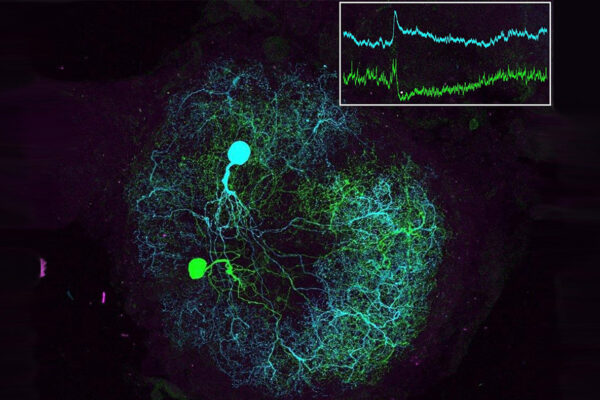
What a locust can teach us about how neuromodulators alter odor processing
Researchers at WashU McKelvey Engineering studied how neuromodulators alter odor processing in locusts.
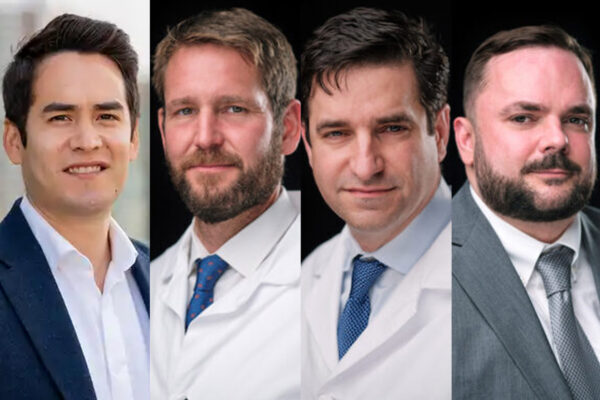
Can brain signals help turn spinal stimulation on only when it’s needed?
Biomedical engineer Ismael Seáñez along with collaborators from WashU Medicine will study the effects of delivering transcutaneous spinal cord stimulation only when the person intends to move, thanks to a three-year $400,000 grant from the Craig S. Neilsen Foundation.

Vision researchers win prize for tool to track public data sharing
WashU Medicine researchers have won a $400,000 prize for creating a free online tool to help scientists track and showcase the real-world value of the raw research data they share with the public.
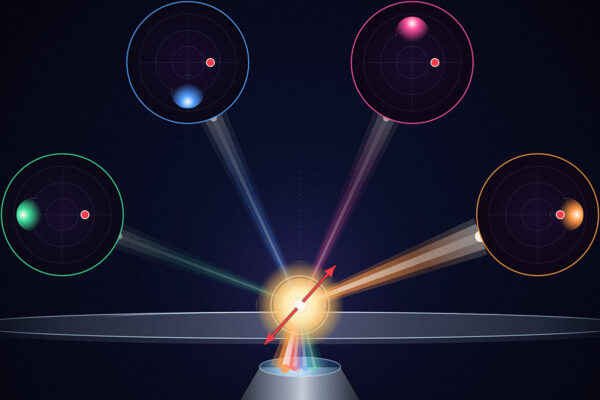
How light can reveal the hidden orientation of a single molecule
Recent work from researchers in the lab of Matthew Lew at WashU McKelvey Engineering found that polarized light patterns can improve how precisely microscopes measure the orientation of single molecules.
View More Stories