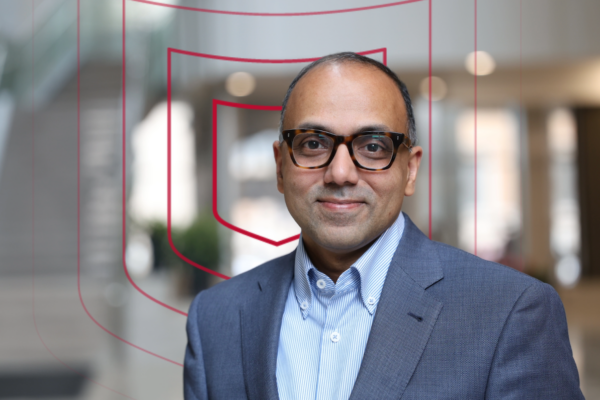
Kannampallil named editor-in-chief of premier informatics journal
Thomas Kannampallil, a professor of anesthesiology at WashU Medicine, is recognized for his expertise in AI-based technology designed to improve healthcare.
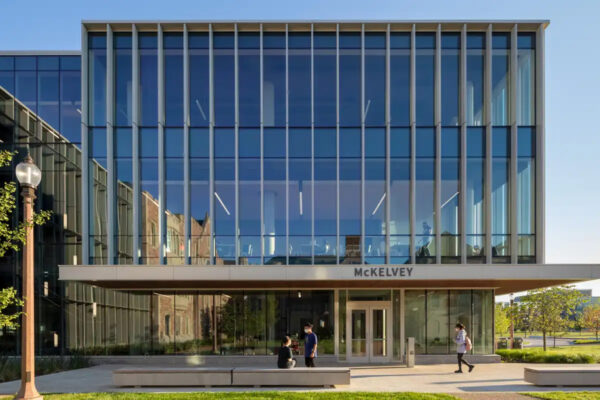
New master’s in artificial intelligence engineering offered at WashU
A new master’s degree in artificial intelligence engineering will be offered at WashU McKelvey Engineering starting in fall 2027.
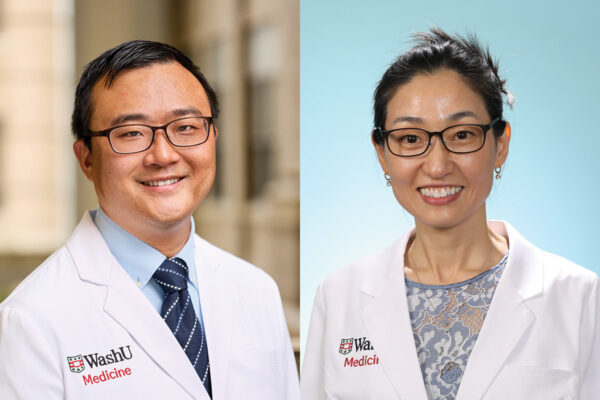
Lee and Lee honored with prestigious Cogan Award
WashU Medicine ophthalmology researchers Aaron Y. Lee, MD (left), and Cecilia Lee, MD, received the Cogan Award from the Association for Research in Vision and Ophthalmology for their contributions to vision science and ophthalmic research.

Activating glass for next-generation semiconductor substrates
WashU’s Sang-Hoon Bae plans to use glass to grow 2D crystals with a National Science Foundation CAREER Award.
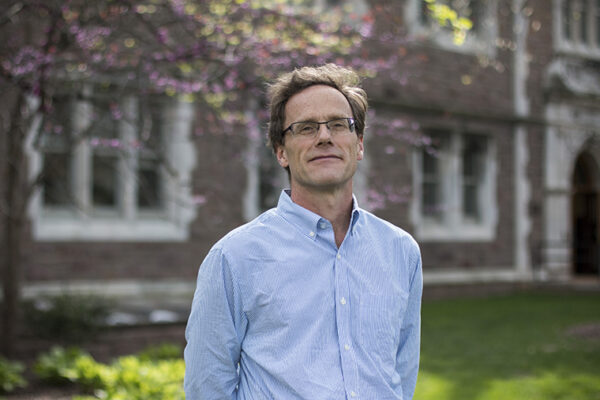
McCarthy earns NSF award
John McCarthy, the Spencer T. Olin Professor of Mathematics in WashU Arts & Sciences, has won a $300,000 grant from the National Science Foundation to develop mathematical models to help understand biological systems.

New comprehensive data platform could transform Alzheimer’s research, treatment
Researchers at WashU Medicine and the Knight Alzheimer’s Disease Research Center led the development of a scalable platform that links research, real-world patient data and genetic data to uncover new insights into Alzheimer’s disease diagnosis, prevention and care.
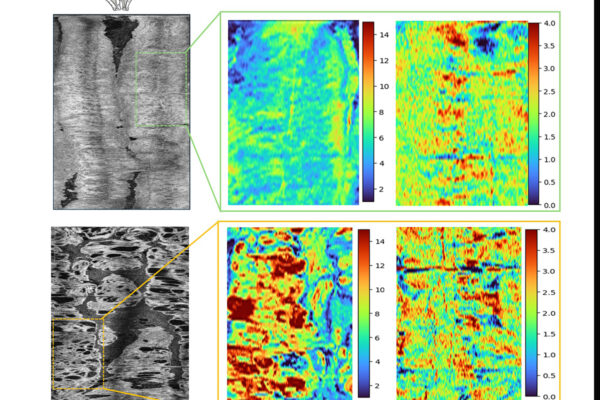
Quick optical biopsy could be early detection method for endometrial cancer
Biomedical engineer Quing Zhu and WashU Medicine collaborators combined optical coherence tomography and machine learning for a rapid, accurate test for endometrial cancer.
New minor in systems engineering for social good offered
A new minor program at WashU McKelvey Engineering will equip students with the ability to connect technical decisions with societal outcomes.
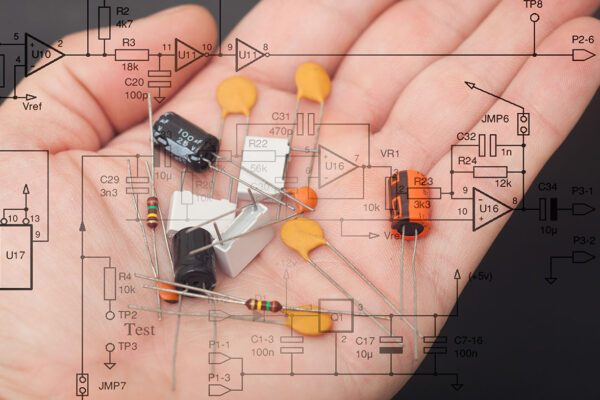
Samsung grant will fund better energy storage systems
WashU engineering researchers led by Sang-Hoon Bae received a grant from Samsung to further their work to improve electrostatic capacitors.
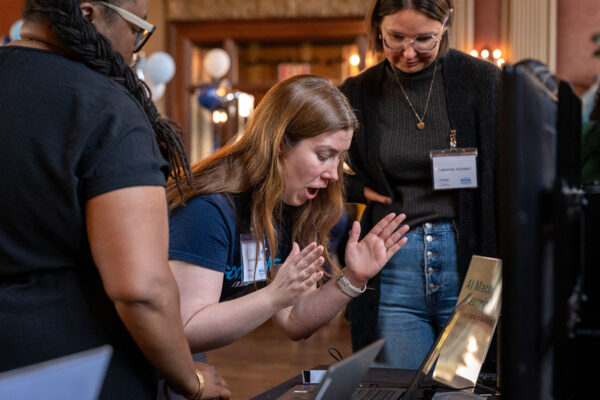
WashU, AT&T partnership helps teachers use educational tech tools effectively
The AT&T Digital Navigation Program, a free program offered through the WashU Institute for School Partnership, helped about 50 local educators learn how to use the right tools the right way.
Older Stories