Believe it or not, something as simple as sidewalks can impact the health of those living in a neighborhood.
Without safe sidewalks, residents have fewer places to walk. “And that’s going to impact your cardiovascular system and, eventually, your mortality,” Rodrigo Siqueira Reis says. In fact, many elements of where we live and work — such as the presence or absence of safe areas to exercise, affordable and healthy food options, and viable transit — can help us or hurt us.
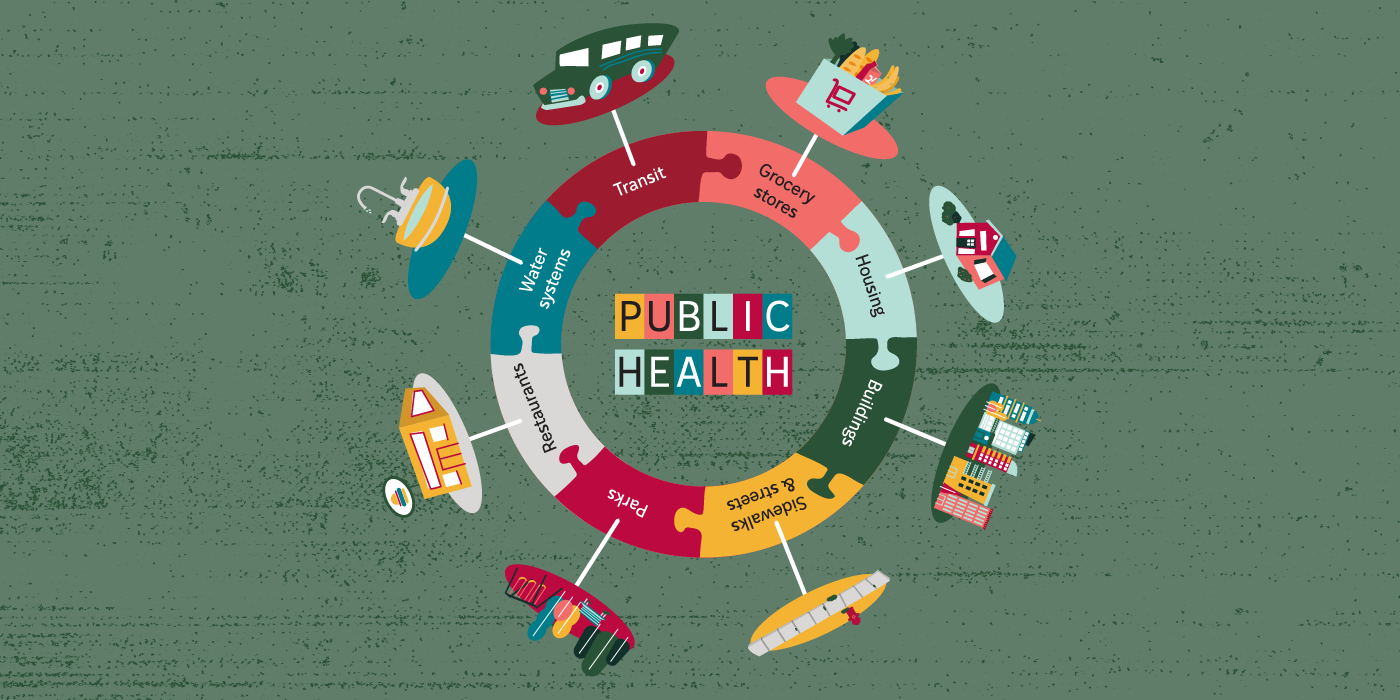
Reis, professor of public health, teaches students in the Master of Public Health program to examine their surroundings in his course “Public Health and the Built Environment.” The built environment is any aspect of one’s surroundings that has been modified by humans, such as sidewalks, streets, homes, office buildings, intersections, transit systems, parks, restaurants, grocery stores and water systems. These structures can affect aspects of health “ranging from chronic diseases to infectious diseases,” Reis says.
“If you don’t have safe crosswalks to cross streets, you can be hit by a car,” he says. “If you work indoors and you’re sitting all day or you’re exposed to fumes or asbestos, that’s also going to impact your health.”
Reis notes that cities are places where many people thrive, but urban environments can also present harmful or unhealthy conditions.
Zoning and urban planning policies shape areas where people live and can create inequities along social, racial, ethnic and cultural divides. In this way, the built environment can provide opportunities for some but reduce opportunities for others.
To understand these issues, Reis’ students hear perspectives from local, national and international guest speakers on bikeability, walkability, affordable housing, tree planting and many other topics.
In one of several group projects, students evaluate the built environments of cities around the world.
“Some cities are doing better than others in a few areas,” Reis says. These cities can inspire improvements elsewhere. For example, Bogota, Colombia, closes 79 miles of streets to cars every Sunday, which provides walking and biking space for over a million people weekly. This type of solution can be implemented in low-, middle- and high-income nations, Reis says.
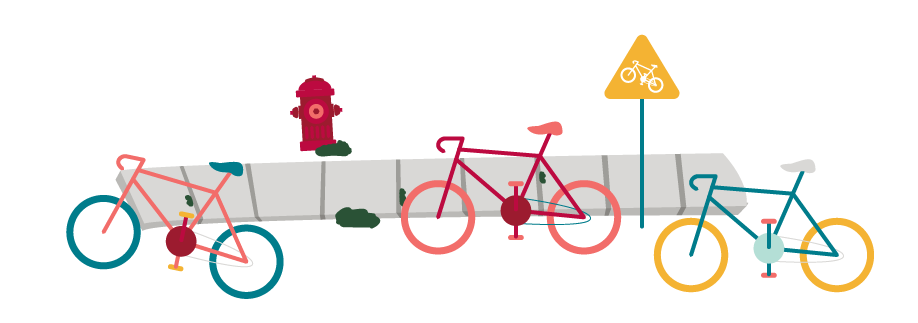
Here in St. Louis, his students audit the built environment of a small area such as a single intersection. They look at the conditions of things like sidewalks, crosswalks, traffic signs, bike lanes, benches and bus stops. In another class project, they find and evaluate a policy or project that’s still in the planning stages. These could be roads, sanitation systems, parks or housing developments.
Students take what they’ve learned to a variety of careers. Reis’ students have gone on to work for nonprofits, local and state governments, and the Centers for Disease Control and Prevention. Some go to law school to study environmental law, and some earn doctorates in environmental science.
“I know that what we discussed in this class will stay relevant no matter where I end up working,” says Claire Ami Pavlides, a second-year Master of Public Health candidate from New York City.
“I’ve come to see that health isn’t simply about hospitals, doctors or individual behaviors. It’s also about the spaces people live, work and move through every day,” she says.
Reis hopes his students, who are from across the United States and around the globe, continue to link the conversations they have had in class to what they see around them.
“This is not a hypothetical course,” Reis says. “To me, it’s a course based on your lived experiences. It’s important that students try to connect this course with places they have lived, where they live now and where they will live and work in the future.”