As a young professor teaching social policy at Washington University in the early 1980s, I was talking with a group of St. Louis mothers who relied on government assistance. They said they could never save for a better neighborhood or education because welfare’s asset limits meant even modest savings jeopardized their benefits.
Meanwhile, my wife, Margaret, and I had one assistant professor salary, two young children, college debt and no savings. But something transformative had happened. When I accepted the faculty position, WashU opened a retirement account for me with an employer match and tax deferral. I barely noticed at the time; retirement felt so far away.
“Washington University is directly responsible for creating this policy.”
Michael SherradenIn a few years, over $10,000 accumulated. We had never had much savings before. I attended a meeting to learn more about the account, and the lecture hall was full of faculty. Why were we all there? I soon realized that we came and paid attention because someone had arranged for us to accumulate assets. Having the assets changed how we acted.
I thought about the mothers I had met. No one was helping them accumulate assets, and if through difficult sacrifice they managed to save, they risked losing benefits.
The next time I met with them, I asked: If someone would match your savings, and your savings would not reduce your benefits, could you accumulate some money? They said yes — and said no one would ever do that for them. This response stayed with me. Why would public policy support professors and other working professionals in building assets for the long term but discourage poor families from doing so?
After a period of reflection and research, this experience led to my 1991 book Assets and the Poor. I proposed that everyone should have access to an account for lifelong asset building, starting as early as birth. This became the foundation for Child Development Accounts (CDAs) — savings or investment accounts, opened automatically, to enable all children to begin accumulating assets early in life.
Over the past three decades, CDAs have moved from idea to policy. I was a Fulbright Scholar at National University of Singapore in 1992, and Singapore adopted EduSave for all schoolchildren in 1993, later expanding asset-building policies for youth. In 1994, I started the Center for Social Development (CSD) at WashU to study such policies. From 2000–05, I advised the Tony Blair government as the United Kingdom started the first universal CDA at birth. In 2007, CSD launched SEED for Oklahoma Kids, a rigorous experiment that generated impactful CDA evidence. Even the poorest families can accumulate assets, and as a result, they are able to think and act more constructively.
“My vision, and CSD’s, is that every newborn on the planet will receive a Child Development Account, along with their immunizations and a birth certificate. This may sound audacious, but technology now makes it possible.”
Michael Sherraden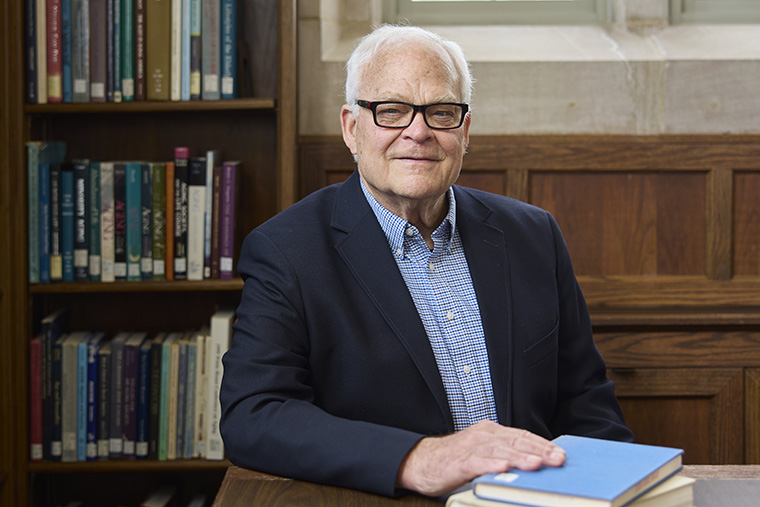
Other countries initiated CDAs. Discussion of universal and lifelong asset-building policy, a concept that did not exist before 1991, grew stronger. In 2010, because of this work, I was named by Time magazine as one of the 100 most influential people in the world. In 2015, Israel launched a universal CDA with regular monthly deposits. In 2024, Kazakhstan launched a universal CDA with annual deposits using oil and gas wealth. Several U.S. states have started universal CDAs. The CSD has advised in all of these developments. Today, over 30 million children worldwide are building assets in CDAs.
Research at CSD has been productive because of the extraordinary talents and dedication of CSD staff. I am fortunate to work with them.
The CDA work has also informed parts of today’s Trump Accounts at the federal level. Unfortunately, the policy stops well short of guaranteeing every child an account. It could leave behind millions of children — especially children from the lowest-income families.
But there is potential. Congress approved more than $16 billion in initial funding, and the Dell Foundation has pledged over $6 billion, with a focus on the lowest-income children. Congressional leaders and staff from both parties recognize the potential of an inclusive platform for asset building starting at birth.
Policy windows rarely open in predictable ways. Trump Accounts are far from perfect, but the core idea — that every child should have an account for asset building over a lifetime — has now entered U.S. federal law with bipartisan and philanthropic support. If we can secure universal inclusion, adequate funding and sound administration, this could mark the emergence of permanent asset building for all children in the United States. We are aiming for that.
Indeed, my vision, and CSD’s, is that every newborn on the planet will receive a Child Development Account, along with their immunizations and a birth certificate. This may sound audacious, but technology now makes it possible. Political and economic barriers can be daunting, but CSD will continue using evidence and partnerships to inform effective policy.