Since August, the 80 members of WashU Racing had committed more than 20 hours a week to building and testing a formula-style race car from scratch — six-hour building days on Saturdays, 12-hour testing days every Sunday in the spring and dozens and dozens of meetings designing systems, planning logistics and finding sponsors.
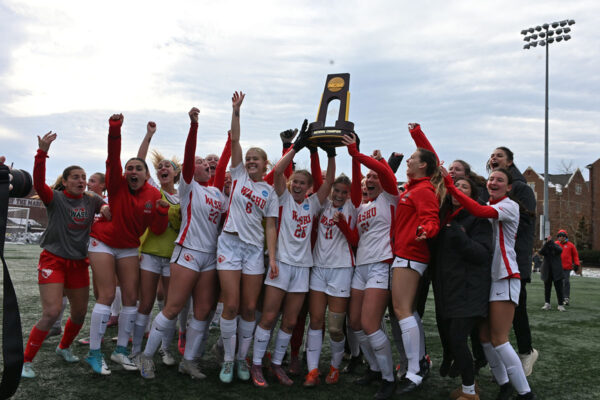
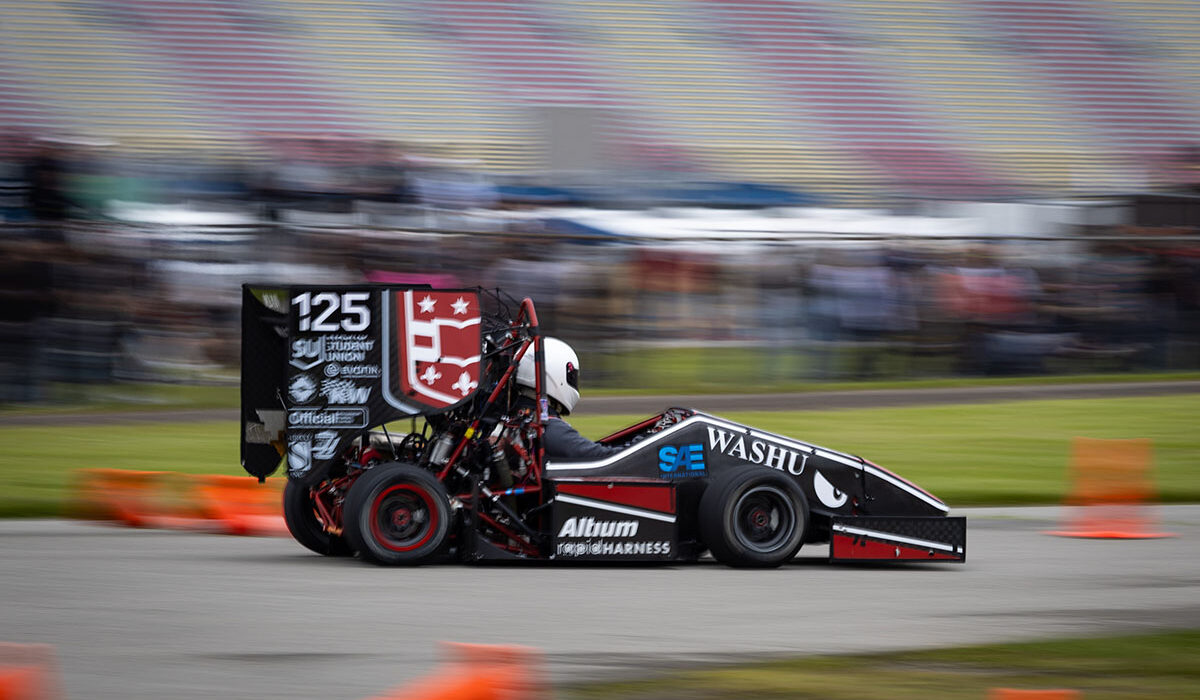
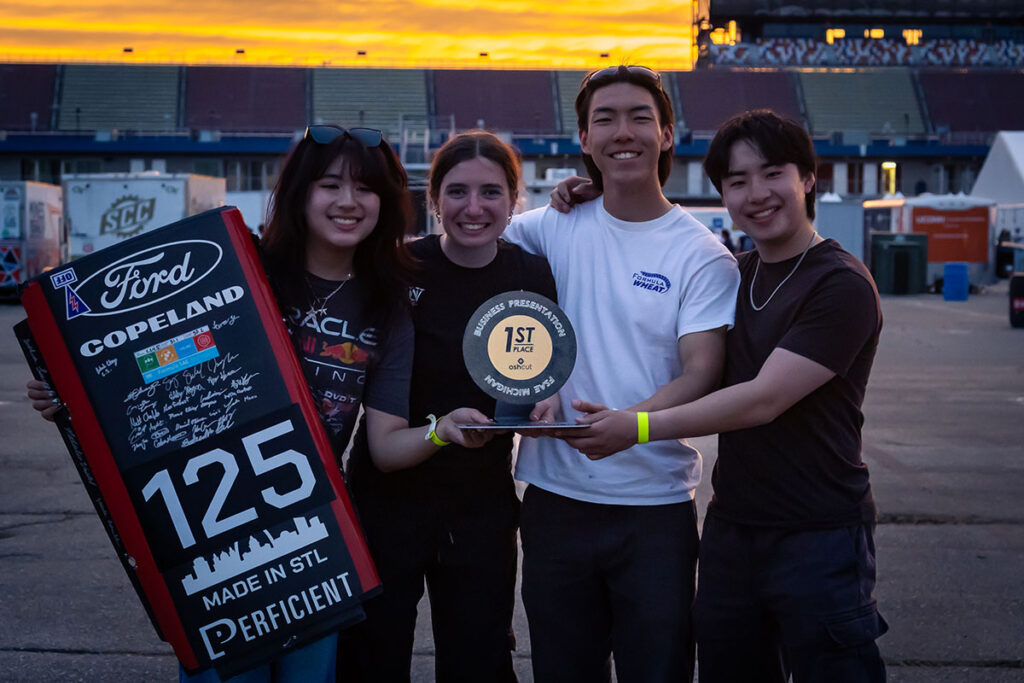
All of that work paid off this spring, when WashU Racing achieved its highest showing in club history at the Formula SAE competition, held annually at the Michigan International Speedway in Brooklyn, Mich. The team placed 25th overall out of 111 teams and took the top spot in the business presentation category.
“Our team had never taken home a trophy before, so that was a really exciting moment for us,” said Suzy Schwabl, who served as club president and earned a bachelor’s degree from WashU McKelvey Engineering this year. She is now working toward a graduate degree in aerospace engineering at WashU.
WashU Racing is composed of eight technical teams: powertrain; electronics and data acquisition; aerodynamics and composites; manufacturing; chassis; suspension; ergonomics; and braking. This year, the team increased the car’s power, improved its weight balance and redesigned its exhaust system and wheel hub assembly. The team designs and builds nearly every element of the car on campus, with the exception of the engine and some components. Once all of the pieces came together, the team tested the car weekly, sometimes on North Campus.
“Testing is probably the most critical phase,” Schwabl said. “It’s split up into diagnostic testing, data collection and then driver practice.”
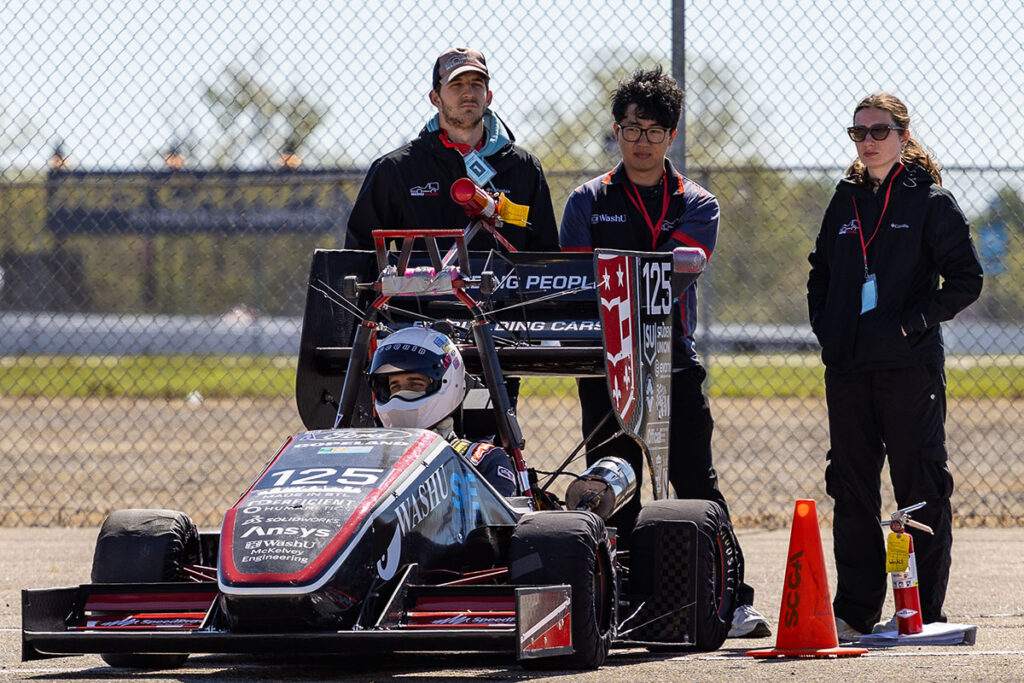
Judges at the Formula SAE competition evaluate teams in multiple categories, including design, presentation, acceleration and endurance. Prior to this year, the club’s best showing came in 2022, when it placed 37th overall.
Schwabl was especially pleased with the club’s No. 1 showing in the presentation competition, which included three rounds of submissions: a written sponsorship proposal for a company of interest; a virtual slideshow presentation; and an in-person presentation. Half of the teams don’t make it past the first round; WashU Racing didn’t last year. But this year, a judge told Schwabl that the team won “by a long shot.”
The team also improved its performance in endurance, a notoriously challenging category. Last year, WashU Racing ran out of gas a few yards from the finish line.
“I’m most proud of the team for being able to finish our big endurance race as we planned to, without running out of gas and without any car issues,” she said.
Tekla Chew, who leads the ergonomics and braking team, said WashU Racing has helped him strengthen his skills as a leader and an engineer. In his role, he established a training system for new team members, developed new seat inserts and throttle linkages and researched improvements to the brake calipers and steering wheel.
“Sometimes, I wake up in disbelief that I got on WashU Racing — I’m honestly just so grateful,” said Chew, a rising senior studying mechanical engineering at McKelvey Engineering. “You could spend your weekend just doing homework and studying. But it’s really cool to wake up and get to interact with people I like and build this thing that I feel so passionate about.”
Younger students and general board members have more flexibility in their roles with the team. Rising McKelvey Engineering sophomore Gabe Damiani wasn’t even interested in automotive engineering until he joined WashU Racing. As a new member, he went above and beyond, showing up at the weekend building and testing days.
“They’re, you know, building an entire car,” Damiani said. “It’s pretty incredible, and that kind of flipped my thinking and pushed me towards that career path.”
In addition to student camaraderie, Damiani and Schwabl also lauded the networking opportunities that the club provides, connecting them with passionate alumni as well as external recruiters. On top of gaining critical leadership experience, Schwabl also was recruited for her current job on the integration and testing team for Starlink, a satellite internet division of SpaceX, at the Formula SAE competition in 2025.
“WashU Racing has been the most insane learning opportunity,” Schwabl said. “The classes I’m in are highly theoretical stuff — if I wasn’t actively building stuff and seeing where my class material applied, I would feel like a totally different mechanic.”