People join movements for many reasons. The American Revolution was no different, says Peter Kastor, professor of history and of American culture studies in WashU Arts & Sciences.
In opposing the British government, colonial settlers exhibited distinct motives, priorities and grievances, yet somehow arrived at similar conclusions. “They all agree on liberty,” Kastor said. “They disagree on what it means.”
Kastor’s remarks came in a lecture titled “Why Did the Colonies Declare Independence?” The talk was presented by the John C. Danforth Center on Religion and Politics as part of its spring 2026 course “1776, Then and Now.”
To begin, Kastor sketched out three familiar narratives. In one, freedom-loving colonists rise against unbearable tyranny. In another, wealthy enslavers balk at paying taxes. A third emphasizes the complex web of loyalty and expectation connecting the British crown and its subjects.
“Which one is right?” Kastor asks. “They’re all right. If there’s one thing I want you to take out of this lecture today, it is that the American Revolution is very much like human relationships.
“It’s complicated.”
Imperial system
Native Americans had resisted European domination. Enslaved African Americans had periodically formed revolts in pursuit of freedom. And European settlers had occasionally pushed back on the policies of the numerous empires that had sought to stake their claims in the land that later became the United States.

Ultimately, each insurgency was crushed. “This is the way empires operate,” Kastor said. Subjects may be granted privileges but the peripheral spaces in which they live are never truly equal. And that inequality “is the thing that British settlers began to challenge.”
Throughout the 1760s and early 1770s, most settlers still considered themselves to be British citizens. Complaints centered o taxes and fees but also highlighted the theme of neglect — the ways in which crown and parliament failed to safeguard their due rights and prerogatives.
“They see themselves as preserving British liberties,” Kastor said. “They want representation. They want to be heard in parliament.” When parliament rejects that, many settlers conclude “that the British imperial system has become corrupt.”
Many roads
The First Continental Congress gathered in 1774. It passed a Declaration of Rights and Grievances but otherwise stalled in debate. By the time the Second Continental Congress began, in May 1775, the Battles of Lexington and Concord had already taken place. “The War for Independence erupts before the Declaration of Independence,” Kastor said.
To draft the Declaration, Congress appointed a committee that included Thomas Jefferson, Benjamin Franklin and John Adams. For Jefferson, the Southerner, freedom and independence were rooted in land ownership but also in slave ownership. Franklin, the Mid-Atlantic pragmatist, valued tolerance and individual opportunity. Adams, a New Englander, was suspicious of concentrated power and objected to British restrictions on local government.
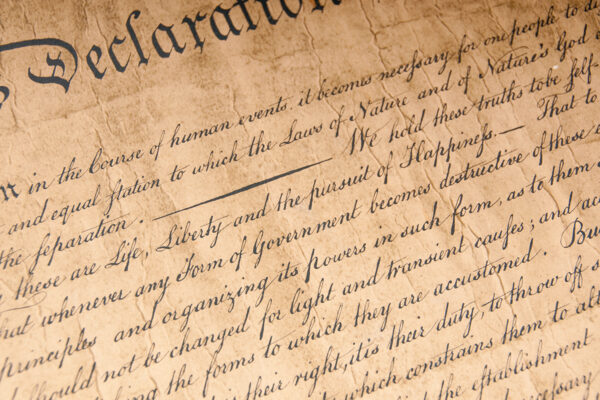
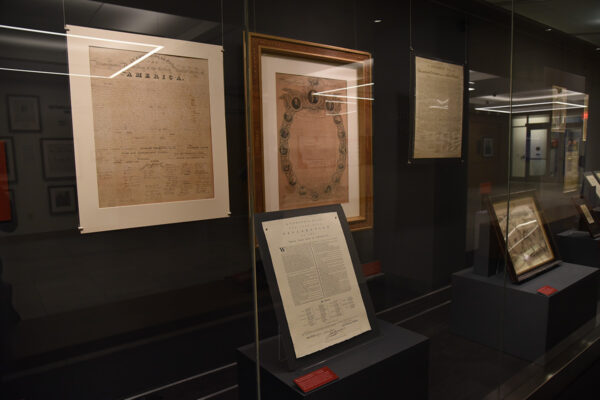
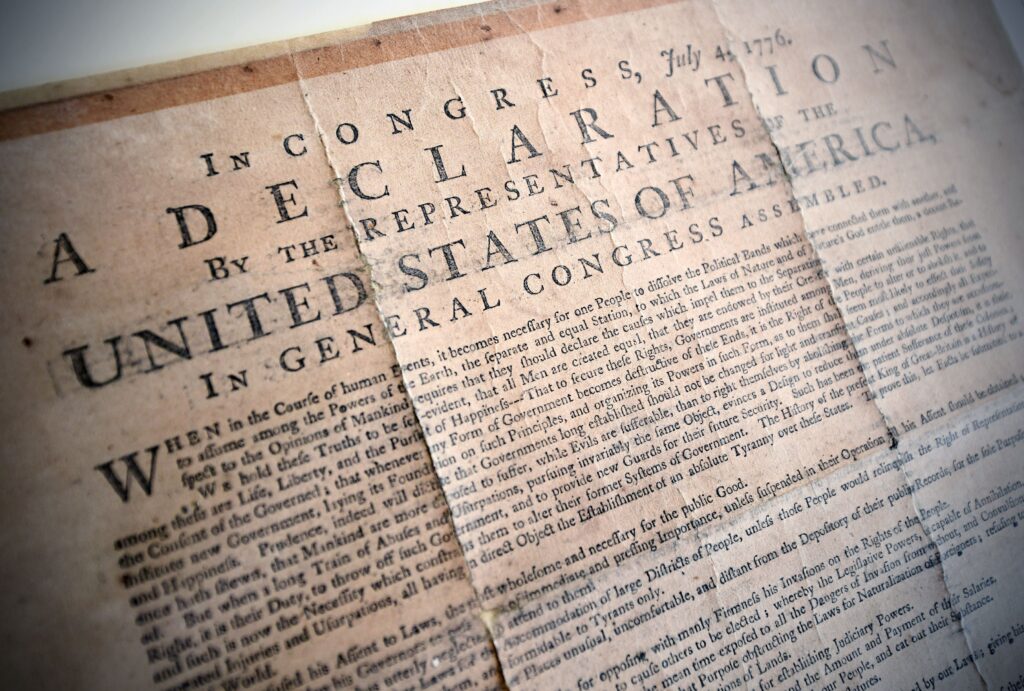
The Declaration was published July 4, 1776. States and localities throughout the colonies quickly followed suit, issuing declarations and then constitutions of their own. These bore many similarities but could be strikingly different.
Massachusetts set stringent property requirements for voters and office holders. Pennsylvania eliminated property requirements and made most offices elected by the people rather than appointed. In upstate New York, settlers declared independence from Great Britain but also from wealthy New York City landowners. The resulting Republic of Vermont was the first colony to abolish slavery.
“There are many roads to the same destination,” Kastor said. “British settlers declare independence not because of their unanimity, but despite their differences.”
A new political society
For many colonists, now U.S. citizens, the world after revolution wasn’t so different from the world before. “John Adams once wrote that people in the United States were divided into thirds,” Kastor said. “A third supported the revolution, a third opposed it and a third didn’t care.”
In time, and especially in the late 20th century, Adams’s quip became almost conventional wisdom. However, “one of the things that historians have found over the last generation is that, in fact, support for the revolution was deeper and farther than we previously knew,” Kastor continued.
Nevertheless, the language of patriotic support could mask divisions. “It resonated with people for very different reasons.” Wealthy planters and penniless farmers could find common cause in part “because the language was so elastic.”
Conversely, the ideological clash between patriot and loyalist could reflect existing tensions. In Virginia, Scots-Irish Presbyterians had long challenged the state-funded Church of England. Jefferson, recruiting militiamen, promised to overthrow British restrictions on Euro-American settlement west of the Appalachian Mountains. The British, meanwhile, offered to free enslaved men who fought for the loyalist cause.
“People get swept up in the revolutionary movement for many reasons,” Kastor said. Yet the development of a shared revolutionary language helps to explain how fractious colonies with different politics, cultures and religious faiths ultimately could join together.
But resistance is one thing. Governing is another. It is only with the ratification of the U.S, Constitution, in 1788, that internal disputes about the nature of citizenship and the balance of power were settled — at least for a time.
“The Constitution sought to articulate not just political institutions, but then, as amended in the Bill of Rights, what it would mean to be a citizen in this new political society,” Kastor concluded.
“What that means is an issue that remains with us to this day.”