What is the university art museum in the 21st century? What could it be? How might it foster artistic investigation and experiential learning?
Since joining the WashU Kemper Art Museum in 2006, Meredith Malone has organized a wide range of exhibitions, programs and new acquisitions that aim to expand visual art’s intellectual, geographic and cultural reach.
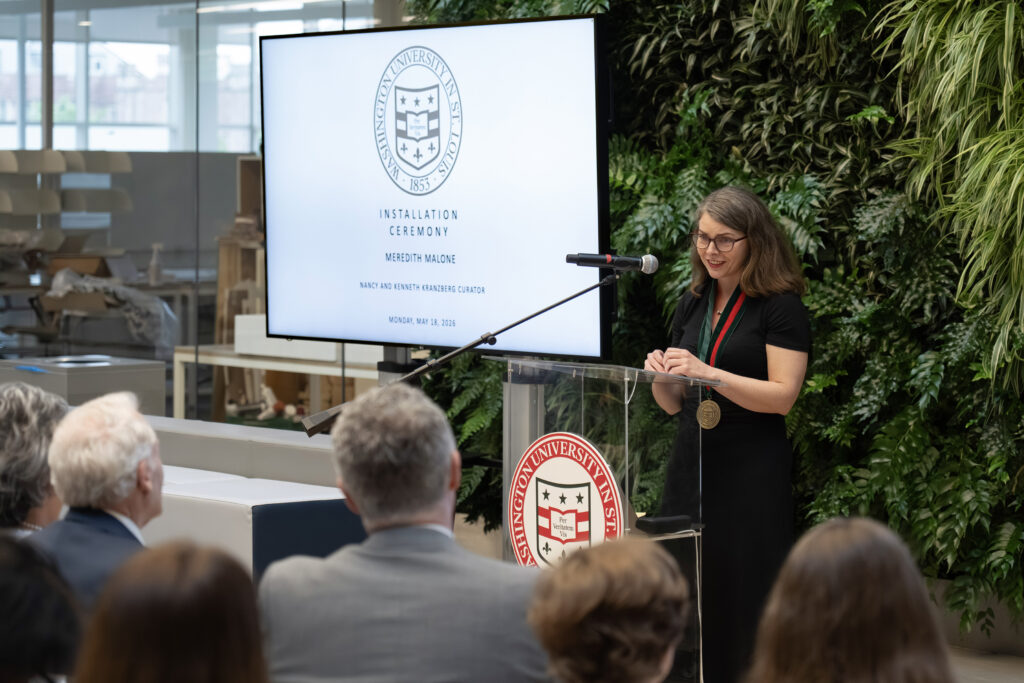
On May 18, Malone was installed as the Nancy and Kenneth Kranzberg Curator, the museum’s first named curatorship. The endowed position, part of With You: The WashU Campaign, honors exceptional scholarship while helping ensure the museum’s continued growth.
In her installation address, “From the Everyday to the Cosmos: The Museum as Laboratory,” Malone examined how experimental approaches, beginning with the post-World War II work of the New Realists and continuing through the work of global contemporary practitioners, have influenced her own scholarship and reshaped the relationship among artist, artwork and viewer.
“I’m especially attracted to artists who consider the exhibition itself as less of a frame or a container than an open proposition and an artistic form in which the viewer is implicated as a knowing participant,” Malone said. “At their best, such exhibitions sharpen our perception and reroute our understanding of the past, present and the future, while creating space for viewers to exercise visual and critical literacy.”
In presenting exhibitions of this caliber, the Kemper Art Museum serves “as a powerful platform for open exploration and dialogue,” Malone added, “acting as something akin to an experimental laboratory.”
‘Investing in the arts’
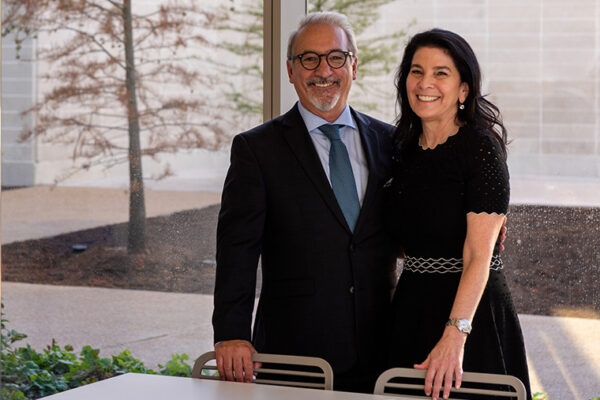
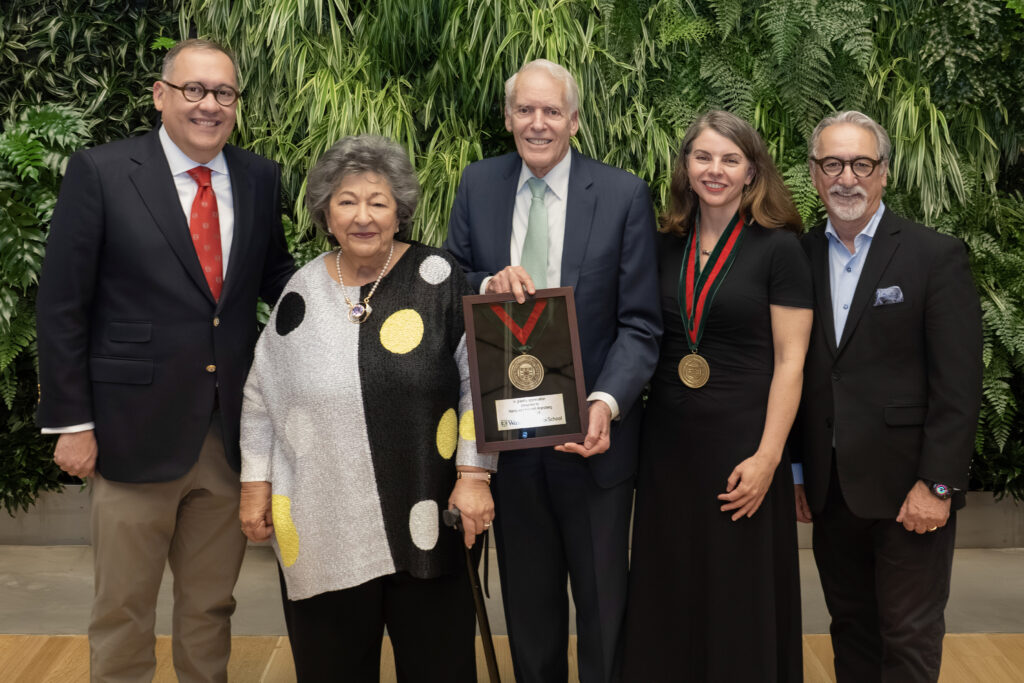
Born and raised in St. Louis, Kenneth Kranzberg and Nancy Kranzberg, AB ’66, are among the region’s most prominent and admired philanthropists.
As chairman of Grand Center Inc., Ken was instrumental in revitalizing the Grand Center Arts District. Nancy is a familiar voice on St. Louis airwaves, hosting the long-running “Arts Interview” program and serving as a regular commentator for St. Louis Public Radio. Since 2006, the couple’s Kranzberg Arts Foundation has supported visual and performing artists by providing studios, workspaces, venues and programming.
“Ken and Nancy are consummate believers in investing in the arts,” said Carmon Colangelo, the E. Desmond Lee Professor for Collaboration in the Arts and dean emeritus at the Sam Fox School. “They are dedicated and visionary leaders who have incubated the careers of countless artists in St. Louis and nurtured a sustainable, community-focused arts ecosystem.”
At WashU, Ken has served on the Sam Fox School National Council and the Kemper Art Museum’s Art Collection Committee. Nancy has served on WashU Libraries’ National Council and is the namesake of the Sam Fox School’s Nancy Spirtas Kranzberg Studio for the Illustrated Book. The Kenneth and Nancy Kranzberg Art & Architecture Library and the Kranzberg Garden in Weil Hall are named in their honor. They also provided a naming gift for the university’s Dowd Illustration Research Archive.
In their remarks, both Kranzbergs emphasized their long association with WashU, the Sam Fox School and the Kemper Art Museum. “We’ve enjoyed so many shows at the Kemper,” Ken said.
“I go way back with Meredith,” Nancy added. “We’re proud to have our names alongside hers.”
Watch the full ceremony here.
‘Critical reflections’
Malone, who earned her doctorate in art history from the University of Pennsylvania, joined the Kemper Art Museum in 2006 as a postdoctoral fellow. During her 20-year tenure, she has risen from assistant curator to associate curator, curator and senior curator.
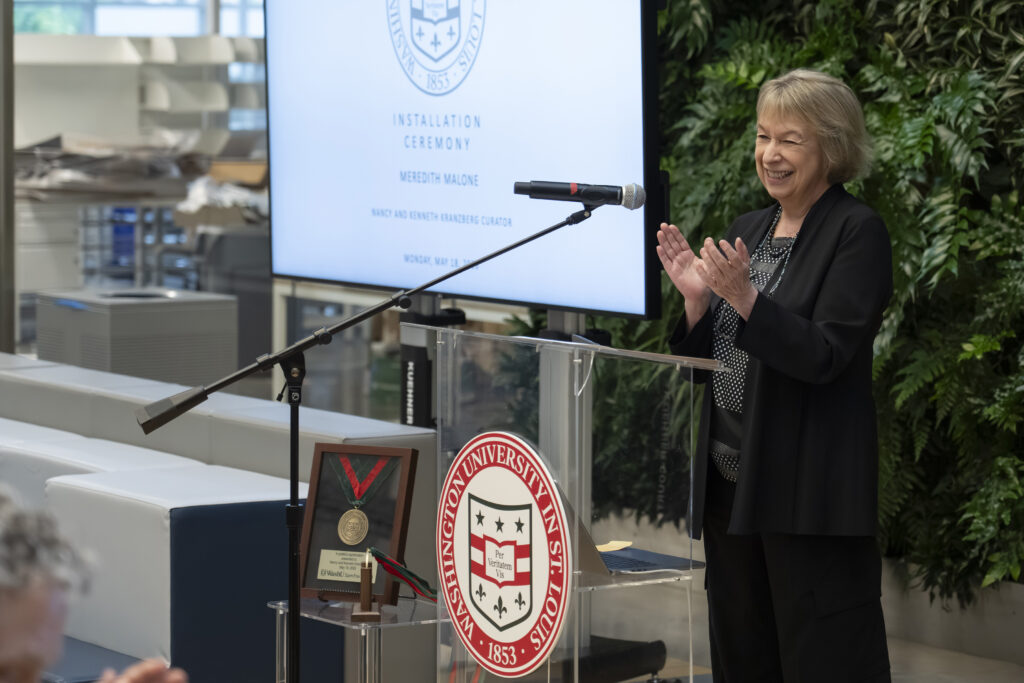
“Meredith is a curious scholar and an ambitious curator,” said Sabine Eckmann, the William T. Kemper Director and chief curator at the museum. “She has organized, curated and co-curated a myriad of exhibitions and is optimistic that the museum can expand its intellectual reach through carefully conceived programs which attract academic, local, national and global audiences alike.”
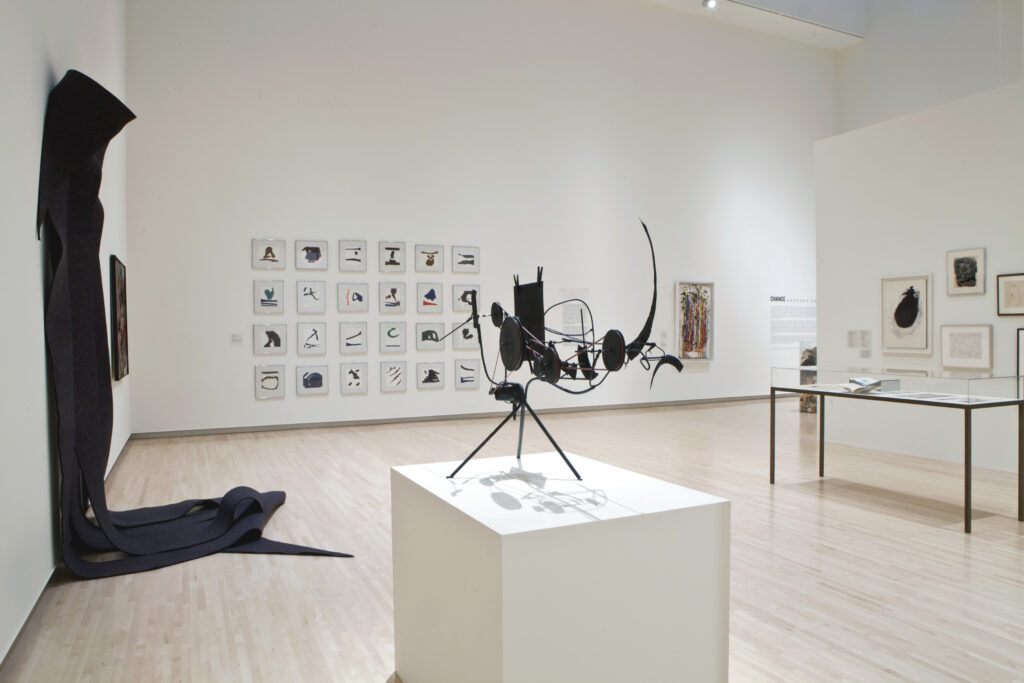
In her installation address, Malone related how New Realism — a Paris-based movement roughly contemporary with pop art in the United States — first captured her interest in graduate school.
“Members were loosely united by their rejection of late modernist painting,” Malone explained. Instead, they created “object-based assemblages and performative exhibitions that questioned traditional notions of artistic authorship, production and distribution, while offering critical reflections on postwar daily life.”
Malone was particularly intrigued by Daniel Spoerri, a Swiss Romanian artist whose work would inform two major thematic exhibitions at the Kemper. “Chance Aesthetics” (2009) highlighted the ways artists utilize randomness. “Multiplied: Edition MAT and the Transformable Work of Art” (2020) explored how Spoerri’s experimental publishing enterprise produced and distributed small, affordable kinetic objects and sculptures by dozens of prominent artists.
“Active audience participation was the point,” she said. “But the possibilities that such involvement afforded often remain double-edged. What kind of subjects did these transformable multiples envision? Did the idea of continuous transformation stem from a position of promise or one of anxiety?”
‘Unpredictable futures’
Malone’s interest in experimental practices extends to contemporary artists whose work also grapples with changing social, environmental and technological conditions.
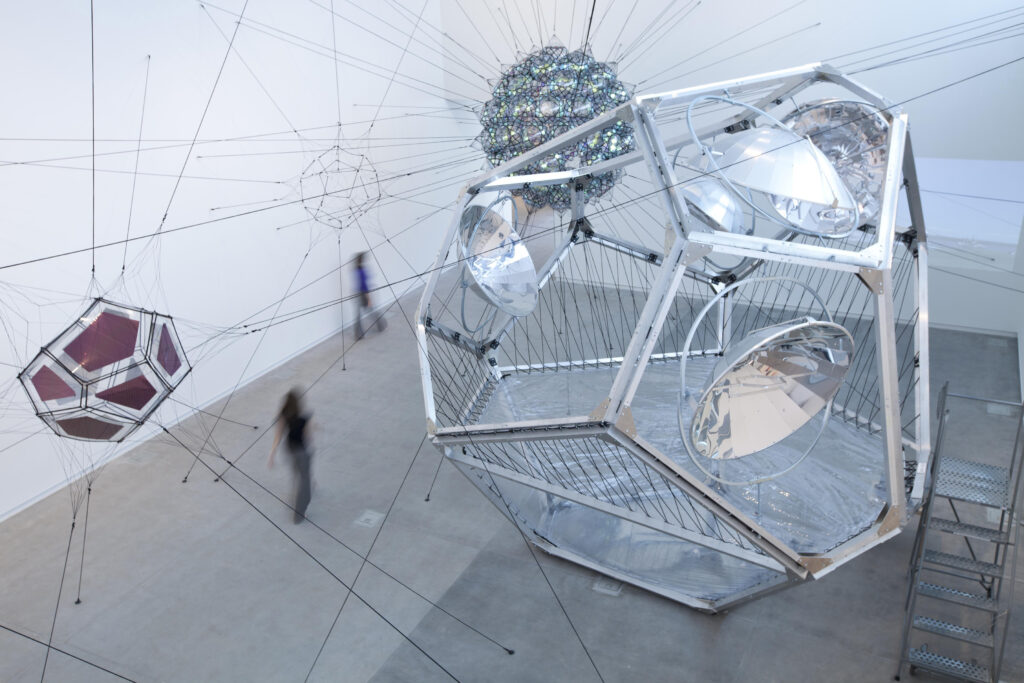
“Tomás Saraceno: Cloud-Specific,” which Malone organized in 2011, embodied the artist’s utopian vision for a floating city. “Nicole Miller: A Sound, A Signal, The Circus” (2022) combined moving image, laser animations and interviews with local teenagers of color, focusing on the brilliance and precariousness of life as it relates to Black experience in the United States. Both dynamic installations sparked active and imaginative dialogues around core ideas of being and inhabiting the world.
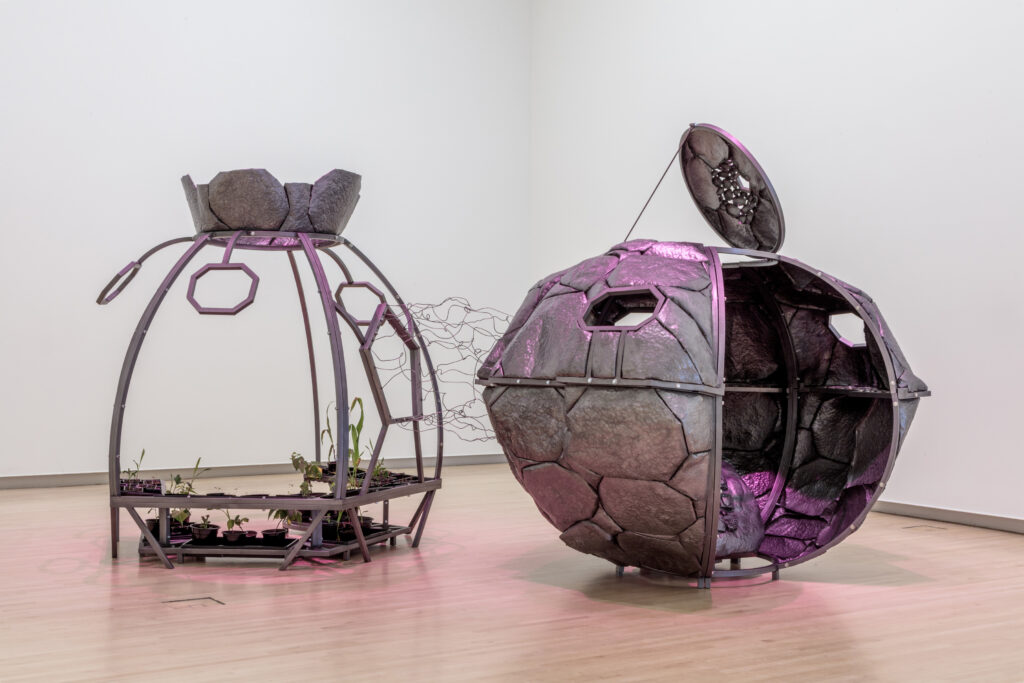
“Seeds: Containers of a World to Come” (2025) co-curated with Svea Bräunert, was anchored by Beatriz Cortez’s “Chultún El Semillero.” Consisting of two steel structures linked by a narrow tunnel, the sculpture refers to both space flight and Mayan storage chambers. Inside are a seed bank and a small living garden. This speculative work speaks directly to issues of fragility, preservation and possibility in the face of the global climate crisis.
“Cortez’s seeds offer a note of hope for the future, as well as a living connection to a world predating modern colonialism,” Malone explained. “Her time-bending space capsules act as symbols of gratitude and portals of multidimensional time travel that open onto unpredictable futures.
“As a curator and an art historian, I have relished my position at the Kemper,” Malone concluded. “This truly outstanding university art museum serves not only as a repository for incredible artistic achievement, but as a dynamic laboratory for cutting-edge creative experimentation and intellectual discourse.”