Fewer than half of Americans today, 49%, believe that all people in this country have the ability to achieve the American Dream, according to a recent survey from the Public Religion Research Institute. Among those under age 30, it falls to 36%.
This should serve as a wake-up call for all of us, says an expert on economic inequality at the WashU Brown School.
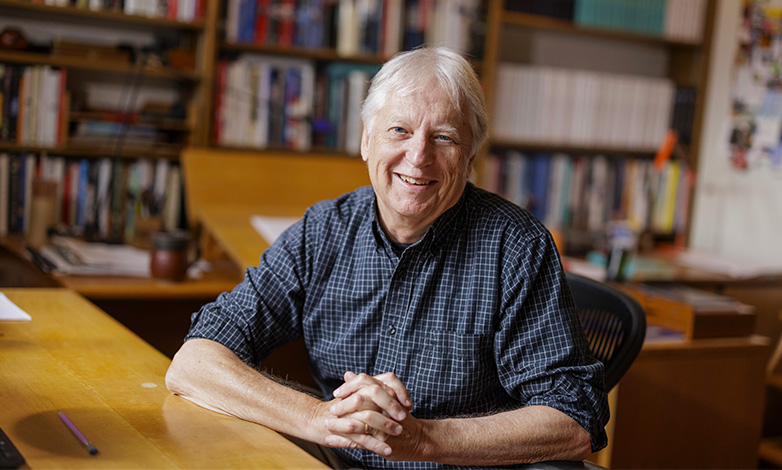
“The American Dream is really core to our identity and what America is about,” Mark Rank, the Herbert S. Hadley Professor of Social Welfare, told USA Today. “The fact that it is in trouble is something we need to pay close attention to.”
Rank is author of the groundbreaking 2014 book “Chasing the American Dream: Understanding What Shapes Our Fortunes” and is a prominent expert on lifetime poverty risk.
He also has noticed his students becoming increasingly more anxious about achieving economic prosperity. Rank has co-taught the course “Economic Realities of the American Dream,” with Steven Fazzari, the Bert A. and Jeanette L. Lynch Distinguished Professor in Arts & Sciences, for the past 15 years. The course is an interdisciplinary look at the issues raised in “Chasing the American Dream.”
“I would say that over this period of time our students have voiced greater concerns regarding their ability to be economically successful, which is one of the key elements of the American Dream,” he said.
On a national level, Americans have grown increasingly dour about the chances of achieving the American Dream, as it has become more difficult over the past 50 years.
The concept of the American Dream, he told USA Today, includes the idea that if you work hard and play by the rules, you should be able to provide for your children, as well as an optimism that each generation will do better than the last.
Instead, Rank said, wages for full-time male workers “have basically flatlined” since the early 1970s. “They’re not earning any more in real dollars today than back then,” he told the publication.
Meanwhile, the costs of housing, childcare, medical care and higher education are climbing.
“People are paying more for many things and not earning enough to keep up,” he told the outlet. “They’re playing by the rules, but they’re going backwards.”