The emails to WashU environmental archaeologist Ilaria Patania and her colleagues in the Department of Anthropology started immediately.
In August, global robotics competition First Lego League challenged children to design a robot to help archaeologists. The task would demand skills in engineering, design and technology. But, first and foremost, teams needed a fundamental understanding of the discipline itself — what archaeologists do, where they work, what tools they use.
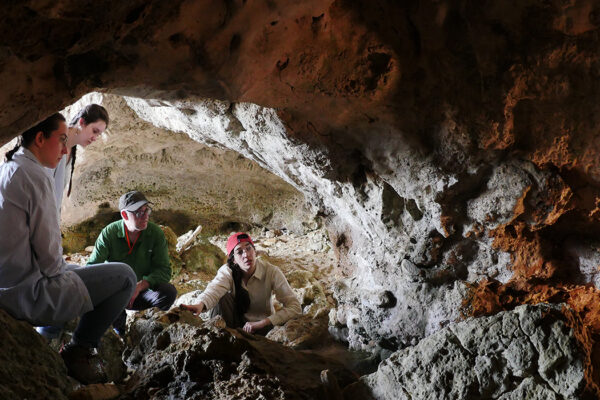
Enter Patania, an assistant professor of archaeology in Arts & Sciences and an expert in both land and underwater archaeology. She’s not sure how First Lego League teams found her (“We Googled ‘archaeology and caves’ and Dr. Patania’s name popped up,” explained one fourth grader), but she responded to every query.
“Archaeology isn’t a career a lot of parents are encouraging their sons and daughters to pursue, so when students come to me interested in learning more, I’m always going to say yes,” Patania said.
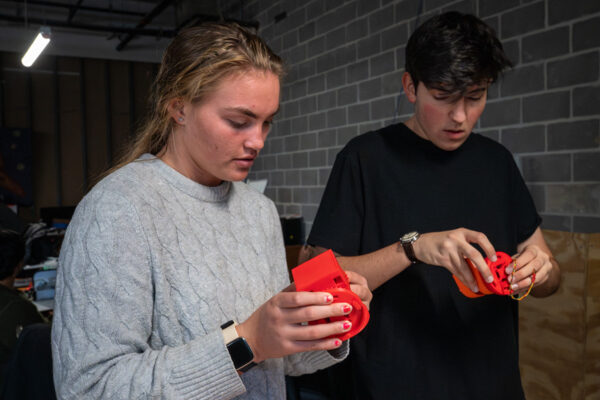
For teams based in the St. Louis region, Patania went one step further, inviting them to campus, leading them on a mock dig, providing feedback on their designs and connecting them to fellow faculty members and students. Last month, she invited the teams to present their designs and share their competition experiences at Friday Archaeology, a public showcase hosted by the department.
Among the teams: Bayless Junior High School’s Team Dig-Bee, which built a sentiment-sifting robot; a Girl Scout Troop that developed a robotic brush to clean artifacts; the Rockwood Eager Eagles, which prototyped an underwater robot; the KME Knights, which created a robotic dog to carry tools; and the Wild Robots, a group of preschool friends who reunited to construct a robotic spider that can crawl cave walls.
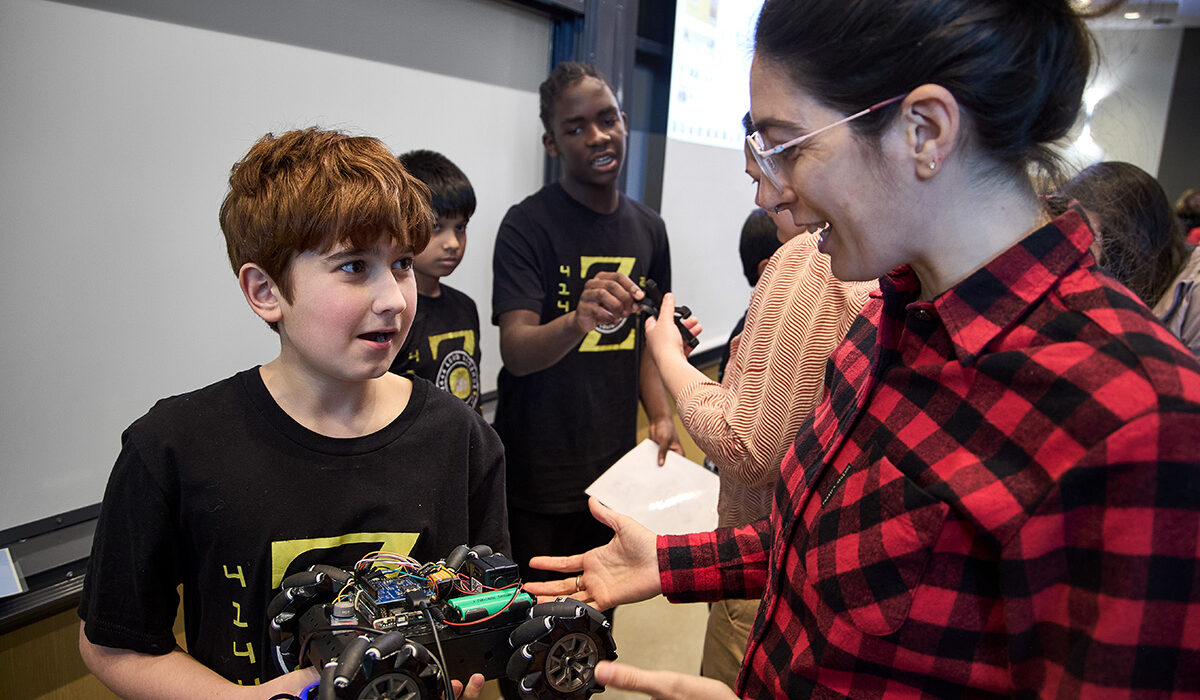
And, finally, the Lego Legendz of the Islamic Foundation of Greater St. Louis, which built a rover prototype that can navigate caves. The team took third place in a regional First Lego League competition and qualified for the Western Edge international invitational in Long Beach, Calif., where it will compete in May against teams from around the globe.
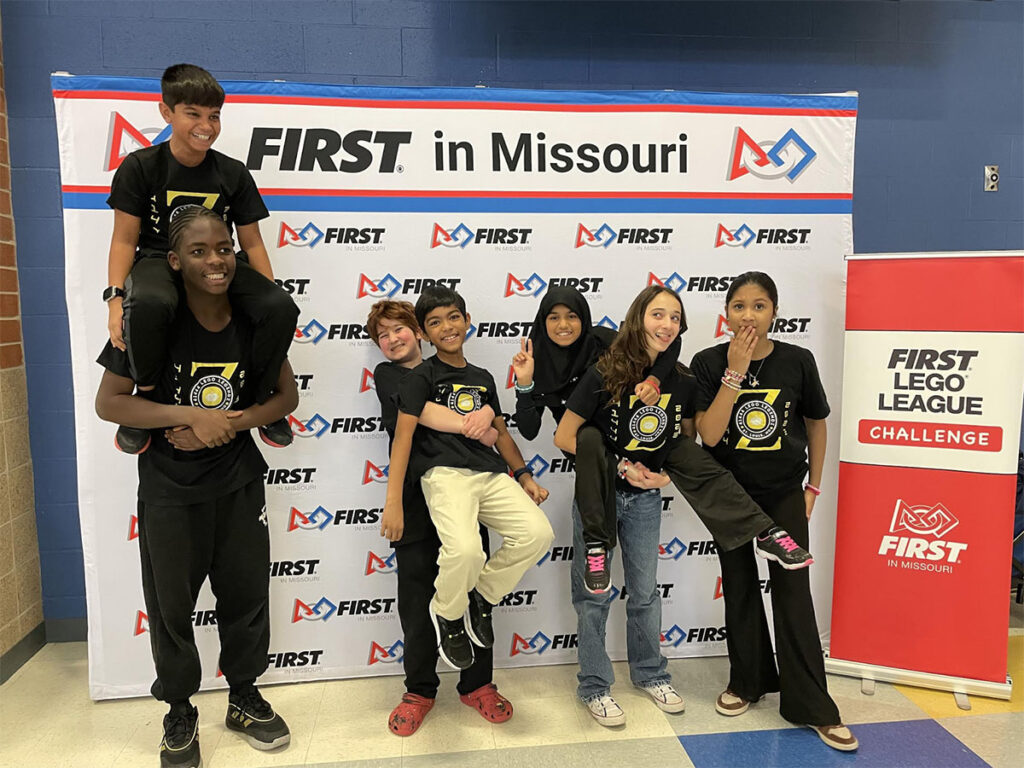
“Our robot is named Steve, like the Minecraft character,” eighth grader Taariq Lateef told the crowd.
Taariq originally wanted to name the robot Flipster because the robot could flip if it hit an obstacle in the cave. But when Patania explained that flipping would damage the robot’s sensitive equipment, the team changed its design. That was one of many pivotal pieces of feedback Patania provided, Taariq said.
“We first had tread wheels, but Dr. Patania said they would get stuck in a lot of caves,” Taariq explained. “So we totally changed the wheels so they could handle rocks and silt and other surfaces. For us, it was helpful to hear her talk about what it’s like for her in the field. We took all of that and put it into our design.”
T.R. Kidder, the Edward S. and Tedi Macias Professor of anthropology in Arts & Sciences, said he was impressed with the sophistication of the students’ designs and their awareness of the field’s literal and physical costs. One team even hosted a bake sale for the department. He hopes the experience will lead some of the students to a career in archaeology.
“Archaeology is engineering. Archaeology is anthropology and history. It brings the humanities and STEM together to solve problems and answer big questions,” said Kidder, who has engaged Louisiana residents in his research at the Poverty Point World Heritage site. “We are all part of a broader scholarly scientific community. As archaeologists, we have an obligation to support the community because if we don’t talk to them, they won’t talk to us.”
Patania also invites community members and children to her dig site in Sicily, where she leads the Early Occupation of Sicily Project.
“It’s important for us to have that community’s knowledge when we do our work; it’s part of our training as archaeologists,” Patania said. “And, for me, it’s also fun and impressive to see the creativity and curiosity of young people.”