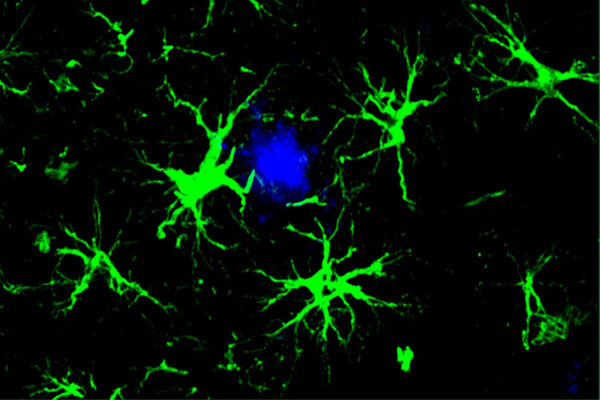
Keith Hengen, an associate professor of biology in WashU Arts & Sciences, and Luis de Lecea, of Stanford University, have won $2.7 million from the National Institutes of Health (NIH) for a five-year investigation into the power of sleep to prevent, delay and diminish Alzheimer’s and other neurodegenerative diseases.
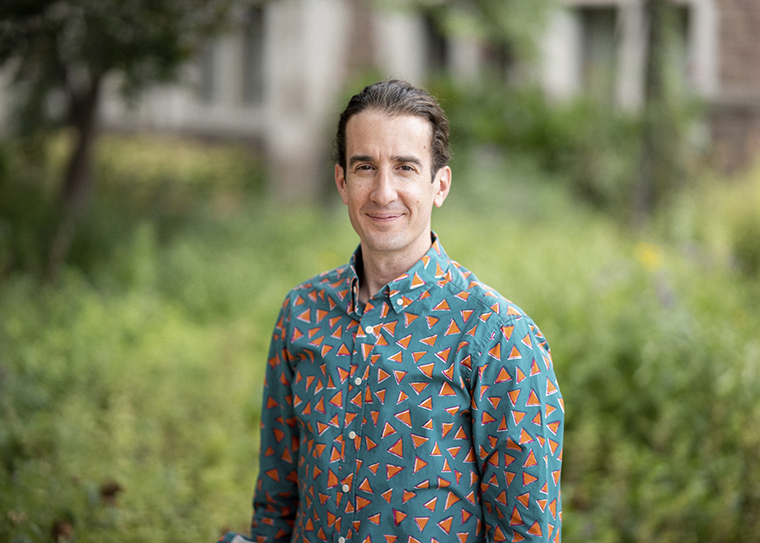
The project builds on previous work, including a 2024 paper by Hengen and Ralf Wessel, a professor of physics in Arts & Sciences, suggesting that sleep has a fundamental purpose: restoring criticality, a state of mind that promotes optimal thinking and learning.
Hengen and de Lecea will use the NIH grant to carefully examine the relationship between sleep patterns, criticality and brain function in mice that have been engineered to be at high risk for an Alzheimer’s-like neurodegenerative disease.
Hengen and de Lecea believe the project will clarify how sleep restores the brain at both the cellular and network level.
“It is imperative that we identify how sleep reinforces brain function,” Hengen said. “We hope to develop targeted sleep interventions that could slow or prevent cognitive decline in Alzheimer’s and other conditions. This research could lead to new therapeutic strategies for neurodegenerative diseases that affect millions.”
Read more on the Ampersand website.