In Brief
- A $3.67 million NIH grant renewal will support WashU’s efforts to expand the reach and impact of diabetes prevention research through 2031.
- A decadeslong effort with Parents as Teachers integrates diabetes prevention into families’ home visits.
- A University of Missouri collaboration connects researchers with rural communities to develop health interventions tailored to local needs.
The National Institutes of Health (NIH) has awarded the Washington University in St. Louis Center for Diabetes Translation Research (CDTR) $3.67 million to support its work through 2031. That milestone extends continuous federal funding since its launch in 2011.
Despite major advances in diabetes prevention and treatment — from lifestyle interventions to newer breakthroughs in GLP-1 medications and continuous glucose monitoring — the nation’s diabetes burden remains staggering. The U.S. Centers for Disease Control and Prevention estimates that approximately 40 million Americans have diabetes, and another 115 million adults have prediabetes.
“It’s been increasing over generations, and it’s getting worse,” said Debra Haire-Joshu, PhD, the center’s director. “It’s a tsunami. Instead of a tsunami headed our way, it’s already here.”
The limits of discovery
Early in her career as a nurse, Haire-Joshu, now the Joyce and Chauncy Buchheit Professor in Public Health at the WashU Bursky School of Public Health, was troubled by patients who returned repeatedly with preventable health problems. Later, while directing education programs at WashU Medicine’s Diabetes Research Center, she witnessed firsthand the toll diabetes was taking on underserved St. Louis communities.
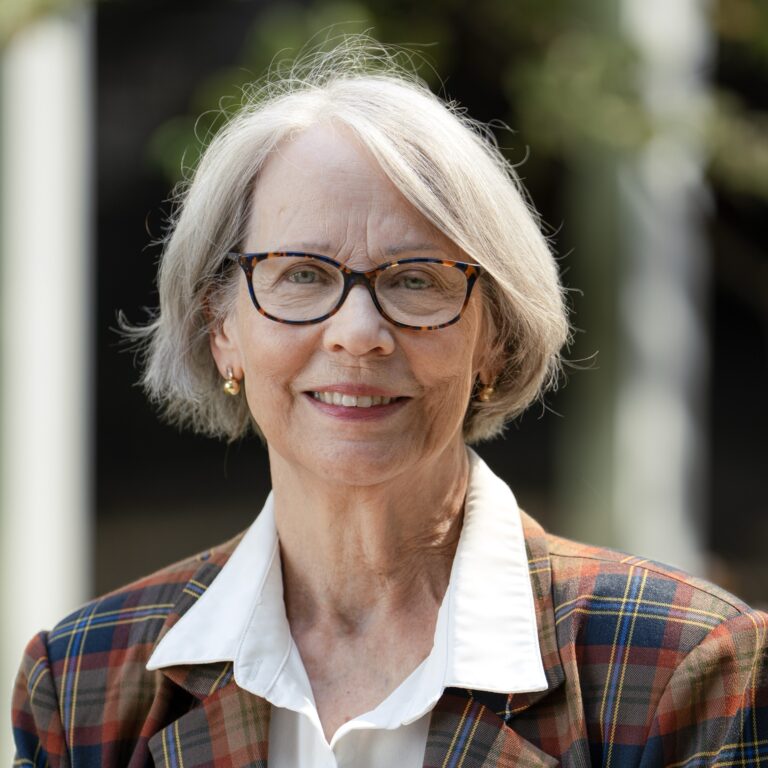
“I saw outstanding clinical science — and an opportunity to extend its impact beyond clinic walls into the community,” she said.
Those experiences drew Haire-Joshu toward population health and a question that would shape her career: Why weren’t effective interventions reaching more people? In 2011, Haire-Joshu led the effort to establish the Center for Diabetes Translation Research.
Now beginning its fourth five-year funding period, the center is one of eight diabetes translation research centers supported by the NIH’s National Institute of Diabetes and Digestive and Kidney Diseases. Its latest renewal application received an overall impact score of 10 — the best possible rating in NIH’s peer-review process. Haire-Joshu co-wrote the application with Ross Brownson, PhD, the Steven H. and Susan U. Lipstein Distinguished Professor at Bursky Public Health, and a team of investigators.
The CDTR provides the expertise, tools and connections researchers need to test interventions, compete for funding and bring successful approaches into communities.
Haire-Joshu describes the center as a “network of networks,” connecting about 100 investigators at WashU and other institutions with training and support that may not be available at their own universities. Many center resources are also available to nonmembers.
The center is a collaboration among WashU, the University of Missouri and the Parents as Teachers National Center. It operates four specialized research cores: implementation science, providing consultations, toolkits and skill-building; health informatics, applying artificial intelligence and data science; rural health, connecting investigators with established community and clinical networks; and home visiting, helping researchers reach families and address diabetes risk across generations.
Unlike conventional university-based research cores, the home-visiting core is housed within Parents as Teachers, giving the organization a direct role in scientific research. Haire-Joshu knows of no comparable arrangement among NIH-funded centers for diabetes translation research. Parents as Teachers’ national network, research infrastructure, longitudinal data and home-visiting expertise help investigators shape research questions, develop grant proposals, design and implement studies, understand what works in real-world settings, and translate findings into practice at scale.
Reaching families, transforming research
What began as a local collaboration between Haire-Joshu and Parents as Teachers has grown into an international research effort and become a cornerstone of the CDTR’s work. Along the way, the relationship has helped redefine how scientists and community organizations work together to improve health.
WashU was among the clinical sites in the landmark Diabetes Prevention Program, which demonstrated in 2002 that intensive lifestyle changes could reduce the risk of type 2 diabetes by 58% among adults at high risk. But the program required at least 16 individual counseling sessions over six months, followed by ongoing sessions — a difficult commitment for young parents juggling jobs, childcare and other demands.
Haire-Joshu saw an opportunity to bring diabetes prevention into Parents as Teachers’ established home-visiting program, which has served families for 43 years. The network offered something conventional health interventions often lacked: a way to reach parents in their homes, through people they already trusted.
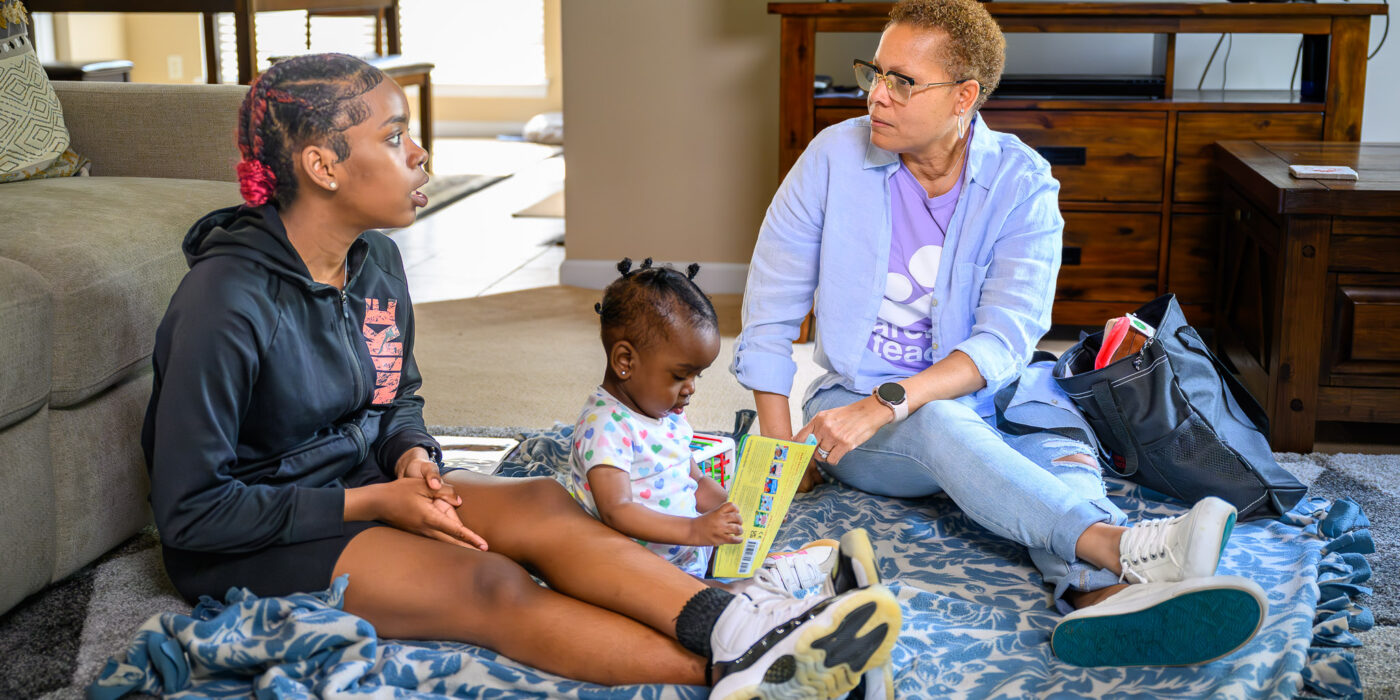
Parents as Teachers works with families from pregnancy through kindergarten entry, supporting parents as their children’s first and most influential teachers. Through regular home visits, trained parent educators build relationships with families and tailor services to their strengths, priorities and needs while supporting children’s development and family well-being. Group connections bring families together to learn, share experiences and build social support. Developmental and health screenings help identify potential concerns early, while referrals connect families with community resources.
Allison Kemner, senior vice president and chief research officer at Parents as Teachers National Center and associate director of the CDTR’s home-visiting research core, said the approach requires educators to be responsive to each family’s circumstances. According to Parents as Teachers data, 82% of families experience at least one identified stressor, which can include housing instability, financial hardship, language barriers, food insecurity or a child with special needs, among other circumstances.
“You can’t go into a home visit and push nutrition when a family is worried about having their electricity shut off,” Kemner said.
Instead, parent educators help families address immediate concerns and connect them with appropriate resources. They weave nutrition and physical activity into their regular home visits, finding workable ways to make healthier habits part of everyday life. In one activity, a parent educator might show a family how much sugar is in a soft drink, counting out the teaspoons with a young child. The child practices counting while the parent learns about nutrition.
The approach produced measurable health benefits. In one St. Louis study, mothers receiving the intervention experienced a 10- to 11-pound weight difference compared with those receiving usual care after two years. Intervention participants lost weight while the comparison group gained. Other studies found improvements in fruit and vegetable consumption, postpartum health behaviors and the home environment.
International expansion
From its beginnings in St. Louis, the collaboration has grown to encompass nine NIH-funded studies. Today, WashU is a clinical center for ENRICH (Early Intervention to Promote Cardiovascular Health of Mothers and Children), a major NIH-funded trial involving Parents as Teachers sites across 24 states. The WashU team is led by Haire-Joshu and Rachel Tabak, PhD, of Bursky Public Health and cardiologist Victor Dávila-Román, MD, of WashU Medicine. The study integrates evidence-based lifestyle interventions into home visits to improve cardiovascular health and reduce diabetes risk among low-income mothers and young children.
The research also extends to Nigeria, where obesity, diabetes and cardiovascular disease are growing public health concerns. Haire-Joshu, Tabak, Dávila-Román and cardiologist Mark Huffman, MD, of WashU Medicine are collaborating with Parents as Teachers and University of Abuja researchers Dike Ojji, MBBS, PhD, and Godwin Akaba, MBBS, on ENHANCE-CVH (Enhancing Intergenerational Health in Nigeria: Peripartum as a Critical Life Stage for Cardiovascular Health), a trial testing whether home-based nutrition and physical activity guidance can improve weight management and cardiovascular health among 1,000 pregnant women with obesity. Ojji, a cardiovascular researcher, and Akaba, an obstetrician-gynecologist, are co-principal investigators of the study. Community health workers deliver the guidance during home visits, adapting it to local foods, cultural practices and technology needs.
The collaboration has also helped strengthen Parents as Teachers’ research and learning infrastructure. Health and well-being became an explicit organizational goal, while Parents as Teachers’ role evolved from participating in individual studies to becoming a driving force in research and implementation. “We’re no longer simply participating in research,” Kemner said. “We’re helping shape the questions, build the partnerships and think from the beginning about what it will take for what we learn to actually make a difference for families.”
Parents as Teachers’ network serves about 200,000 families through over 2 million visits annually across all 50 states and six other countries, offering the potential to bring evidence-based health interventions to families on a much larger scale. Through the CDTR’s home-visiting core, Parents as Teachers also makes its research expertise and infrastructure available to investigators beyond its existing collaborations.
Understanding rural communities
That attention to context also drives the CDTR’s expanding work in rural Missouri. Based at the University of Missouri (MU), the Rural American Partnerships in Diabetes Discovery core is co-led by Richelle Koopman, MD, and Amy Braddock, MD. Through MU’s Department of Family and Community Medicine, the core draws on two established networks: the Missouri Practice-Based Innovations Network, which connects primary-care clinicians and researchers, and MU Extension, which brings university resources and expertise to communities across the state. Together, these networks help researchers adapt evidence-based diabetes interventions to the needs of rural populations with limited access to healthcare.
Of Missouri’s 115 counties, 99 (86%) of them are rural, with 34% of the population living in these counties. A total of 180,000 rural adults in Missouri have a diabetes diagnosis with another estimated 50,000 undiagnosed — a much higher rate than those living in suburban and urban areas. Those disparities underscore the importance of focusing on rural health research.
“The increased disease burden of diabetes and other chronic diseases experienced by rural community members currently emphasizes the importance of timely, effective and responsive rural health research,” Braddock said. “Our rural patients deserve better care.”
Delivering that care requires understanding the particular challenges rural communities face. A digital diabetes prevention program, for example, may offer little benefit where broadband service is unreliable.
“You need to understand the community you’re working with and come in with some humility, as well as really a focus on partnership and collaboration,” Haire-Joshu said.
Investing in the next generation
The CDTR also invests in the scientists who will carry that work forward. Since 2011, its pilot and feasibility program has supported 54 completed projects that generated $40.7 million in subsequent research funding and more than 140 publications, according to the center.
One of those investigators was Ebony Carter, MD, whose 2015 pilot examined group prenatal care for women with diabetes. The work led to a $1.625 million Pathway Accelerator Award from the American Diabetes Association and additional NIH funding.
Recently, Carter, now the division director of maternal-fetal medicine and the Upjohn Distinguished Professor of Obstetrics and Gynecology at the University of North Carolina at Chapel Hill, contacted Haire-Joshu with another milestone: She had become a tenured full professor.
“Debra gave me my first research grant, and with it, a mentor for life,” Carter said. “That $20,000 seed grew into a multimillion-dollar research program and a career I once only hoped for. She believed in me before I believed in myself, and she opened doors at WashU that shaped everything that followed.”
The gesture carried personal significance for Haire-Joshu. Early in her career, as she pursued her PhD in the 1980s, Haire-Joshu benefited from the guidance of experienced scientists who taught her to develop research questions, write grants and evaluate evidence.
“They just took mercy on me and taught me what good science was,” she recalled.
Today, she hopes the center can do the same for a new generation of investigators — while helping their discoveries reach people faster.
“We don’t want to wait 20 years,” Haire-Joshu said of the time to move research findings into regular use.
The urgency she felt early in her career remains. But the center she built gives researchers something she struggled to find: a way to bring scientific advances into the communities where they are desperately needed.