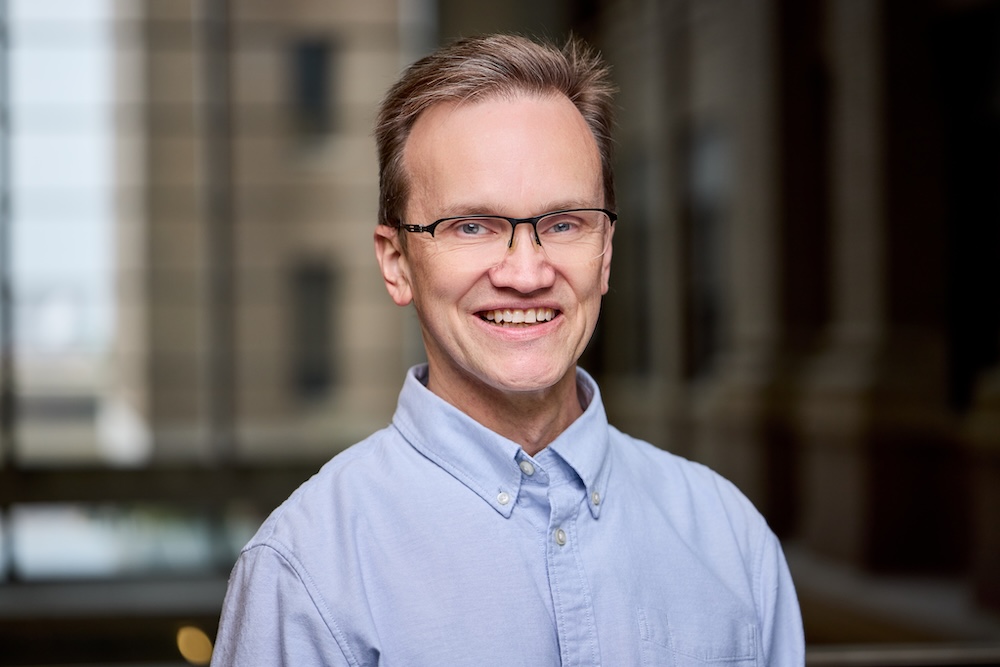
Andrew K. Groves, PhD, a renowned developmental biologist known for his research into inner ear development and hearing loss with a focus on the potential for hearing restoration, has been named the inaugural Stuart A. Kornfeld Distinguished Professor of Medical Sciences at WashU Medicine.
Groves was installed by Chancellor Andrew D. Martin and David H. Perlmutter, MD, executive vice chancellor for medical affairs, the Spencer T. and Ann W. Olin Distinguished Professor and the George and Carol Bauer Dean of WashU Medicine.
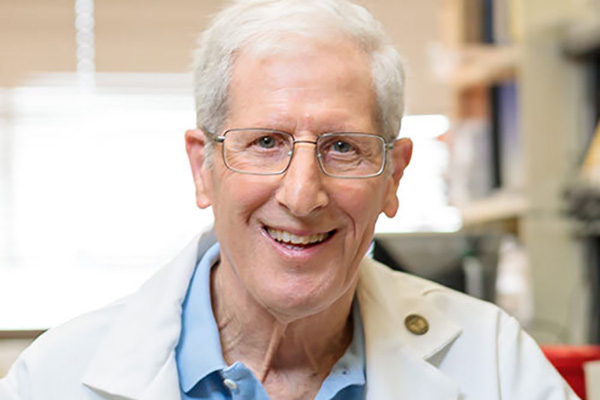
The distinguished professorship is named in honor of the late Stuart A. Kornfeld, MD, a highly regarded physician-scientist at WashU Medicine who pioneered the study of glycoproteins — molecules present in living organisms and consisting of sugars attached to proteins — which play fundamental roles in the functions of cells, whether those cells are healthy or diseased. His foundational work led to a better understanding of a group of rare, inherited conditions called lysosomal storage diseases and helped pave the way for new therapies.
“Stuart Kornfeld was an extraordinary scientist whose discoveries continue to shape the way we think about human biology and disease,” said Chancellor Andrew D. Martin. “This professorship recognizes not only his extraordinary legacy but also the next generation of scientists like Dr. Groves, whose work in developmental biology continues the tradition of discovery-driven research that lays the groundwork for future therapies.”
Groves joined WashU Medicine in May 2025 as head of the Edward Mallinckrodt Department of Developmental Biology. He is an international leader in the study of how the inner ear develops and why, unlike other vertebrates, mammals are unable to naturally regenerate the delicate sensory hair cells of the inner ear that govern hearing and balance. The goal of his work is to guide the development of new therapies that could one day restore lost hearing and balance.
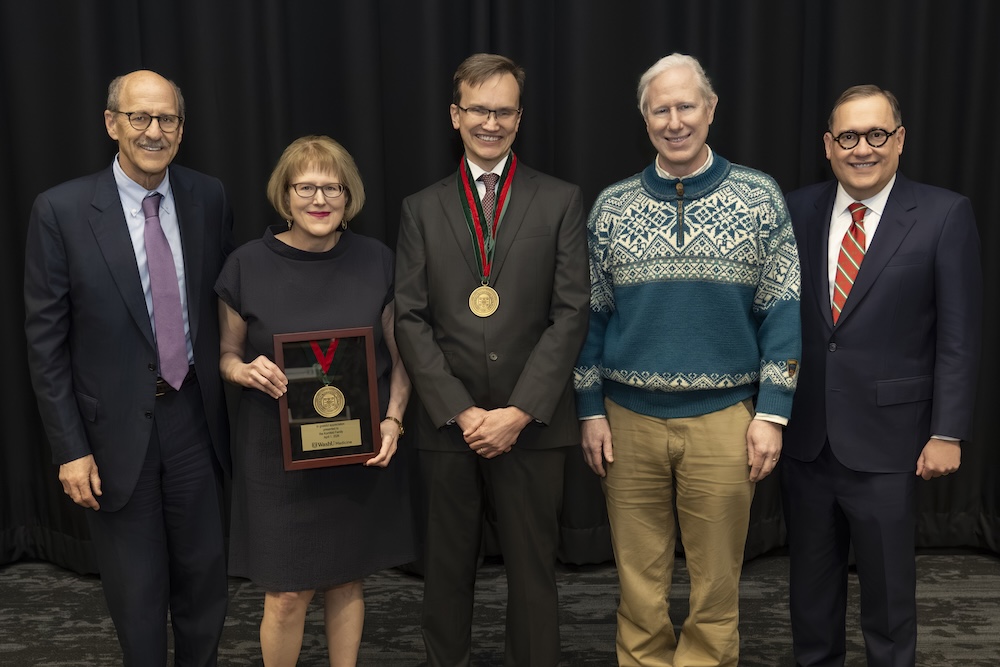
“Stuart Kornfeld was one of the giants in the history of the cell biology field,” Perlmutter said. “His work laid the foundation for the molecular basis of protein trafficking to the lysosome. He was also a role model for physician-scientists at WashU Medicine and for many others nationally and globally. I am so glad this professorship could provide recognition for Dr. Groves, whose work has transformed the understanding of inner-ear development and the mechanisms of hearing loss and its potential restoration. We are looking to Dr. Groves to lead our Department of Developmental Biology in this next era with the rare blend of innovation and humility that characterized the career of Stuart Kornfeld.”
Building on that legacy, Groves’ laboratory has focused on how the inner ear forms during early embryonic development. His team studies the signals and genetic programs that shape the ear’s complex three-dimensional structure and give rise to the inner ear’s sensory “hair cells.” These specialized cells convert sound waves and head movements into electrical signals that the brain can interpret as hearing and balance. Groves also investigates why hair cells can regenerate in birds, fish, amphibians and other vertebrates, but not in mammals. Understanding this difference is critical for developing strategies to repair damage to hair cells caused by loud noise, aging, infections and certain medications.
Groves earned his undergraduate degree at the University of Cambridge in the U.K. and his doctoral degree at the Ludwig Institute for Cancer Research at University College London, where he studied the early development of cells in the brain and spinal cord. He later pursued postdoctoral training at the California Institute of Technology, where he researched the development of the neural crest, an important population of cells in vertebrate embryos that give rise to a variety of cell types, including bone cells, pigment cells and neurons. He then shifted his research focus to the inner ear, beginning what would become a decades-long investigation into its form and function.
In 1999, Groves became section chief at the House Ear Institute in Los Angeles, a leading center for hearing research, with an academic appointment in the Department of Otolaryngology at the University of Southern California. In 2008, he was recruited to the Baylor College of Medicine in Houston. During his time there, Groves became the Vivian L. Smith Endowed Professor and director of the Graduate Program in Development, Disease Models & Therapeutics.
Groves is a founding member of the Hearing Restoration Project consortium established by the Hearing Health Foundation, a collaborative effort to develop treatments to restore lost hearing. He joined the Board of Scientific Counselors for the National Institutes of Health’s (NIH) National Institute on Deafness and Other Communication Disorders (NIDCD) in 2013 and chaired the board from 2015–2018. Since 2020, he has served on the NIH’s NIDCD Advisory Council.
About Stuart A. Kornfeld
Kornfeld’s body of work is a testament to the importance of basic biomedical research — many of his key discoveries have become central to translational medicine and drug discovery.
A St. Louis native, Kornfeld earned his bachelor’s degree from Dartmouth College in 1958 and his medical degree from Washington University School of Medicine in 1962. He completed his residency training in internal medicine at what was then Barnes Hospital and pursued more research training at the National Institutes of Health. He returned to St. Louis in 1966 to join the School of Medicine faculty.
Over his long career, Kornfeld held key leadership roles, including co-director of the Division of Hematology-Oncology from 1976–1992 and co-director of the Division of Hematology from 1993–2009.
He directed Washington University’s Medical Scientist Training Program, which grants combined MD-PhD degrees, from 1991–1997. He also founded the Physician-Scientist Training Program in the Department of Medicine in 2000 and co-directed this innovative program until 2019. Kornfeld died in August 2025 at age 88.