In Brief
- WashU’s Rural Students Collective offers students from small towns and rural communities a sense of community.
- The Rural Students Collective provides academic, social and professional programming.
- The Rural Scholars Academy introduces talented high school students to WashU.
WashU senior Iris Mishra admits she was a little nervous to move to St. Louis for college. The population of her hometown of Memphis, Mo., is about 1,700 – less than the size of her class at WashU.
“Initially, I was so worried about even leaving campus, on top of already being nervous about how rigorous my classes might be,” she said.
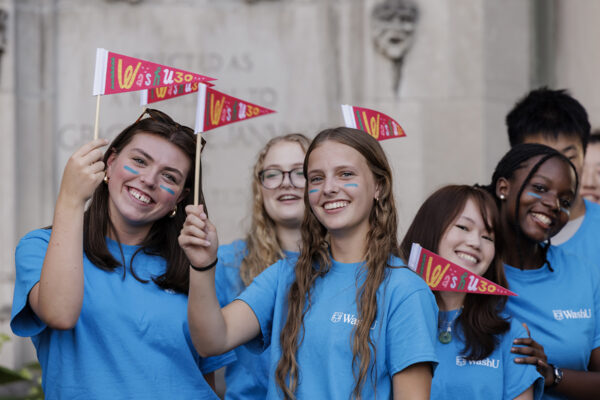
That changed when Mishra joined the Rural Students Collective, which formed her sophomore year. The group serves WashU’s growing population of students from rural communities and small towns. Rural students now make up about 8% of the Class of 2030.
“The main mission of the Rural Students Collective is to cultivate a space where rural students can feel comfortable to be themselves as well as find peers that can help them, mentor them and become friends,” said Mishra, who is studying art history and archaeology in Arts & Sciences.
Sophomore Kayla Dunbar, of Brookport, Ill., said she also has found a home at WashU. The first time Dunbar had heard of WashU was when her school counselor encouraged her to apply to the Rural Scholars Academy, a no-cost program that prepares rising high school juniors for life on a college campus. As a scholar, Dunbar lived in a WashU residence hall, studied with WashU professors, learned about the college application process and explored St. Louis attractions.
“When I was in high school, I really didn’t know what WashU was because I feel like rural communities are isolated, so colleges don’t always visit us,” said Dunbar, who is majoring in biochemistry in Arts & Sciences and now serves as RSC vice president. “But once freshman year started and I joined the RSC, I immediately found belonging at WashU.”
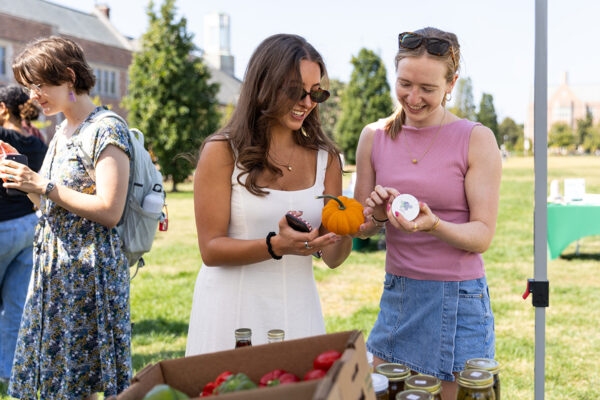
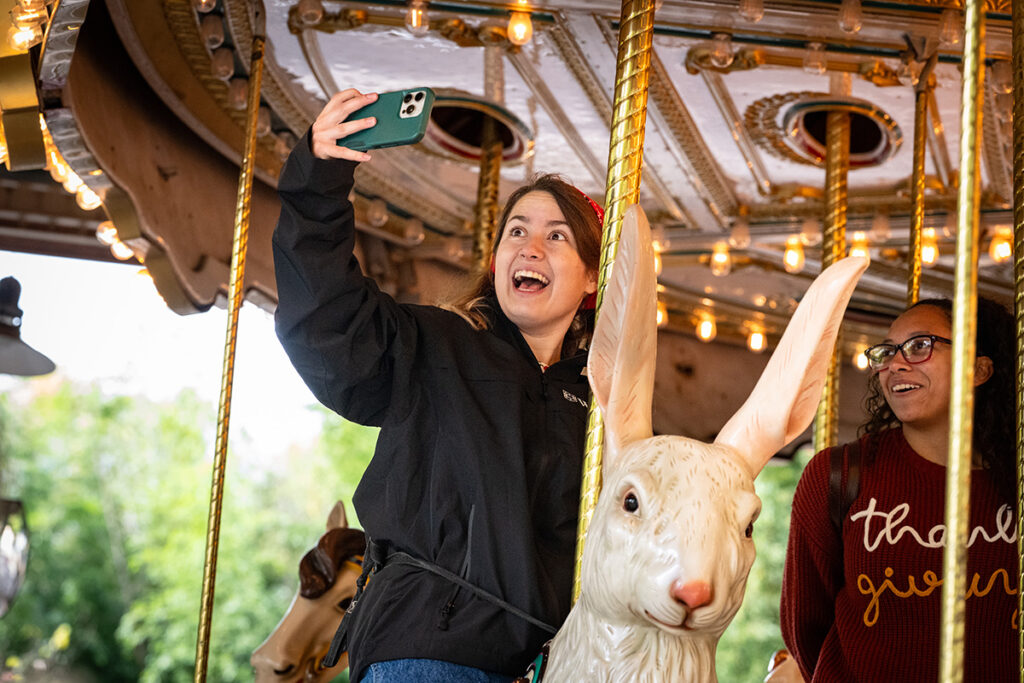
RSC members regularly gather for social activities in their new hometown. At the start of the year, RSC officers show new members how to take advantage of their U-Pass, and this month RSC members took a trip to Grant’s Farm, where they saw a variety of animals, including the Budweiser Clydesdales, and bottle-fed baby goats.
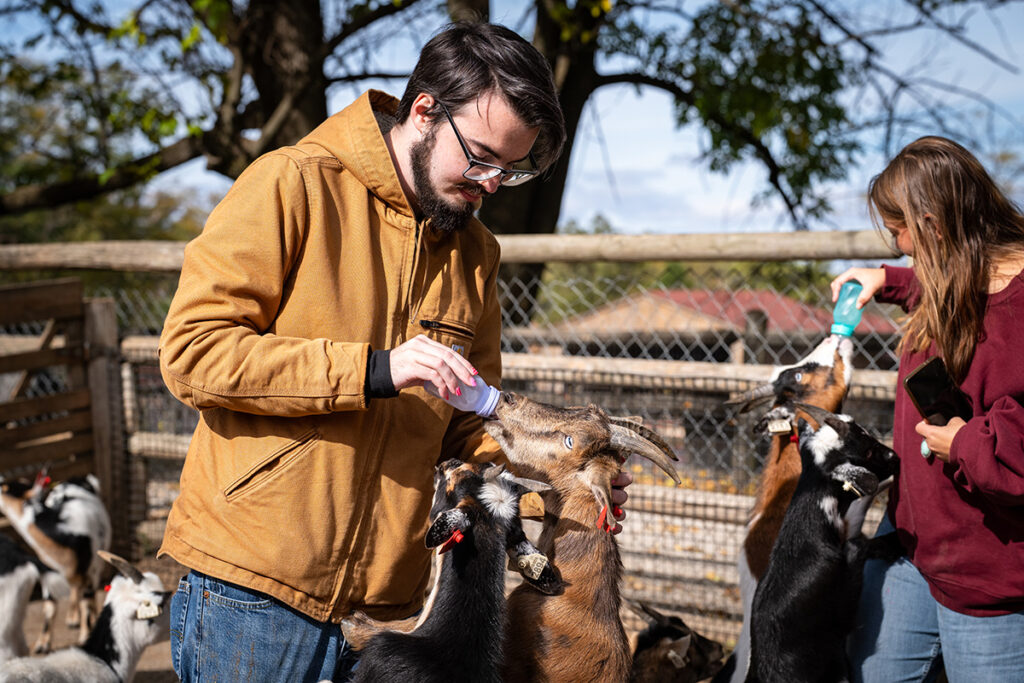
“We’re really just a large group of friends who get together, do fun things together, help each other out, and really create that small-town community while at WashU, so people have a place where they can feel at home, and they have a family they can come to when they need help,” said Alex Dering, another rural student and the collective’s treasurer. He is majoring in history and secondary education in Arts & Sciences.
Another favorite outing is their annual stargazing trip. With car trunks full of snacks, blankets and an acoustic guitar, the group drives to a nearby astronomy park together to look up at a bright-lit sky free of the city’s light pollution.
“I always miss looking up at the night sky and seeing all the stars. So coming to the RSC and getting to do stargazing kind of helped me come back to home in a way,” said Dering, who is from Morgantown, W. Va.
The collective also hosts a variety of pre-professional workshops. In the past, Mishra has led students in a resume writing session, while other members have led LinkedIn and job application workshops as well. Frequently, the RSC organizes study groups for members to join and learn from one another. Having gone to schools where high-level classes may be few and far between, and classes are catered toward the middle denominator across the board, students in the RSC form weekly study groups to help each other through difficult classes.
Students in the RSC also are involved with several other groups on campus. Dering, for example, is a photo editor for Student Life newspaper and a canvasser with WashU Votes, while Mishra is the vice president of her sorority and works as a student assistant in the history department.
“Even as you get to campus, your rural identity remains a part of who you are, but you’re also allowed to branch out and to find community in other places that aren’t just so tied to being from a rural community,” said Dunbar, who is a member of the Chi Omega sorority, the Chemical Society, oSTEM and the Pride Alliance. “I’ve been able to learn so much about myself at WashU and explore my interests, and I’m excited to grow this community on campus.”