
In Brief
- The Implementation Research Institute has trained more than 150 investigators to translate scientific discoveries into real-world practice.
- The IRI received a five-year nearly $1 million federal grant to train approximately 30 more early-career researchers.
- Former fellows, including Byron Powell, now lead the nationally recognized training program.
A WashU Brown School training program has received a five-year federal grant renewal, supporting its ongoing work to prepare researchers to bring scientific discoveries into everyday practice.
The Implementation Research Institute (IRI) received a $967,427 award from the National Institute of Mental Health (NIMH), part of the National Institutes of Health (NIH). The award, which began Sept. 2, will support four additional cohorts of early-career faculty pursuing leadership roles in implementation science. The institute’s work stretches back nearly two decades.
Implementation science focuses on identifying effective strategies for putting evidence-based treatments, interventions and other scientific advances into practice.

“While researchers make remarkable breakthroughs in health, behavioral and social welfare sciences, the availability of cutting-edge care in the real world takes too long — nearly two decades,” said Enola Proctor, a research professor at the Brown School who founded IRI in 2009. “As a result, the return on research investments lags and the quality of care for all of us remains highly varied. Implementation science discovers strategies to improve efficient and effective delivery of science-based care.”
Training next generation of implementation science leaders
Since its founding, IRI has trained more than 150 investigators and expects to train approximately 60 more through the latest five-year grant for leadership roles in implementation science, Proctor said.
“While our trainees come from research-intensive universities, they have not yet cracked the bar for R01 research grants,” she said. “Our training content remains at the cutting edge of implementation science, equipping our trainees to pursue high-impact research and provide leadership to this important field at their home institutions.”
The Research Project (R01) is NIH’s most commonly used grant program for independent research projects.
The institute offers a training institute along with monthly individual mentoring for two years, Proctor explained, along with networking, peer mentoring and a site visit to see a high-impact research project in action.
A new generation of leaders carries work forward
During the most recent funding cycle, the institute transitioned to a new generation of leaders, including former IRI fellows Byron Powell and Leopoldo Cabassa, both professors at the Brown School, along with colleagues from universities and research organizations across the country.
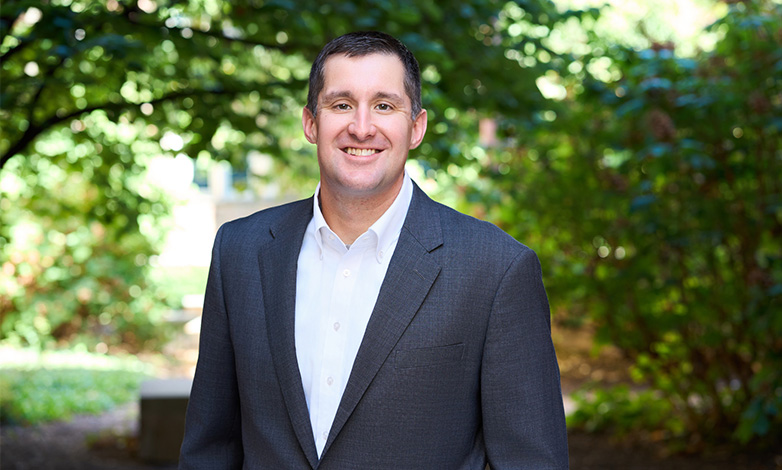
“I’m forever thankful to Enola and the original IRI faculty for developing this training program,” Powell said. “I was a graduate student when the IRI was established, and I was always quick to volunteer for anything related to the fellowship, just to be in the room and learn from this brilliant group of scholars and practitioners. It’s an honor to now lead the program that has meant so much to my own professional development.”
The transition reflects the institute’s commitment to developing leaders who will sustain and advance the field, Proctor said. The grant renewal also expanded its faculty, including the addition of associate director Andrea Graham of Northwestern University, a WashU alumna who earned her bachelor’s, master’s and doctoral degrees at the university.
“This renewal gives us an exciting opportunity to build on IRI’s success while adapting our training to meet the evolving needs of the field,” Powell said. “We plan to strengthen connections between intervention and implementation science, expand training in scientific communication, formalize opportunities for peer mentorship and make more of our programming available to the broader research community.”