In Brief
- Counterpublic is among the largest public art exhibitions in the United States.
- “Coyote Time,” its 2026 iteration, features more than 50 artists at locations throughout the St. Louis region.
- Sam Fox School faculty, alumni and visiting artists are among the participants.
There’s a garden growing in Sauget, Ill.
Located just outside St. Louis, this century-old village is dominated by heavy industry. Since the mid-1980s, millions have been spent cleaning toxic sites, including two EPA Superfund areas. Even today, an estimated 210 million gallons of contaminated groundwater are intercepted and treated each year before discharging into the Mississippi River.
But life, too, can be stubborn.
“Listen,” said Lynne Smith. “There are birds. There are frogs. Ducks swoop down. There’s a turtle!” And so there was, moving faster than this writer expected to see a turtle move.
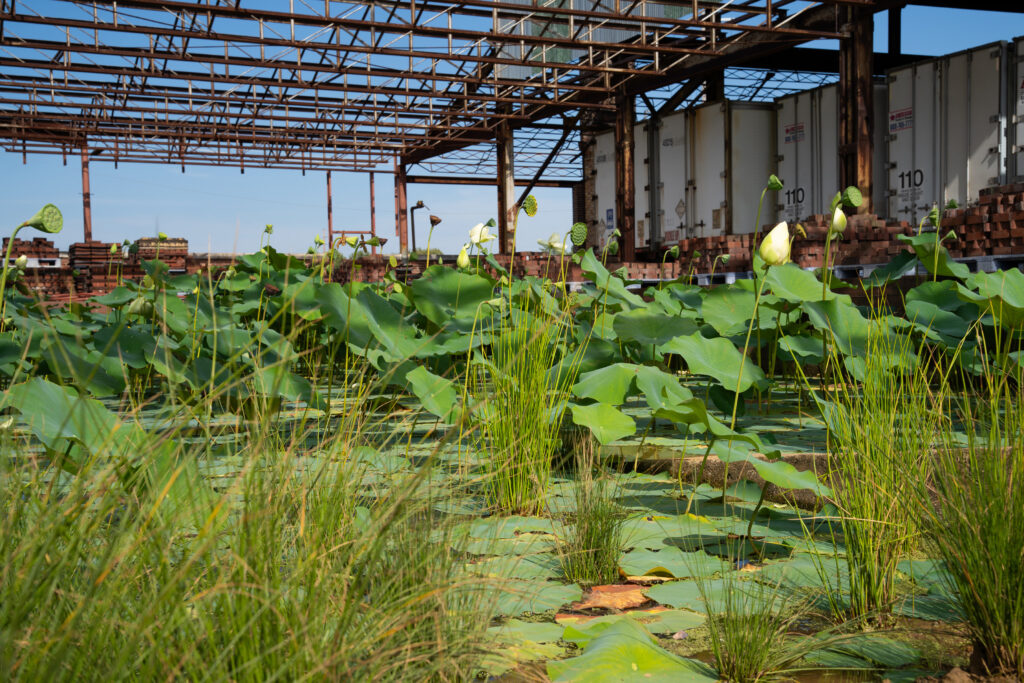
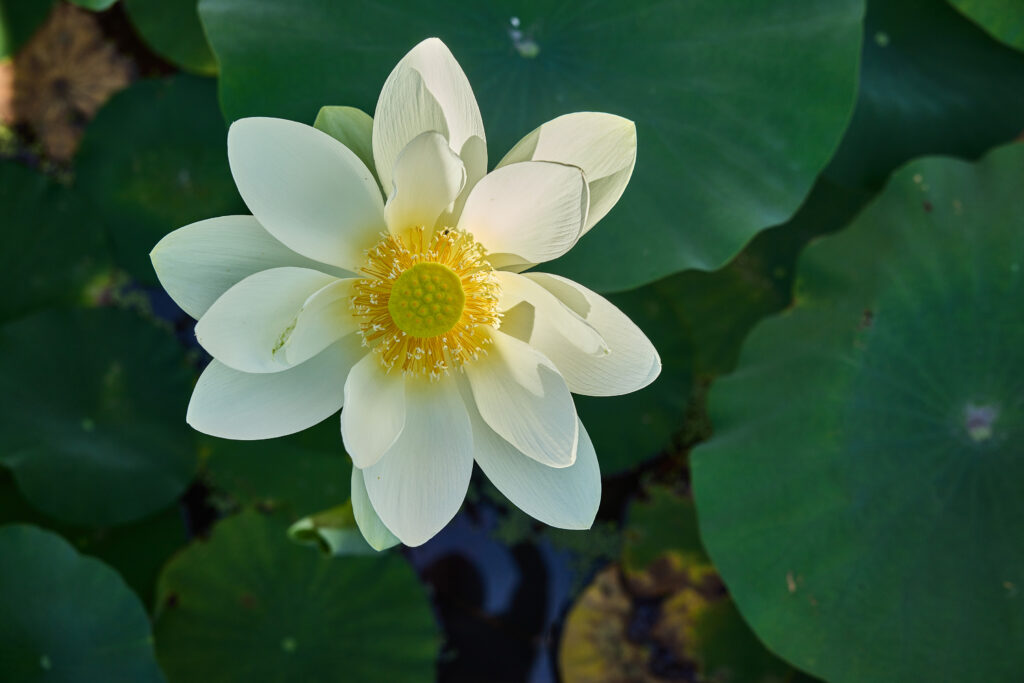
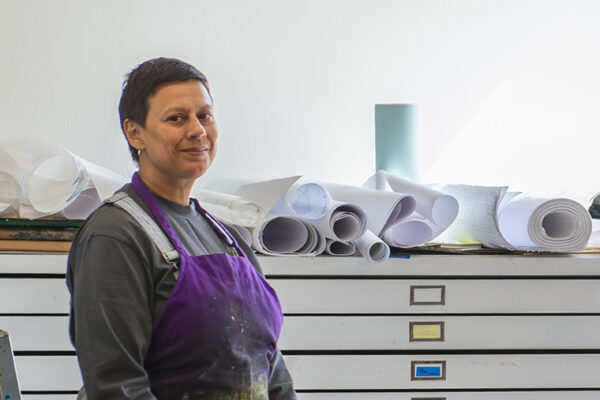
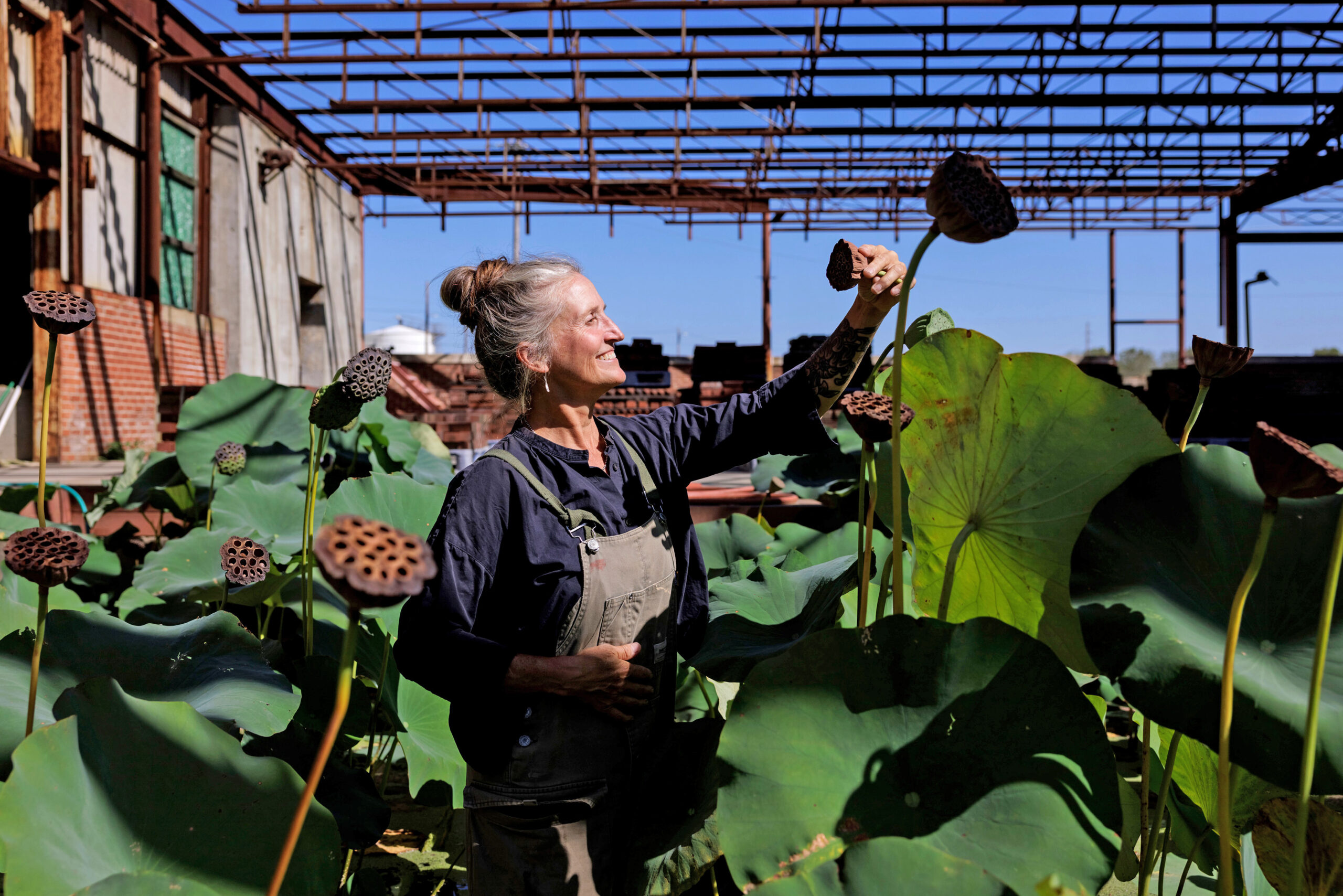
Smith is an alumna (MFA ’24) and lecturer in the WashU Sam Fox School of Design & Visual Arts. Last spring and summer she installed, by hand, a large rainwater garden in an old loading dock originally built by the Sterling Steel Casting Company. Now, on a sunny fall afternoon, the basin overflows with American lotus and its only known natural variant, “yellow bird.” A simple fountain, improvised from hose, bucket, shovel and brick, stirs a gentle current.
“The American lotus has been around for 100 million years,” Smith said. “It’s one of just two surviving prehistoric lotuses, and it’s native to this region. That’s really compelling.
“This project is a response to the site and to the resilience of all these non-human inhabitants,” Smith added. “I wanted to do something for them. How can we give them a better, healthier pond to swim in?”
‘Coyote Time’
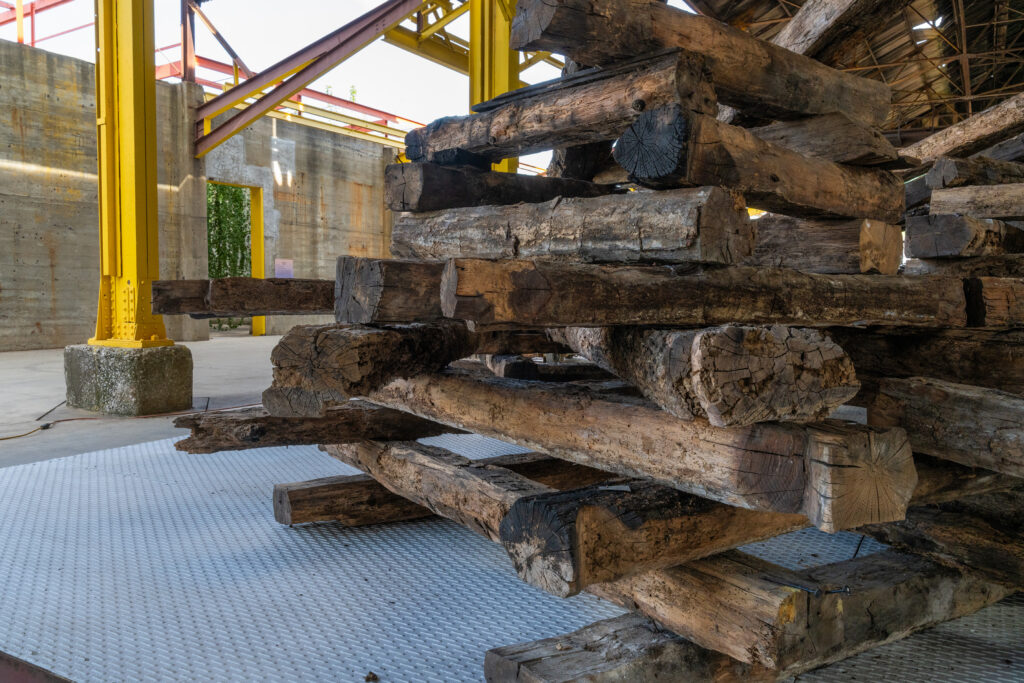
Sterling Steel closed in 2001. Four years later, the property was acquired by the nonprofit National Building Arts Center (NBAC). Today it houses the largest collection of architectural and building arts artifacts in the United States.
Smith’s rain garden, titled “The Unloading Dock (receiving, holding),” is one of a half-dozen artworks currently on view at the NBAC as part of “Counterpublic 2026: Coyote Time.” In all, this latest iteration of the region-wide public art triennial, among the nation’s largest, features more than 50 artists, including many associated with the Sam Fox School.
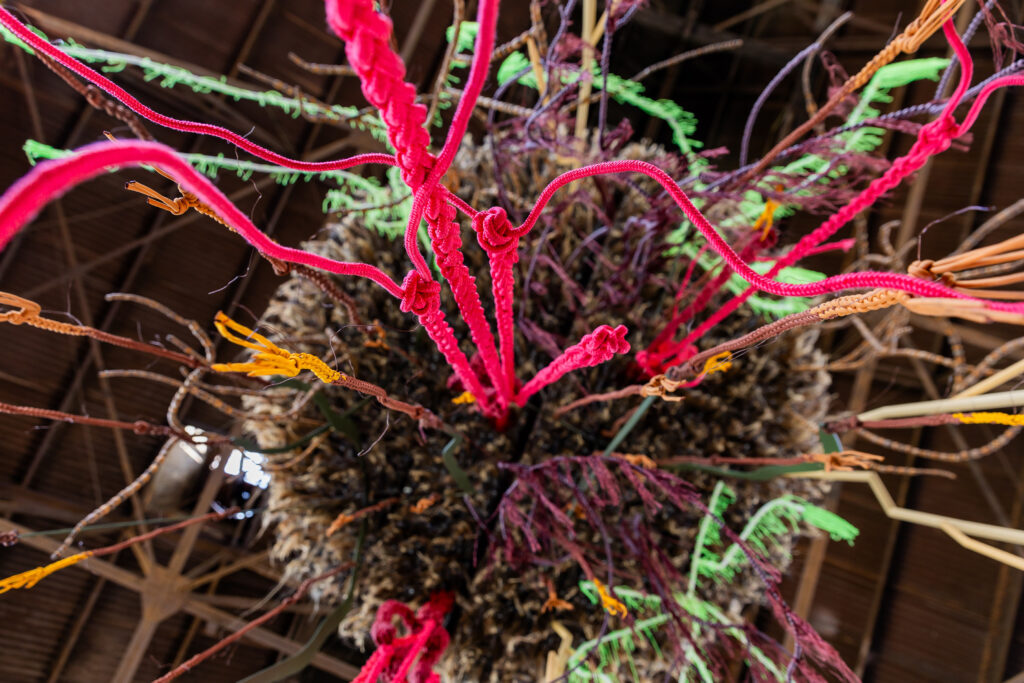
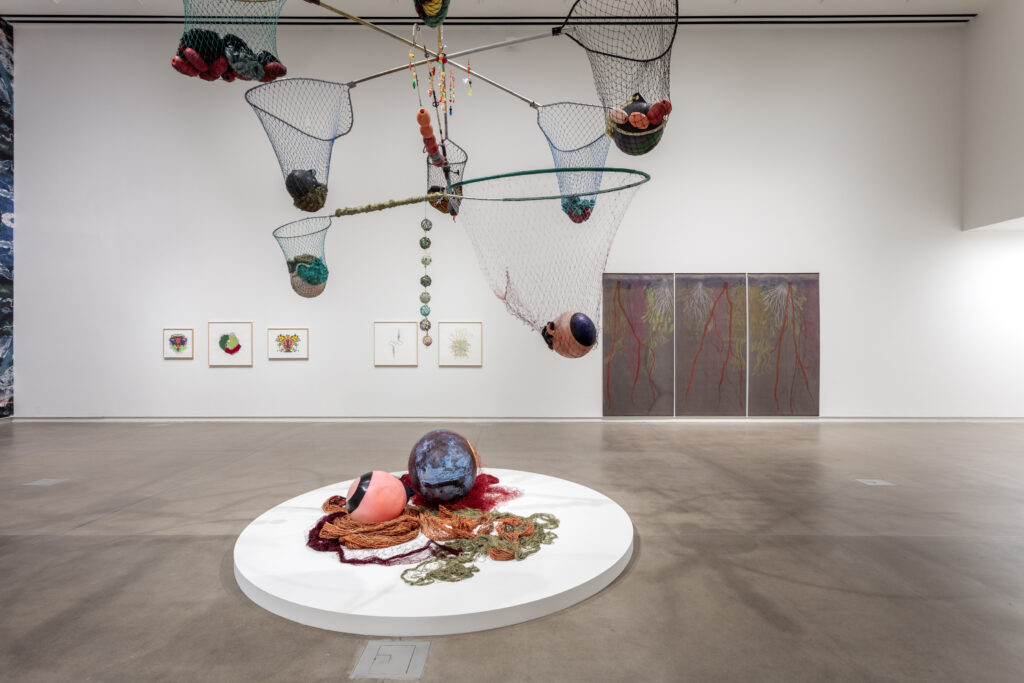
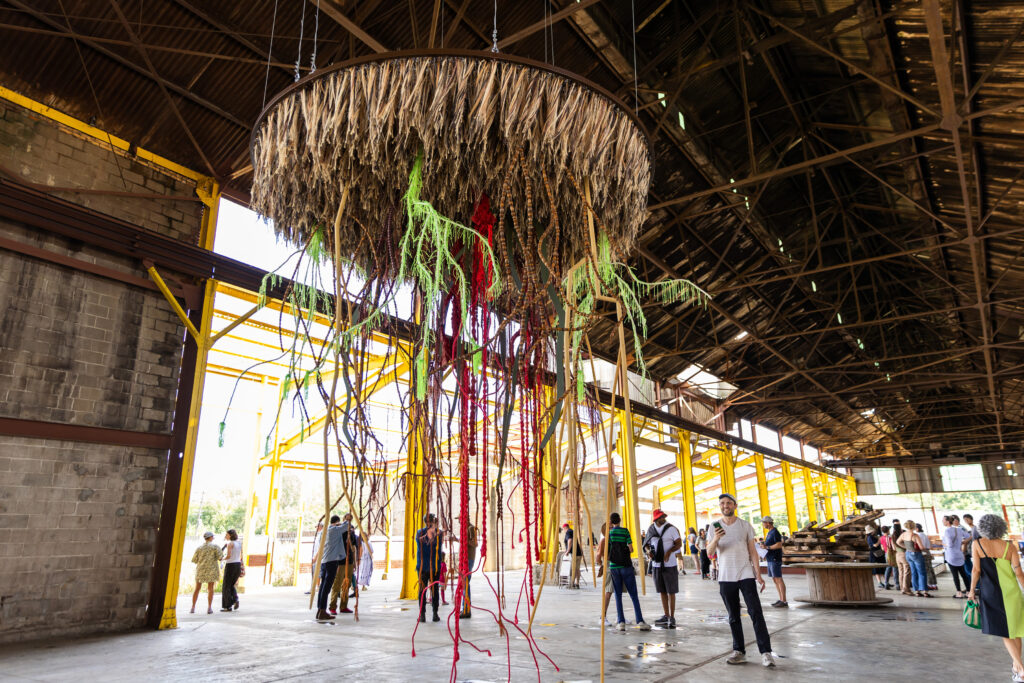
A few steps from “The Unloading Dock” is “Fiesta de la Raíces” by the Los Angeles-based Colombian artist Carolina Caycedo. Woven and knotted from rope, steel, Paracord, wood, beads and natural fibers, the large hanging sculpture depicts, at roughly 1:1 scale, six plant species native to the Midwestern tallgrass prairie: compass plant, leadplant, rosinweed, Indiangrass, blue false indigo and prairie dropseed.
“Fiesta de La Raíces” is a companion to “Prairie Root Portrait,” which Caycedo created last spring in collaboration with WashU’s Island Press. That piece, a relief-printed triptych, is featured in her concurrent solo exhibition, “Growing Deep Roots,” on view at the Kemper Art Museum through Jan. 4.
“A lot of these prairie plants have very deep root systems,” Caycedo said in a recent Q&A. “They can go 15 feet down. We humans are so grandiose, but there are things bigger than us that we can’t even see.”
Connecting St. Louis
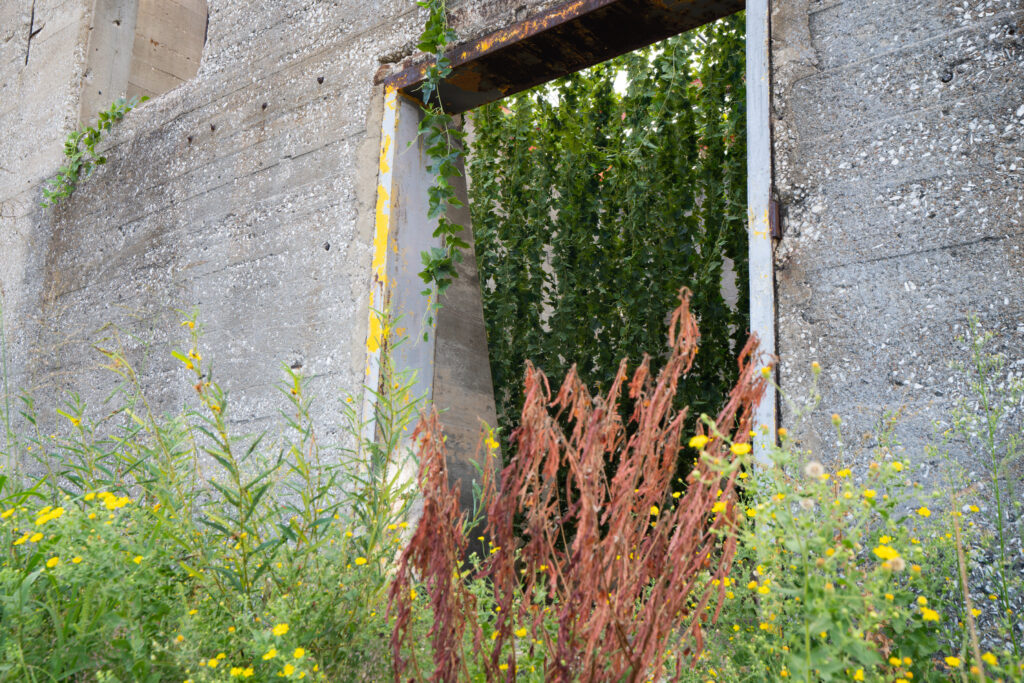
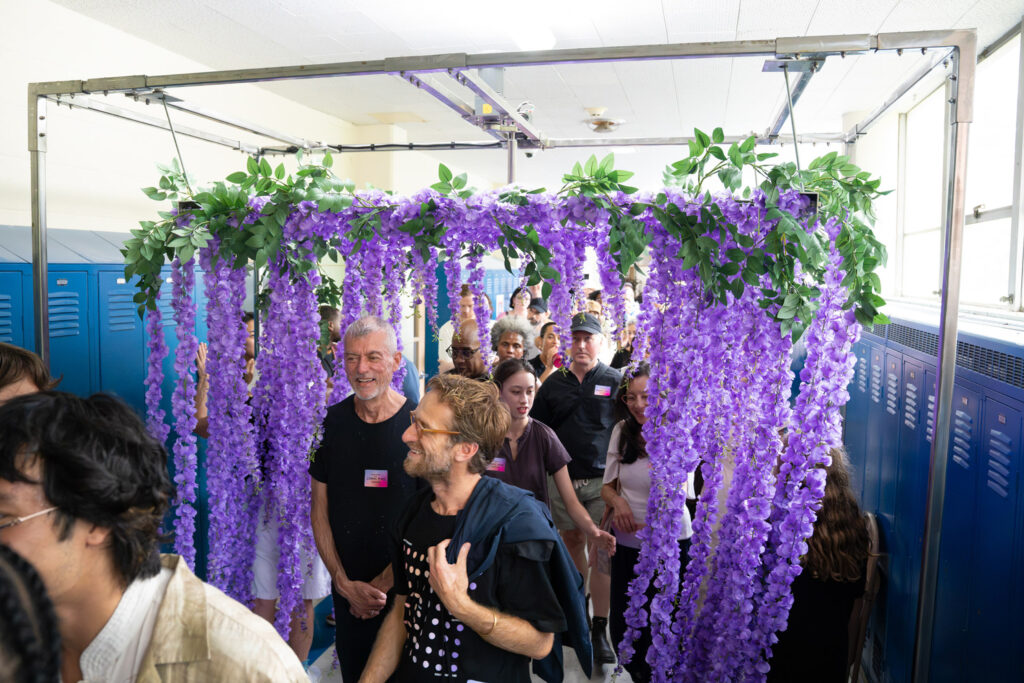
The NBAC campus hosts regular exhibitions for NON STNDRD, the artist-run initiative co-founded by WashU’s Sage Dawson. Currently on view in the NON STNDRD space is “CLEANSE (Devour),” one of two Counterpublic sculptures by Rachel Youn (BFA ’17). The other, “CLEANSE (Portal),” is at the International Institute of St. Louis, in the Tower Grove neighborhood.
Juanita McNeely
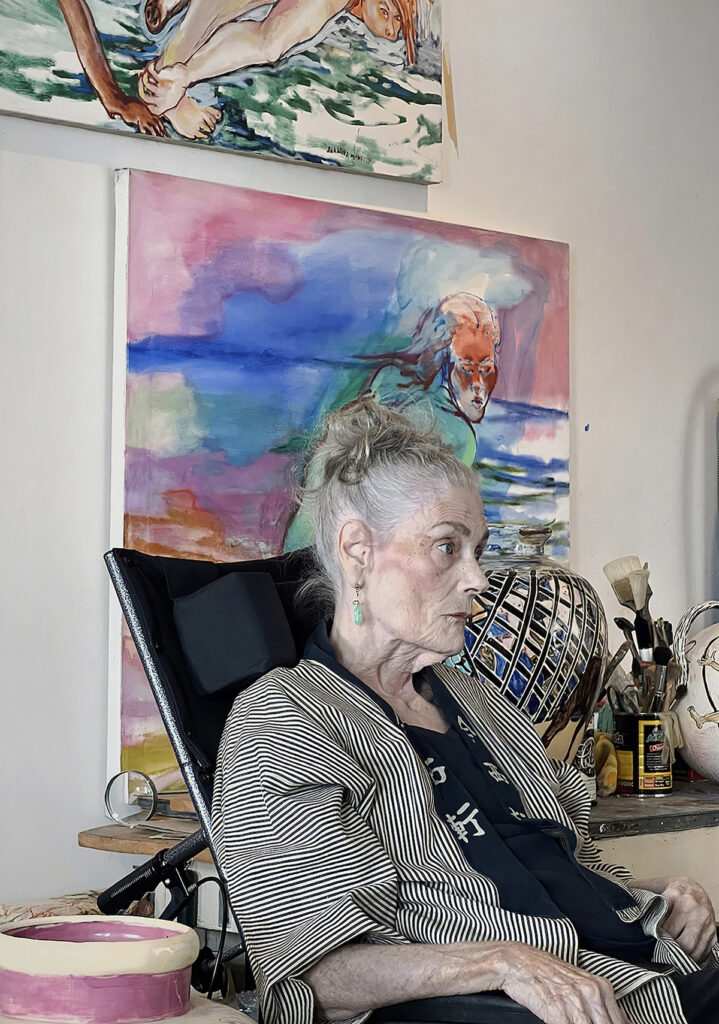
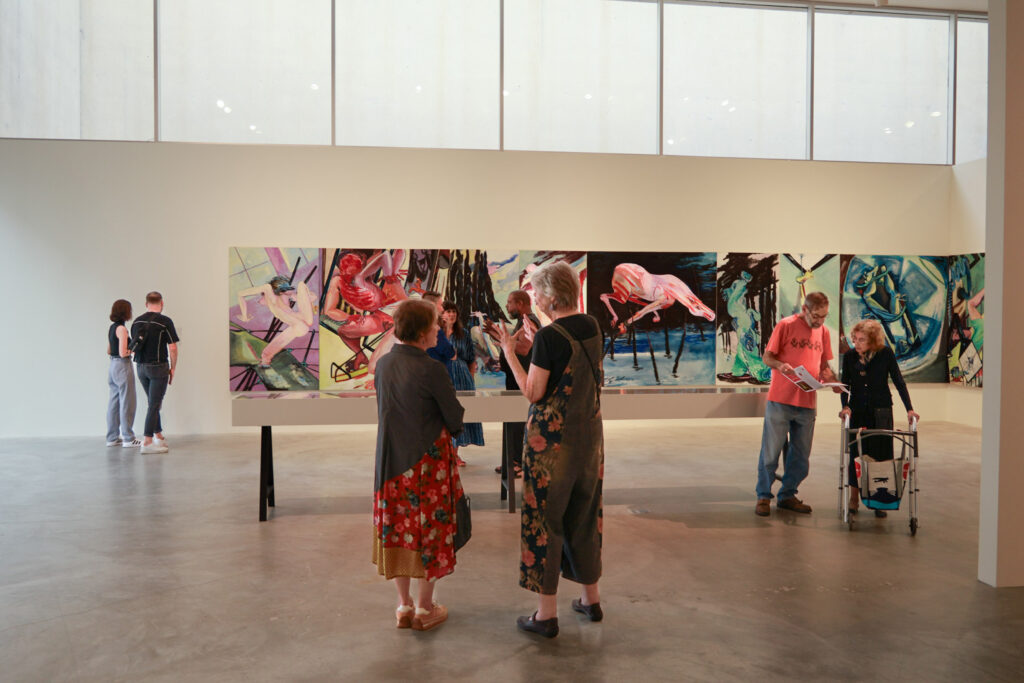
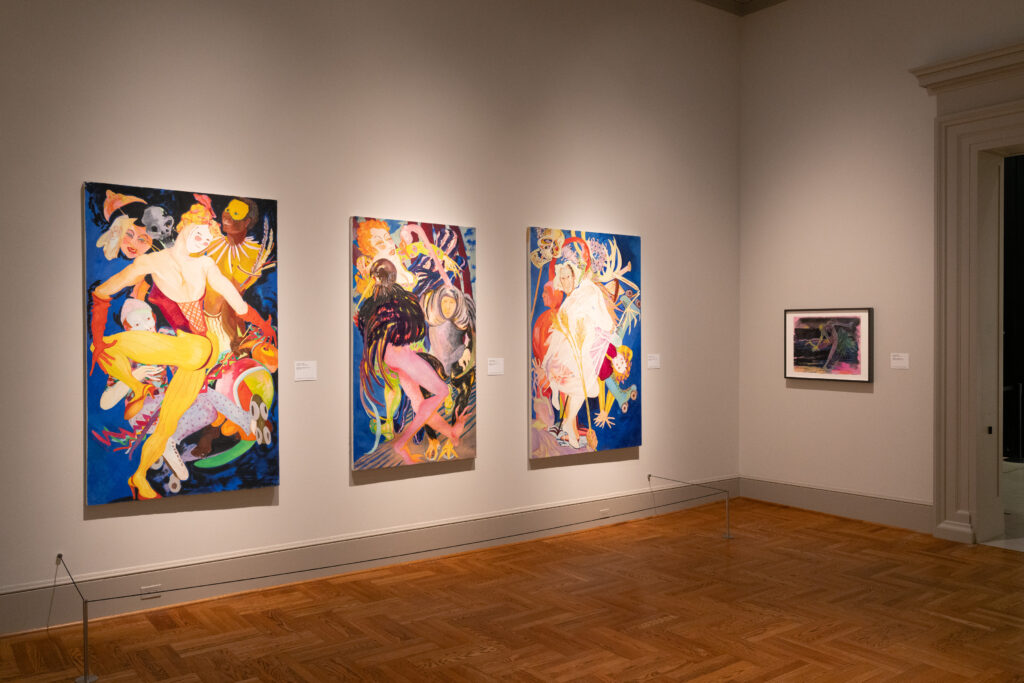
Juanita McNeely (1936-2023) was a prominent feminist artist known for lush and searing depictions of the body. In partnership with Counterpublic, the Contemporary Art Museum St. Louis and the Saint Louis Art Museum are presenting a two-venue survey — the artist’s first solo show in her hometown.
Born and raised in Ferguson, McNeely studied painting at WashU, earning a BFA in 1959. As a young woman, she survived cancer and a life-threatening pregnancy. In 1982, her spine, weakened by radiation treatments, fractured in a fall. She spent the rest of her life using a wheelchair.
That personal history shaped McNeely’s artistic practice. For example, in the wake of her spinal injury, McNeely was told she’d never again paint at large scale. In response, the defiant artist created “Triskaidekaptych” (1986), a monumental, 13-panel, 52-foot-long work in which figures leap and twist and fall in joy or agony or both.
Both works consist of artificial vines attached to motorized carwash scaffolding. Yet they are thematically distinct. “(Devour)” is situated in a bunker-like space, ceiling and concrete walls largely open to the elements. Vines are kudzu, that infamous quick-growing perennial. What does it mean, this piece seems to ask, for nature to reclaim a landscape?
The International Institute, located in a former Catholic high school, welcomes local immigrants and refugees. For “(Portal)”, the vine is purple wisteria, which can symbolize endurance or luck. Situated at the end of a long, well-used hallway, flanked by neat blue lockers, the piece feels hopeful and celebratory: an auspicious beginning to new endeavors.
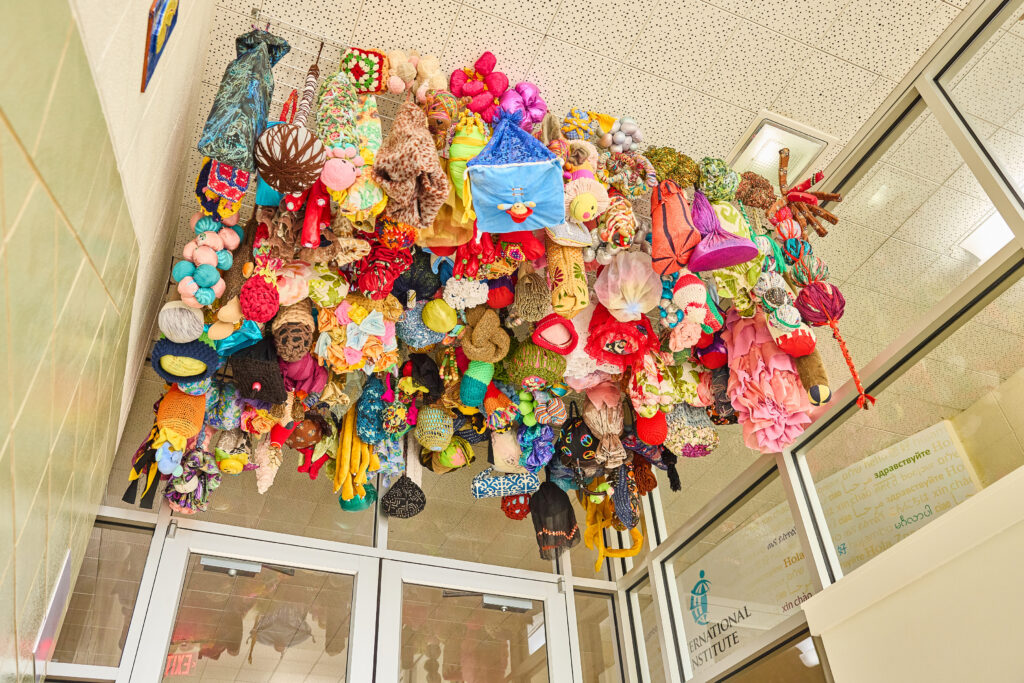
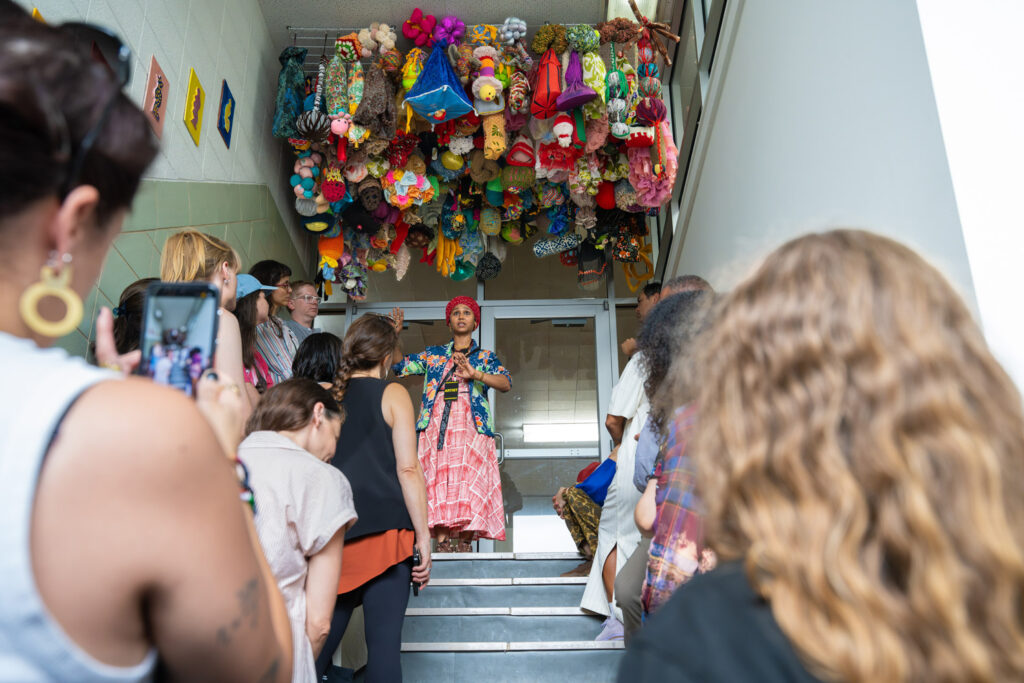
The International Institute also hosts “Souvenir,” a new permanent installation by Delhi-born artist Mee Jey (MFA ‘19). Greeting visitors in the front vestibule, it encompasses dozens of soft sculptures that Jey has bundled, tied, knotted and otherwise handcrafted from repurposed textiles. These bright, colorful works feel warm, intimate and — suspended from the ceiling — charmingly disorienting. Accompanying them are clay tablets representing the many people who have passed through the institute’s doors.
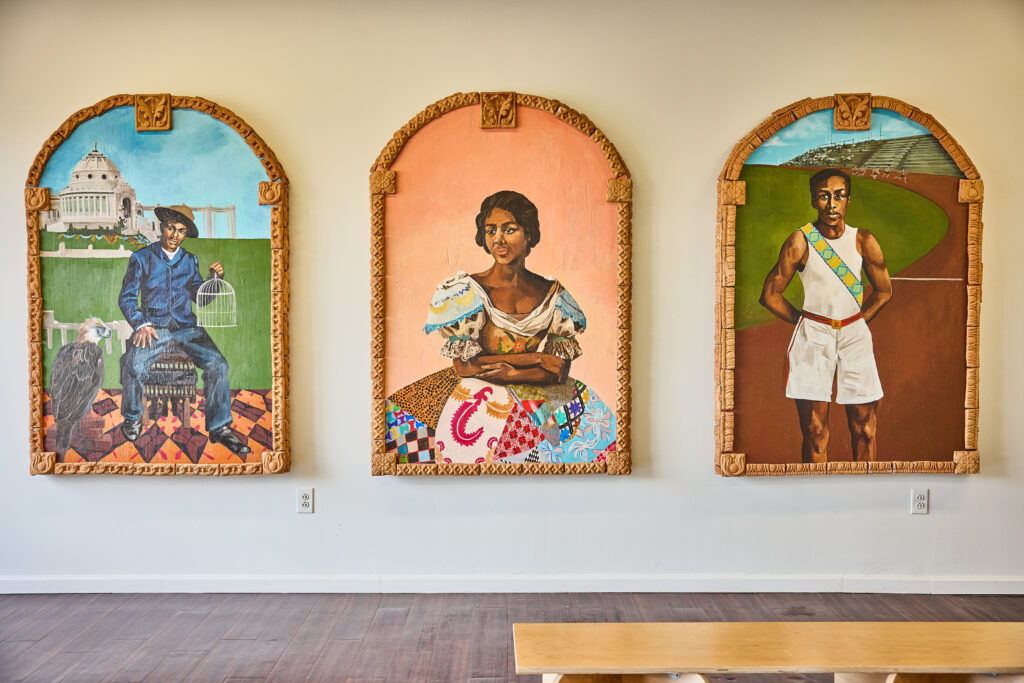
A few miles north, in the Ville, is “Meet Me in St. Louis” by Jamie Lee Harris (MFA ’23). Painted on rough plywood and framed in decorative tile, this three-part mural tells stories of Black life through the lens of the 1904 World’s Fair. At right is a miner from Mill Creek Valley, the historic Black neighborhood that was largely razed in the 1950s. At left is George Poage, the first Black athlete to medal in the modern Olympic Games. At center, a woman wears an Edwardian dress patched together from quilted fabric scraps — a nod to the textile traditions that families carried with them during the Great Migration.
‘Wild and lush’
Back in Sauget, to create “The Unloading Dock,” Smith collected fresh rainwater and acquired 30 tons of clean, reclaimed clay from a local swimming pool excavator. Frogs quickly laid eggs in the basin, so rather than risk disturbing them, she installed the clay without mechanical equipment, bucket-by-bucket.
“I didn’t want a performative garden,” she said. “Temporary nursery pots restrict growth. I wanted the plants to roam freely as they do in the wild. I wanted the basin to be lush and abundant.”
After sourcing lotus seeds and tubers, Smith raised the young plants in her apartment for nearly two months, until it was warm enough to transition them outdoors. Now the floating leaves contrast gracefully with NBAC’s brick walls. More bricks, piled onto pallets, provide visitor seating.
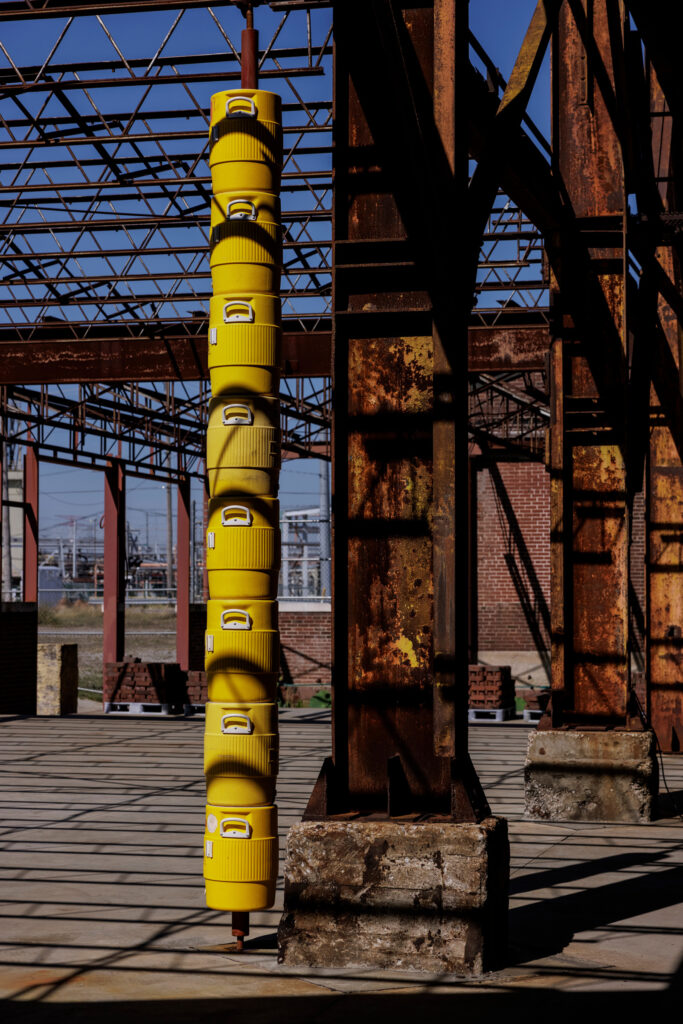
Rainwater continues to collect in a tall stack of Igloo coolers — Smith’s play on the iconic “Endless Columns” by sculptor Constantin Brancusi. Their bright yellow color also echoes nearby foundry supports and the yellow-tinted rust (Fe₂O₃⋅H₂O) that forms in wet and humid conditions. Meanwhile, Smith also began working with Dianne Duncan, director of imaging in WashU Arts & Sciences’ Department of Biology, to analyze water samples and microbial algae.
“When I first visited the site, I was in awe of the architectural accumulations, but I was captivated by a pepperweed growing in a gap between thick planes of concrete,” Smith said. That sparked an interest in ruderal species, which are plants that grow on depleted or disturbed land.
“Curiosity and plants guided me through Sauget’s complex ecologies,” Smith continued. “I make species logs and field recordings, and material and microscopic image archives. Art is what allows me to research — to get my arms around interconnected areas of knowledge.”
“It gives possibility to anything.”
“Counterpublic 2026: Coyote Time” remains on view through Dec. 4 at locations around St. Louis. Three recent Sam Fox School alumni served as part of the organizing team. Dallas Spears (MFA ’26) was the Counterpublic Sam Fox School Fellow. Cleonique Hilsaca (MFA ‘25) and Eva Agüero (MFA ’25) were Counterpublic International Institute Fellows. For more information or a complete list of artists, curators, projects and locations, visit Counterpublic.org.