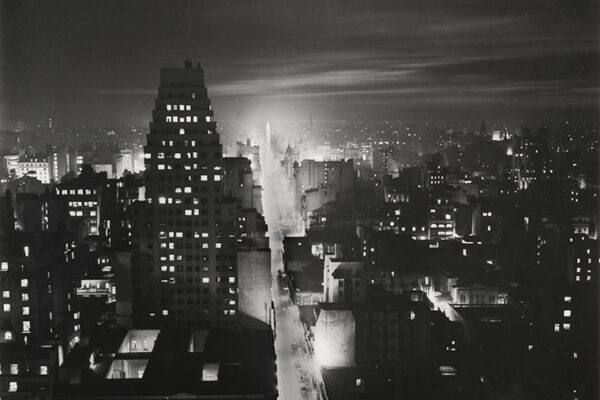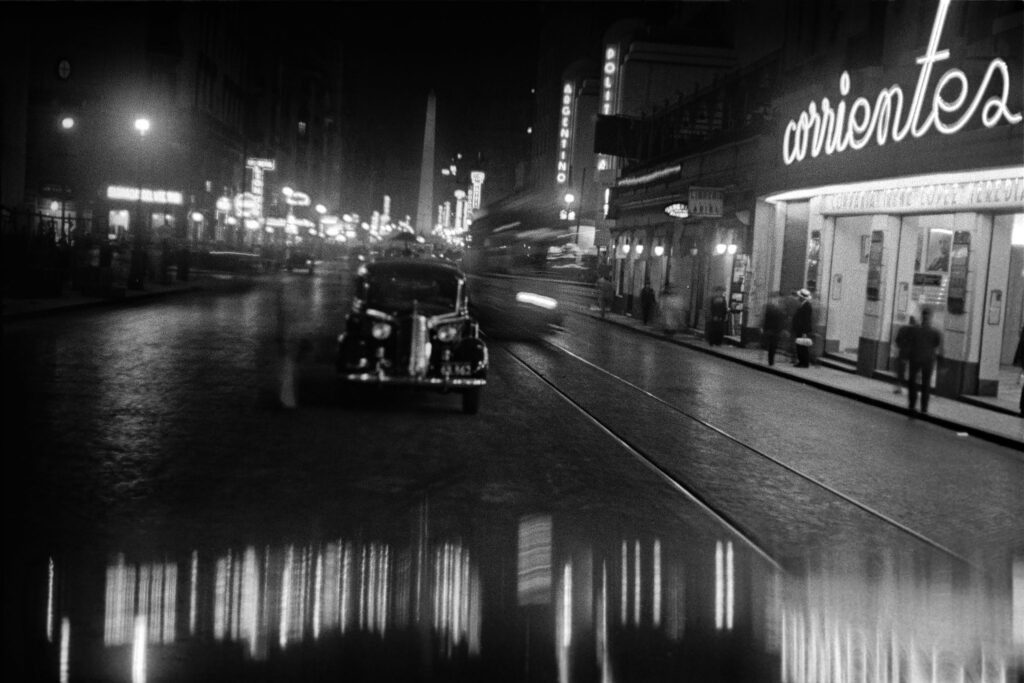
Horacio Coppola was born in Buenos Aires in 1906 to prosperous Italian immigrants, the youngest of six children. He learned photography from an older brother and in 1929 founded the city’s first film club.
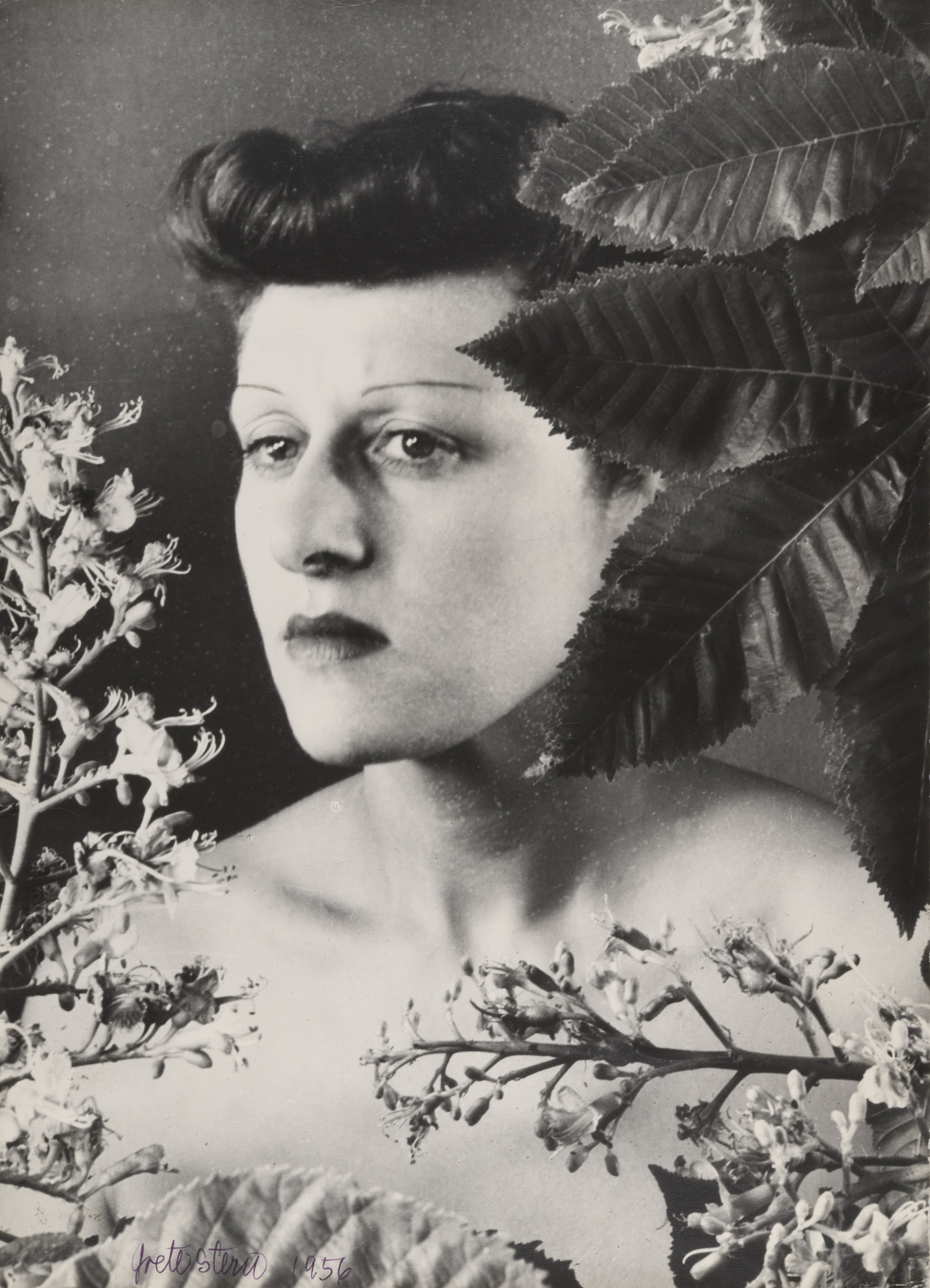
Coppola met Grete Stern, a German-Jewish photographer and graphic designer, in 1932, while both were studying at the Berlin Bauhaus. When the Nazi government forced the school to close, in 1933, the couple fled to London and married. They settled in Buenos Aires in 1935 and, though divorced in 1943, remained pivotal figures in a thriving artistic community.
Beginning Sept. 9, the WashU Kemper Art Museum will explore Stern and Coppola’s legacy as part of “Buenos Aires Modern, 1935–1950.” The exhibition, drawn extensively from their personal archives, is the first in the United States to examine how a cross-disciplinary group of local, exile and immigrant artists adopted and transformed the aesthetics of international modernism.
“Horacio always claimed that he had already been working with these ideas prior to his European trips,” said Sole Van Emden, Coppola’s step-granddaughter. “You might say he made avant-garde photography before he saw avant-garde photography.”
A social commitment
Van Emden’s mother, Maria Calsyn, is one of the executors for the Coppola and Stern estate, as is Maria’s brother, Carlos Peralta-Ramos. Van Emden and Calsyn now live in St. Louis. Peralta-Ramos lives in Argentina, just outside the capital.
“My mom, Raquel Palomeque, married Horacio in the 1950s,” Calsyn explained. “I was 13 or 14. I grew up with him.”
Calsyn recalled that, even after separating, Coppola and Stern stayed on friendly terms. When Coppola and Palomeque (herself the founder of an early cinema club) set out for a months-long European tour, the extended family, including Stern, gathered dockside to see them off.
“I was fascinated by her,” Calsyn said. “She was an amazing woman. Horacio was concerned with the compositional aspects of photography, but Grete had more of a social commitment. And a lot of her work reflects that.”
Dana Ostrander, who curated “Buenos Aires Modern,” concurs. “They spoke different languages — him Spanish, her German. They had distinct personalities and extremely different backgrounds, having grown up on different continents. What’s so interesting is the way they collaborated.”
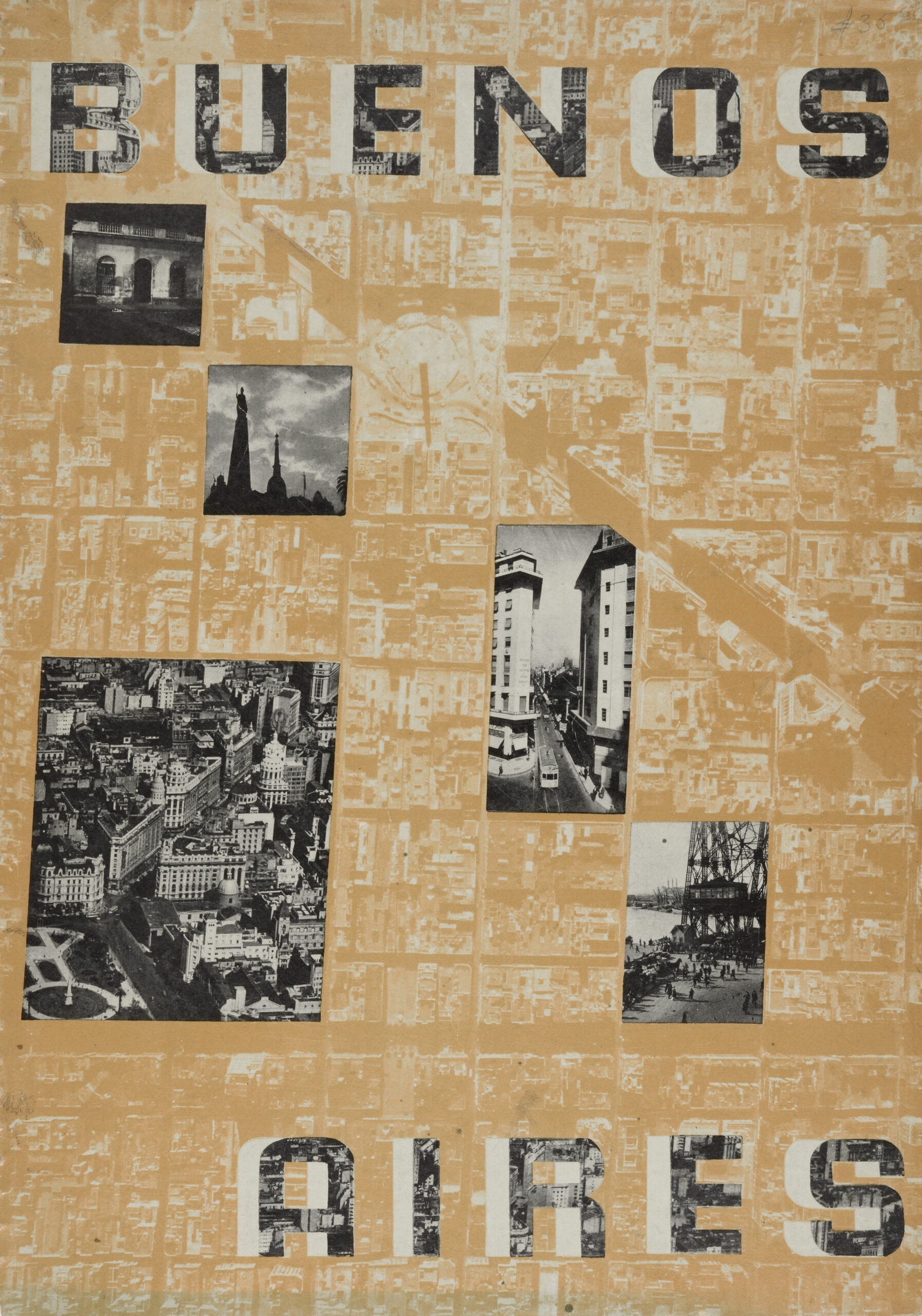
For example, when Coppola was commissioned to create a photobook documenting the modernization of Buenos Aires, Stern designed a striking spiral-bound cover for its second edition. Later, the couple would collaborate, either individually or together, with architect Wladimiro Acosta, artists Gyula Kosice and Clément Moreau, and graphic designers Attilio Rossi and Luís Seoane, among many others.
Such collaborations were emblematic of the larger Buenos Aires art scene, Ostrander said. “During this period, you have Argentines and European exiles in constant contact. They have a lot of ideas that they’re excited to share. They’re eager to take up new technology, to experiment with unprecedented forms, and to use modernist ideas to address their immediate concerns. How do we make life better for people in the city? How do we express dissent? How do we advocate for women’s rights or the rights of workers?
“Each artist in the exhibition had their own ideological investments,” Ostrander said. “But they were all engaged in this shared project of using art to improve life in Buenos Aires, both for recent arrivals and longtime residents.”

Arrival, adaptation, integration
In the early 20th century, Argentina was a wealthy nation with a rich intellectual life. “My grandmother read ‘Don Quixote’ in French,” Calsyn quipped. “People did turn their eyes to Europe, but they also valued local art and literature.”
Among Coppola’s friends was Jorge Luis Borges, the famed short-story writer and essayist. In 1930, Borges used several of Coppola’s photos of Buenos Aires neighborhoods to illustrate a biography of poet Evaristo Carriego. Borges himself would sit for a pair of portraits by Stern, in 1939 and 1951.
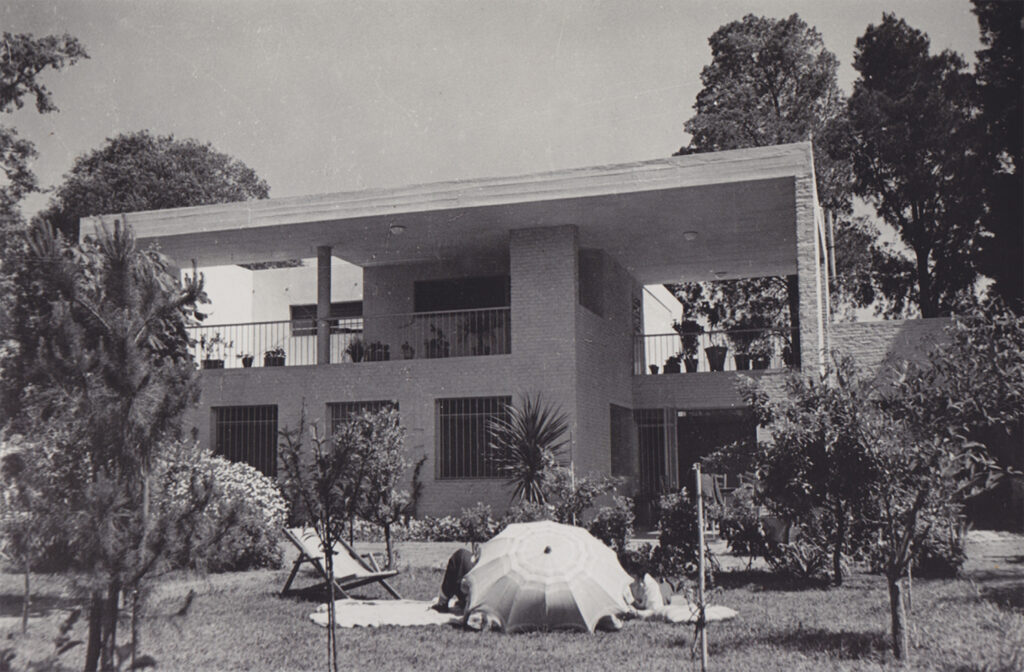
Both the Carriego biography and the second Borges portrait are featured in “Buenos Aires Modern.” The opening section, “Recent Arrivals,” explores the period’s mix of European modernism and Argentine culture through photographs, magazines and newspapers. The second section, “Adaptations,” highlights architects and designers including Kosice and Acosta, who emphasized modernist principles as well as local conditions. “Integration,” the third and final section, showcases a younger generation of artists who frequently gathered in the home Acosta designed for Stern and Coppola.
“I wanted to resist this narrative that Stern and Coppola simply brought modernism to Argentina,” Ostrander said. “That’s too reductive. They were collaborating with people. There was a constant exchange of ideas and forms.”
Sharing the work
Stern and Coppola remain well-known inside Argentina and are increasingly known internationally. Carlos Peralta-Ramos, the estate co-executor, said that in recent years, their work has been published and exhibited in Belgium, Brazil, Egypt, Germany, Portugal and Spain, and seen at major art fairs in Hong Kong and Paris, among others.
Yet with the notable exception of a 2015 survey at MoMA in New York, Stern and Coppola remain much less known in the English-speaking world. Calsyn hopes that will begin to change with exhibitions like “Buenos Aires Modern” and its accompanying scholarly monograph, which is being distributed by the University of Chicago Press.
“The mission of the estate is to keep Grete and Horacio’s legacy alive by sharing their work with a broader public,” Calsyn said.
Van Emden sees similarities between the present day and the conditions that helped give rise to early modernism. “Immigration, mobility, changes in technology … It’s interesting how excited and dynamic they were to work with these challenges, and to collaborate and to foster other people’s work.
“These are things that many current artists are thinking about,” Van Emden concluded. “How do they tackle some of these same issues?”
“Buenos Aires Modern, 1935–1950” will open Sept. 9 with a panel discussion featuring Ostrander and Natalia Brizuela, a professor of Spanish and Portuguese and of film and media studies at the University of California, Berkeley; and Megan A. Sullivan, an associate professor of art history at the University of Chicago. The talk will begin at 5:30 p.m. in Steinberg Hall Auditorium. A public reception will immediately follow at 6:30 p.m. in the Kemper Art Museum. The exhibition remains on view through Jan. 4.
The Kemper Art Museum is located on the WashU Danforth Campus, near the intersection of Skinker and Lindell boulevards. Visitor parking is available in the university’s east end garage. Regular hours are 11 a.m.-5 p.m. Mondays and Wednesdays through Sundays. The museum is closed Tuesdays. For more information, call 314-935-4523 or visit kemperartmuseum.wustl.edu. Follow the museum on Facebook, Instagram and YouTube.