The Kemper Art Museum at Washington University in St. Louis will present “Carolina Caycedo: Growing Deep Roots,” a solo exhibition of new and recent work by the Los Angeles–based Colombian artist Carolina Caycedo, Sept. 9 to Jan. 4.
The exhibition brings together sculpture, drawings, prints and videos that address the interrelated issues of water and land stewardship and just energy transition. Drawing on environmental justice frameworks, traditional knowledge systems and ecofeminism, the exhibition highlights Caycedo’s continued engagement with rivers and the socio-ecological impacts of extractive, profit-driven expansion alongside works that imagine more sustainable futures.
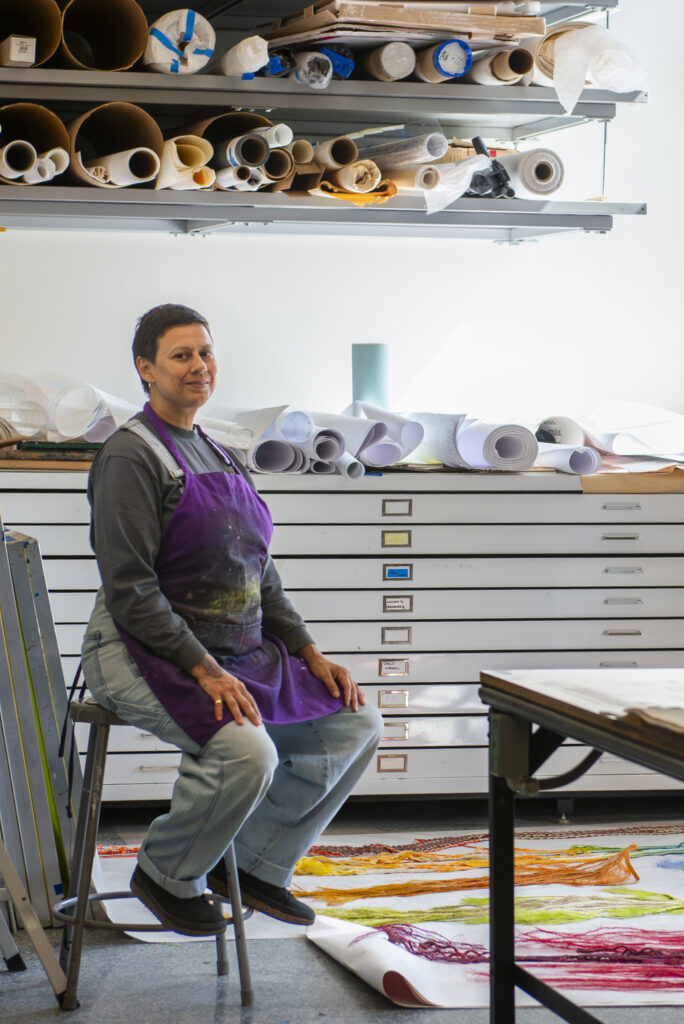
“Caycedo’s practice challenges dominant conceptions of nature as a resource to be exploited, instead positioning ecosystems as living networks to which we are deeply accountable,” said Meredith Malone, the Nancy and Kenneth Kranzberg Curator and senior curator at the Kemper Art Museum. “This exhibition brings together works that are both visually compelling and urgently relevant, creating space for reflection on our connection to place, to what sustains us and to what we can do to reciprocate.”
According to Sabine Eckmann, the William T. Kemper Director and chief curator, “Growing Deep Roots” “continues one of the museum’s thematic exhibition programs: to present artistic practices that engage with the natural environment, frequently zooming in on its increasing decline and advancing hopes for reversals.”
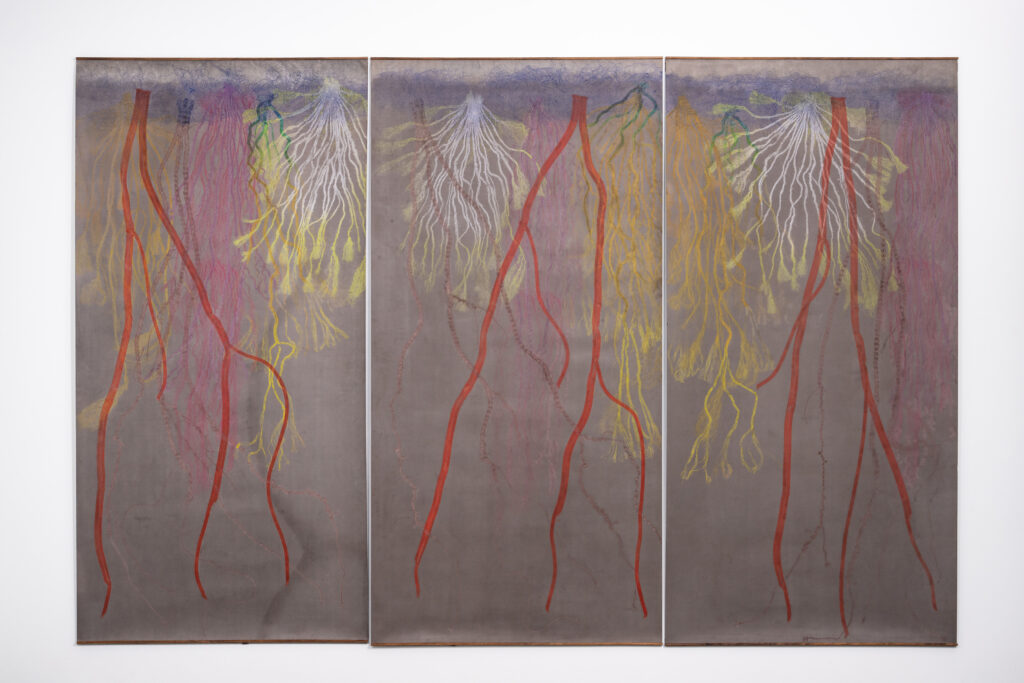
In her “Plant Portraits” series (2021–ongoing), Caycedo reconfigures scientific botanical illustrations, merging plant and human anatomy. In calling them “portraits,” Caycedo reorients the Western portraiture tradition, presenting plants as subjects with agency while underscoring interdependence across species. The artist expands this approach in her “Root Portraits” (2026–ongoing), which move below ground to emphasize the importance of root-to-soil interactions. Focusing on perennial prairie grasses and grains that improve soil health, mitigate climate change and boost biodiversity, the series includes works such as “Complex, Nutty, and Slightly Sweet: I Am Kernza.” The drawing depicts the encircled roots of two Kernza plants, the first commercially available perennial grain being developed for long-term environmental sustainability by plant scientists.
Caycedo also created the large, three-part relief print “Prairie Root Portrait” at the WashU Island Press, part of the Sam Fox School of Design & Visual Arts, in March, when she was the Arthur L. and Sheila Prensky Island Press Visiting Artist. This work, depicting the roots of six different native prairie grass species, is informed by her conversations with St. Louis–based and regional plant scientists and community members about the importance of perennial agricultural systems and the restoration of prairies in the Midwest region of the United States.
Concurrently, Caycedo will present a related work, “Fiesta de las Raíces,” a new commission for “Counterpublic 2026: Coyote Time,” a triennial exhibition featuring 50 new commissions throughout the St. Louis region. Installed at the National Building Arts Center in Sauget, Ill., from September through December, this site-specific hanging sculpture takes the form of entwined root systems, extending the artist’s examination of native prairie grass roots beyond the museum.
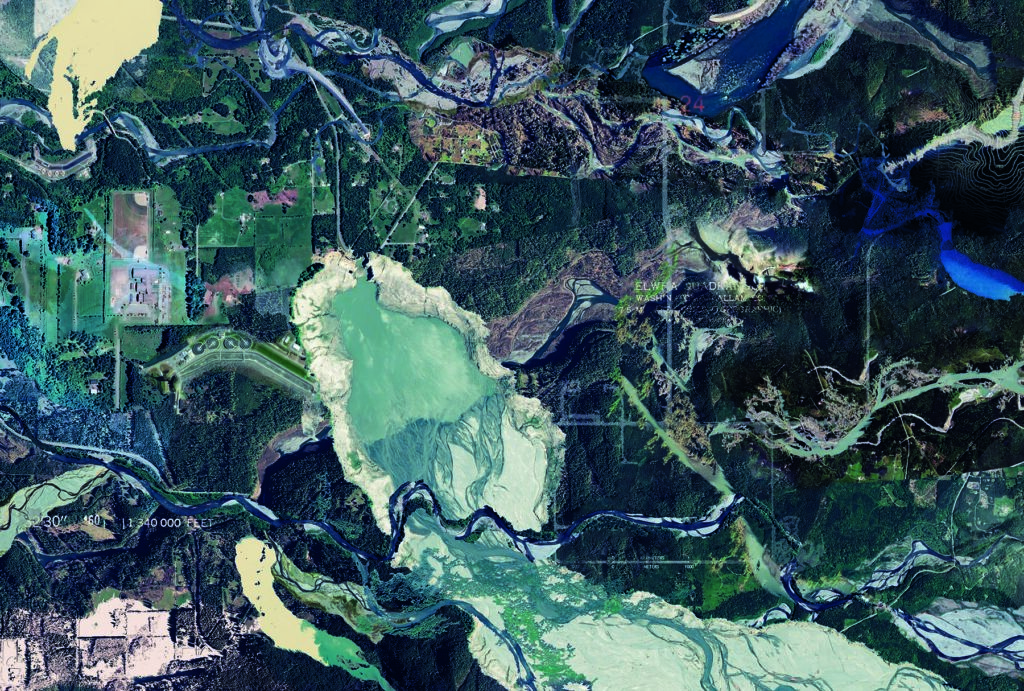
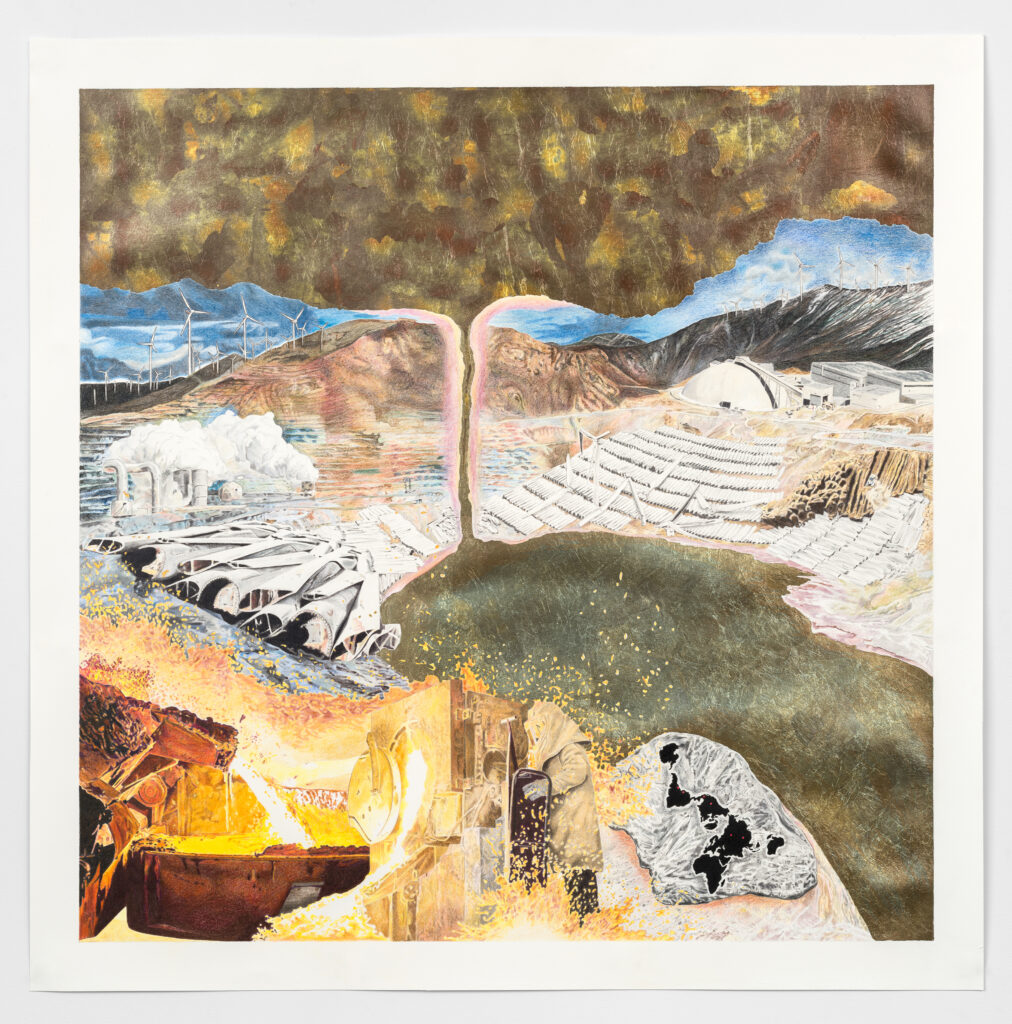
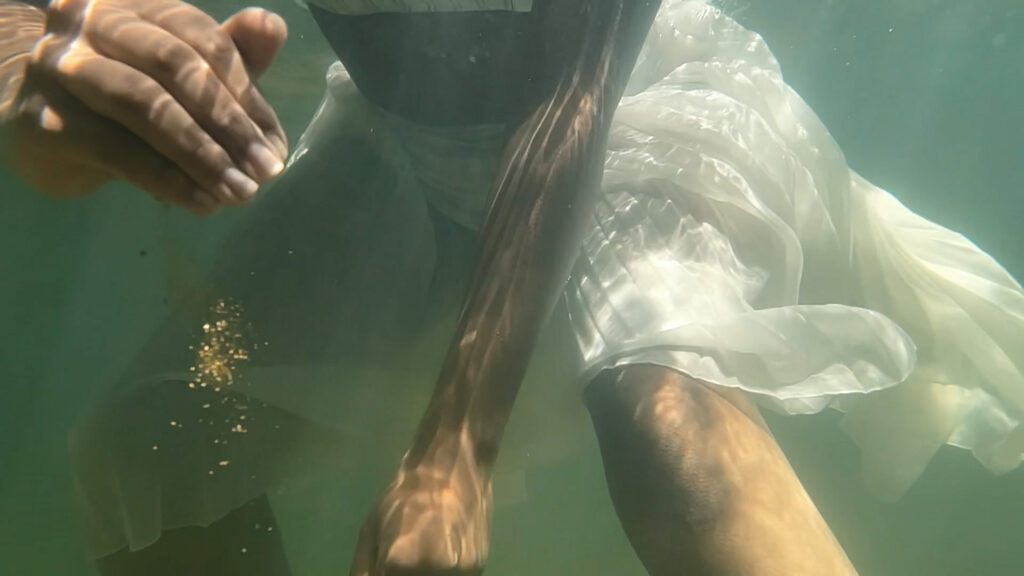
The ideas of “Growing Deep Roots” further expand through a range of works that narrate the impact of resource extraction and industrial infrastructures on both bodies of water and human bodies. Caycedo’s “Mineral Intensive” drawings (2023–ongoing), rendered in vibrant colored pencil, collage together images of large-scale mining sites and extractive landscapes that include scenes of labor. The mural “Elwha’s Healing” (2022/2026) depicts the recovery of the Elwha River in the Pacific Northwest following the removal of two hydroelectric dams after decades of native activism, and the subsequent return of salmon populations.
With her long-running series of hanging sculptures, “Cosmotarrayas,” named as a portmanteau of “cosmo” and atarraya, the Spanish word for “cast-net,” Caycedo connects her studio practice with community involvement. To create “Celestial Autonomy, the Dance of Big Dipper and North Star” (2023), the artist sourced everyday fishing nets from fishermen, fishing supply stores, and beach cleanup nonprofits in Anchorage, Alaska. The title references the Alaskan flag, in which the Big Dipper and North Star represent the role of astronomical knowledge in Indigenous Alaskan navigation. The sculpture’s eight dipnets correspond to these stars and, according to the artist, represent a combination of “porousness and strength, reflecting the inherent connectivity among beings,” as opposed to damming systems which control and redirect the flow of water.
As part of “Growing Deep Roots,” Caycedo will curate a selection of portraits and landscapes by women and nonbinary artists from the museum’s permanent collection, including works by Rebecca Belmore, Rivane Neuenschwander and Rose B. Simpson. These will be presented in dialogue with her “My Feminine Lineage of Environmental Struggle: Expansion I” (2019), a printed canvas banner depicting more than 140 women environmentalists from around the world, many of whom have faced violence, incarceration or persecution. In addition, two cases in the center of the gallery present specimens selected by Caycedo from the herbarium at the Missouri Botanical Garden. One case features native prairie species, while the other highlights plants named for or identified by women scientists, recognizing their often-overlooked contributions to the study and classification of the natural world. The conversation Caycedo creates among these diverse artworks and botanical samples underscores the vital relationship between women’s labor, feminism and environmentalism.
“Growing Deep Roots” is made possible by the leadership support of the William T. Kemper Foundation. All exhibitions at the Kemper Art Museum are supported by members of the Director’s Circle, with major annual support provided by Emily and Teddy Greenspan and additional generous annual support from Michael Forman and Jennifer Rice, Julie Kemper Foyer, Joanne Gold and Andrew Stern, David and Dorothy Kemper, Ron and Pamela Mass, and Kim and Bruce Olson. Further support is provided by the Hortense Lewin Art Fund, the Ken and Nancy Kranzberg Fund and members of the Kemper Art Museum.