Art and science follow distinct investigative pathways. But there is no shortage of creativity in the lab, and no shortage of rigor in the studio.
“Both disciplines start from a place of inquiry,” said Carolina Caycedo. “We observe something in the world and become curious about its origins and character.”
Over the last two decades, Caycedo has earned an international reputation for exploring the intersection of art and ecology, with a particular emphasis on water and land stewardship. In spring 2025, she made her St. Louis exhibition debut as part of the group show “Seeds: Containers of a World to Come,” organized by the WashU Kemper Art Museum. This fall, she will return to the Kemper Art Museum for a solo exhibition, “Growing Deep Roots,” while also installing a new sculpture for Counterpublic, the city’s acclaimed public art triennial.
In this Q&A, Caycedo discusses her work, her interest in migration and just energy transitions, and the possibility of repair.
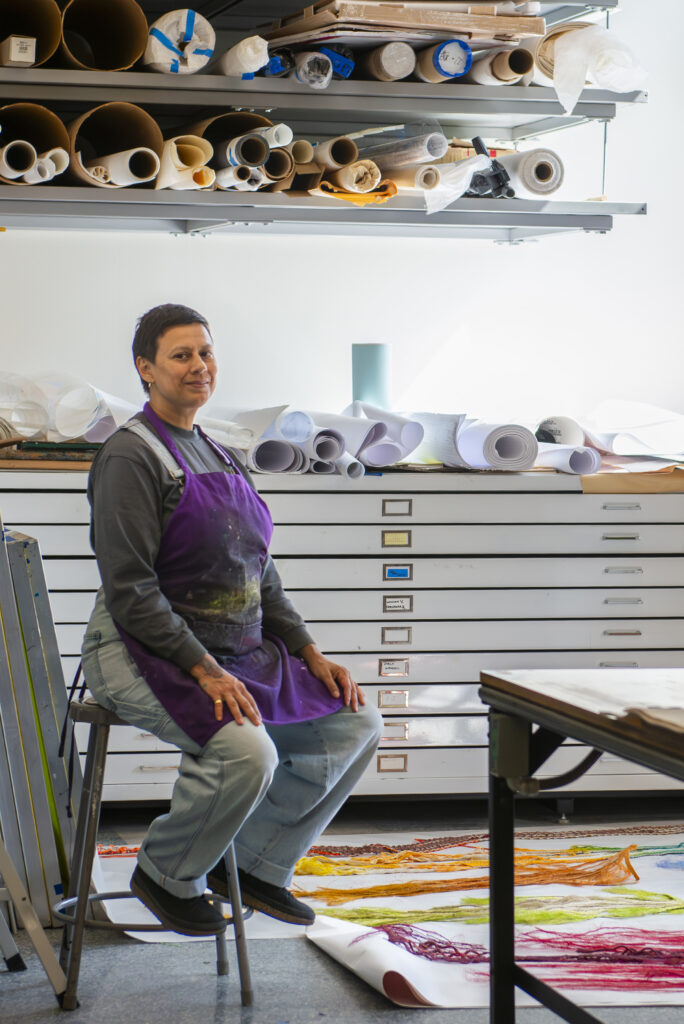
Your previous commission for the Kemper Art Museum, “Ñañay Kculli ~ S’oam Bawi Wenag ~ Kiik K’úum” (2025), reflected the traditional “three sisters” strategy of planting squash, beans and corn together. How did that piece come about?
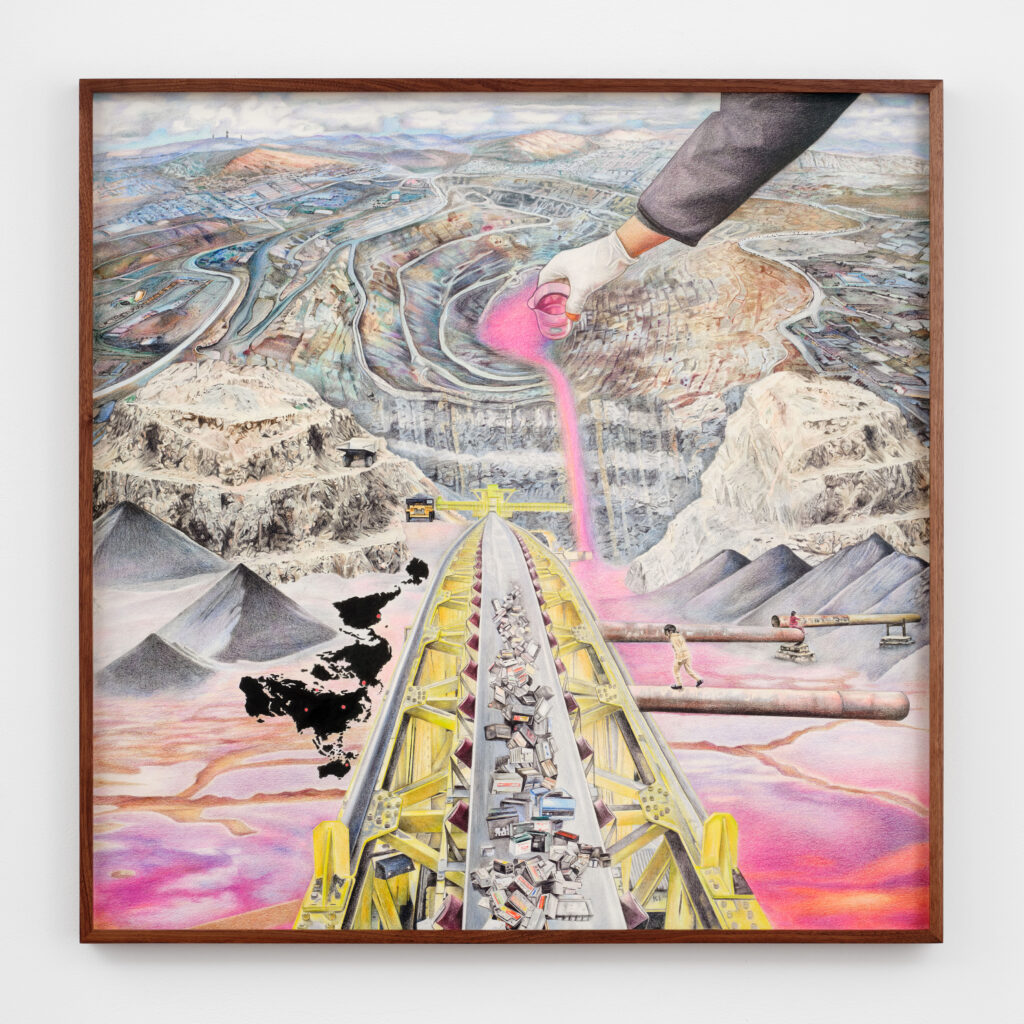
This research started with an inquiry into just energy transitions. Early on, I realized that energy is much more than just the electrical matrix. The first and foremost form of energy, at least for humans, is food.
Sometimes we think about this term “transition” as propelling us towards something different or better. But certain agricultural techniques have happened since time immemorial and will continue to inform the way we transition into the future.
The three sisters started in the area we now know as New York, but it traveled with Indigenous people across the Americas. So I also wanted to make the point that migration has always happened: migration of seeds, migration of knowledge, migration of people.
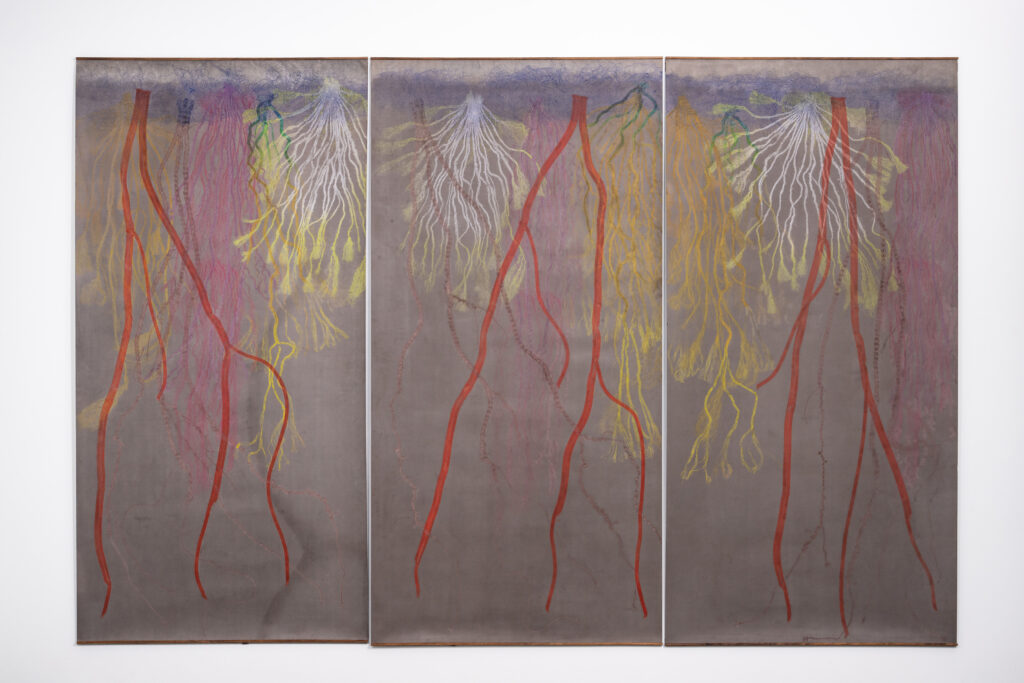
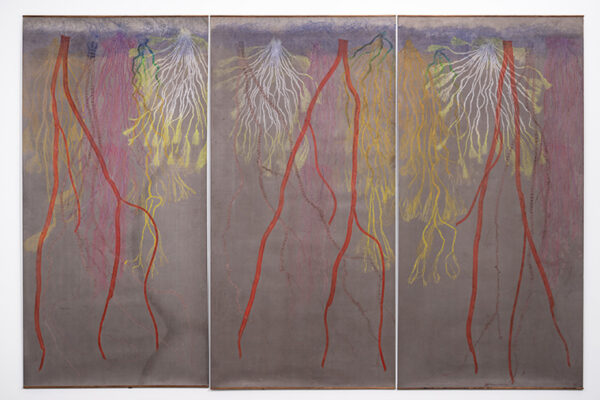
“Growing Deep Roots” includes a 9-by-14-foot triptych that you created during a residency with the WashU Island Press. Titled “Prairie Root Portrait,” it depicts, at roughly actual size, the entwined root systems of six different native prairie grasses. What drew you to that subject?
When I visited St. Louis for the first time, I wanted to learn more about prairies. These native grasslands constituted an ecosystem that once covered vast expanses of Missouri and neighboring states.
I had conversations with people working on conservation, climate change and transition processes. Flooding is a big issue. With climate change, rains are stronger. There’s more water and less absorption because prairies — and the whole cycle of water fluctuation and management — have been degraded. So now there is a lot of interest in implementing rain gardens. These can include a mixture of prairie plants that absorb water and mitigate flooding.
That really blew my mind. A lot of these prairie plants have very deep root systems. They can go 15 feet down. We humans are so grandiose, but there are things bigger than us that we can’t even see. And the prairie is like any ecosystem. The more diverse it is, the healthier it is. So rather than rendering a single plant, I understood that we had to portray a number of them in relationship.
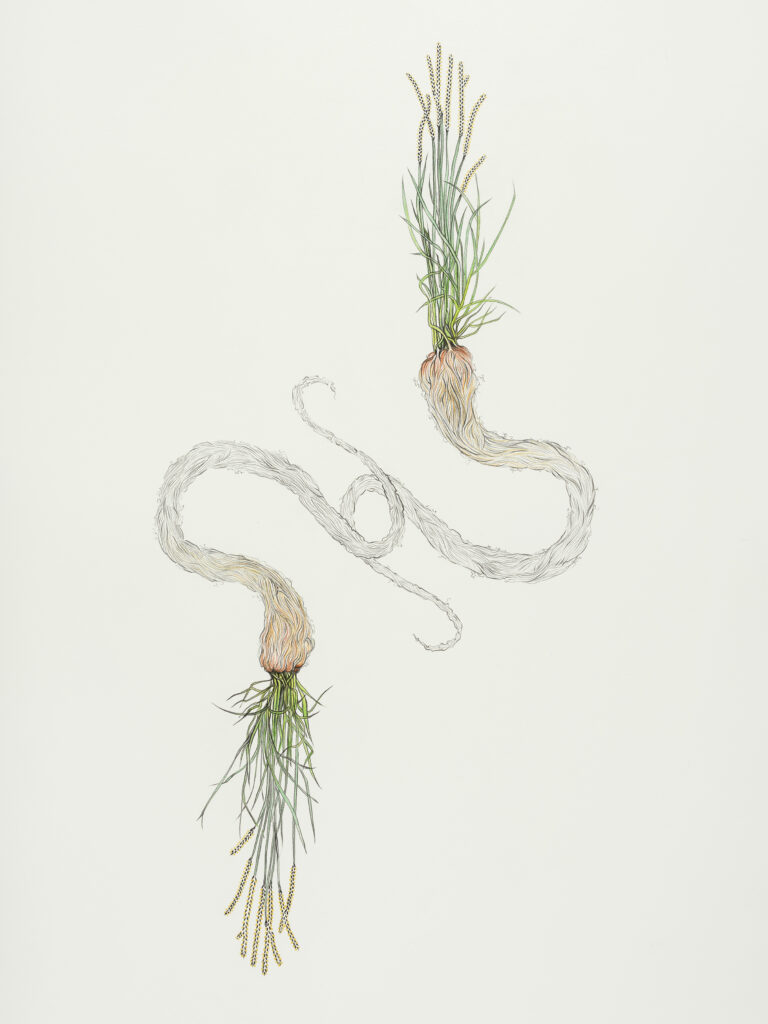
“Prairie Root Portrait” builds on your ongoing “Plant Portrait” series. Why do you use the word “portrait” to describe these works?
The two main formats that we learn in art school are portrait and landscape. Landscape is the horizontal window through which we tend to represent nature. Portrait is the vertical format that is more commonly used to represent humans. As artists, we have been complicit in the establishment of these formats and how they train the gaze. In Indigenous or traditional ways of seeing the world, that division — between culture and nature, science and art — doesn’t exist.
It also responds to something I’m witnessing. Animals, rivers, forests … They have inherent rights in natural law, but more and more legal thinkers are putting those rights into legislation. That’s true across the world, but in Latin America, we’re definitely pioneers.
Relearning, reenchanting, rewilding … There’s always a possibility for repair.
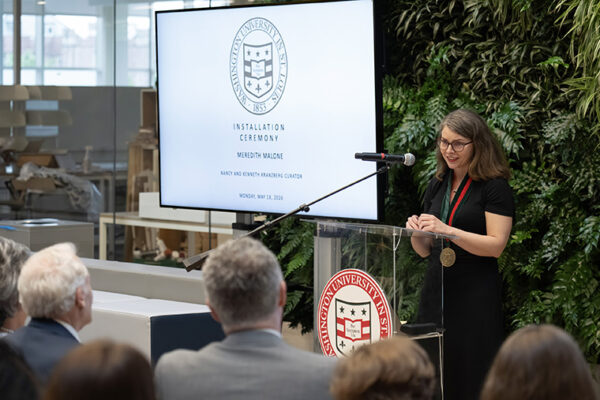
“Carolina Caycedo: Growing Deep Roots” is curated by Meredith Malone, the Nancy and Kenneth Kranzberg Curator and senior curator at the Kemper Art Museum. The exhibition will open Sept. 9 and remain on view through Jan. 4. For more information, visit the museum website. “Counterpublic 2026: Coyote Time” opens Sept. 10 and remains on view through Dec. 13. For more information, visit counterpublic.org.