In Brief
- Suicide prevention is everyone’s responsibility, but people need different levels of training and expertise.
- Gatekeeper training can help people recognize distress, ask directly about suicide, listen and connect others to support.
- Ryan Lindsay emphasizes that you don’t need perfect words — just a willingness to start the conversation.
During Suicide Prevention Month this September, WashU expert Ryan Lindsay is emphasizing a simple message: You don’t have to be a mental health professional to help someone who may be struggling.
When someone is struggling, the person who notices first may be a friend, colleague, classmate, supervisor, mentor or someone else they trust. Knowing what to do next can make that moment an opportunity to help.
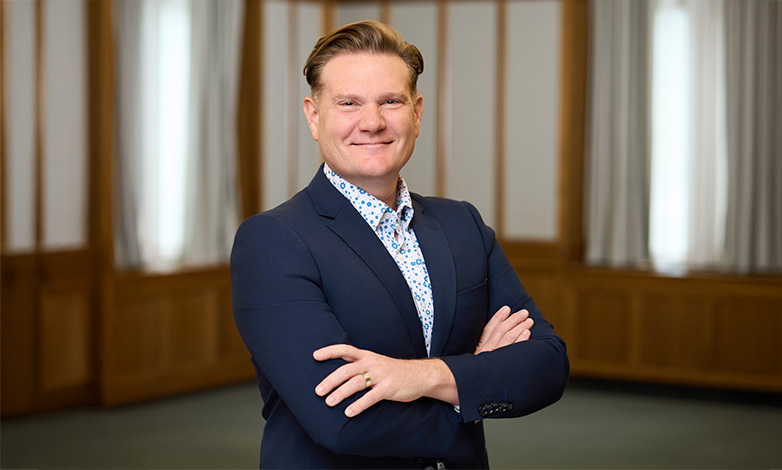
“My work has focused particularly on those conversations,” said Lindsay, a professor of practice at the WashU Brown School. “Most people are not being asked to assess suicide risk or provide treatment. But we can help people become more comfortable noticing when someone is struggling, asking the question and connecting them to help.”
Lindsay’s work on suicide-prevention conversations is part of COMPASS (Construction Organizations Mobilizing for Peer Support and Suicide Safety), a research project focused on helping construction organizations strengthen suicide awareness, peer support and connections to mental health care. Construction workers have one of the highest rates of suicide of any occupation.
The project is led by Bradley Evanoff, MD, the Richard A. and Elizabeth Henby Sutter Professor of Occupational, Industrial and Environmental Medicine at WashU Medicine. Lindsay and other WashU researchers collaborate on the effort, along with colleagues at the University of Iowa. It is funded by a grant from the National Institute for Occupational Safety and Health, part of the Centers for Disease Control and Prevention.
Everyone has a role, but not the same role
The need is urgent in the construction field, where more than 5,000 workers die by suicide each year. Construction workers are more than twice as likely to die by suicide as other male workers and five times more likely to die by suicide than from a workplace injury, Lindsay said.
COMPASS draws on the evidence-based Australian MATES in Construction model and uses three levels of training, from general awareness to more intensive preparation for people who can provide intervention and referral.
“One of the lessons from COMPASS is that everyone can contribute to suicide prevention, but that does not mean everyone should have the same responsibility,” Lindsay said. “Some people need awareness. Others may choose to develop stronger skills for recognizing risk and connecting someone to care. A smaller group needs more advanced intervention skills.”
That can apply beyond construction as well. Suicide-prevention training can help people recognize warning signs; engage someone who may be at risk; and connect them with appropriate support.
Listen and connect
For many people, the hardest step may be asking about suicide. Lindsay said people often worry that bringing it up will make things worse or that they will need to know how to respond to every possible answer.
They do not, he emphasized.
A conversation can start simply: “I’ve noticed you haven’t seemed like yourself lately. How are you doing?” If concerns about suicide arise, the question can be direct: “Are you thinking about suicide?”
“You don’t need the perfect words,” Lindsay said. “You need the willingness to open the conversation, listen to the answer and help the person take the next step. Sometimes the most important thing we can do is make it clear that they do not have to figure out that next step alone.”
People who want to build these skills can explore gatekeeper programs such as Question, Persuade, Refer (QPR) and Ask, Listen, Refer, an online suicide-prevention training program for colleges and universities. WashU is a participating campus.
“Notice, ask and listen,” Lindsay said. “Then help connect the person with someone who has the skills and role to take the next step.”
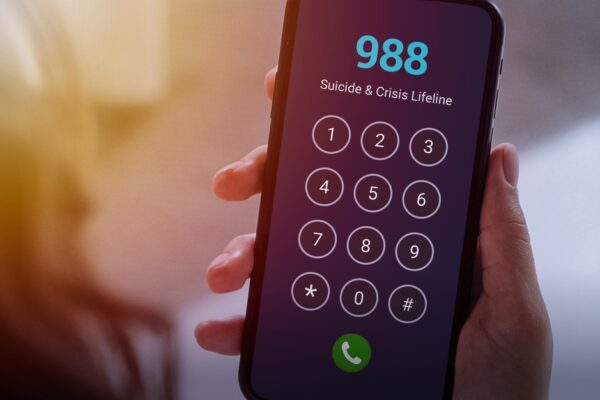
For immediate crisis support, call or text 988 to reach the 988 Suicide & Crisis Lifeline.