In 2007, when Minnesota Rep. Keith Ellison became the first Muslim elected to Congress, he chose to place his hand on a two-volume Quran that once belonged to Thomas Jefferson. The gesture brought attention to a largely forgotten chapter of American history: one where Islam provided both a foundation for the new nation’s government and the strongest test case for the founders’ beliefs about religious liberty. And it revived a long-standing debate over who belongs in the American experiment, according to Tazeen Ali, an assistant professor of religion and politics at Washington University in St. Louis.

According to Ali, Jefferson’s Quran, purchased in 1765, sat on his bookshelves alongside legal treatises and other works of political theory. Like other Enlightenment-era thinkers, the young lawyer believed that even Islam had to be studied seriously if he wanted to legislate in a modern world. Yet, Jefferson and the other fathers often held contradictory beliefs about Islam: It was both feared and held up as a test case for the boldest claims about American religious liberty.
“Many people in the founding era were more comfortable with what one might call ‘toleration’ than with full religious liberty,” said Ali, who teaches in the WashU John C. Danforth Center on Religion and Politics. “Toleration assumes that one religion, usually Protestant Christianity, sets the tone for the nation, and that other groups may be allowed to exist as long as they do not challenge that dominance.
“In that world, Islam can appear as something so foreign and so threatening that it sits outside of the circle of toleration altogether.”
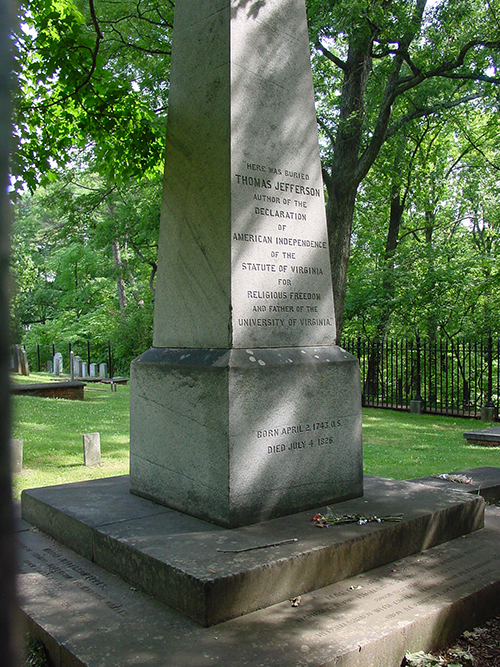
According to Ali, Jefferson took a more expansive stance on religious liberty. Inspired by English philosopher John Locke, he argued that religious liberty meant no established church, no religious test and no civil punishment for belief. That view shaped his work on the Virginia Statute for Religious Freedom, which disestablished the Church of England in Virginia, ended tax support for a single state church and declared that no one could be forced to support religious worship or lose civil rights because of their beliefs.
Jefferson later said the law was meant to protect “the Jew, the Gentile, the Christian, the Mohammedan, the Hindu, and the infidel of every denomination.”
That same logic carried into the Constitution. Article 6 states that no religious test shall ever be required as a qualification for office under the United States. That was a radical break from European practice, where public office was often restricted by religion. Jefferson, George Washington and John Adams all defended the clause as essential to republican government. If authority came from “we the people,” then access to office could not be limited by creed.
In principle, then, the new republic could include a Muslim governor, a Jewish senator or an atheist judge, Ali said. Supporters of the Constitution accepted that possibility as the price of genuine liberty. Critics, especially Anti-Federalists, saw danger in the idea.
Theory versus practice
Jefferson imagined that, in principle, even a Muslim could one day stand as an equal citizen under the law and serve in office, and he believed that religious groups should not be subjected to violence or persecution. In private correspondences, though, he sometimes echoed more conventional dismissals or disavowals of Islam as superstitious or despotic, Ali said.
“I want to be wary about not romanticizing Jefferson’s universal claims about religious liberty,” Ali said. “Jefferson’s inclusion of Mohammedans in his rhetoric didn’t mean that actual Muslims in his world, whether the enslaved Africans on U.S. soil or foreign diplomats, enjoyed anything like full equality. Nor did it mean that public culture suddenly embraced Islam as a legitimate American religion.”
As president, Jefferson led the young nation’s first sustained overseas military campaign, the Barbary Wars, fighting against Muslim powers in the Barbary states and Morocco of North Africa. According to Ali, the Barbary Wars crystallized an American image of Muslim politicians as barbaric, fanatical and fundamentally opposed to U.S. civilization and Western values.
“This gap between formal policy and popular rhetoric matters, because it helped plant the early seeds of what we now call American Islamophobia.”
‘The founders’ most generous language about religious liberty often pushed beyond their own practices. They could imagine equal rights for an abstract Muslim neighbor, while failing to recognize, or at least refusing to honor, the humanity and religious lives of the enslaved Africans in their own households.’
Tazeen Ali
Ali said these contradictory actions reveal a structural limit to American religious liberty. On one hand, there’s the theoretical promise of expansive religious liberty. On the other is a long habit of viewing Muslim-majority societies through the lens of threat. American public life has been negotiating both legacies ever since, Ali said.
While Jefferson and the other founders imagined Muslims as hypothetical citizens in arguments about religious liberty, their convictions did not extend to the enslaved Africans, many of whom were Muslims, then living in the U.S.
“There is clear evidence that educated, literate Muslims were among those enslaved in the early republic. They remind us that Islam was present not only in theory, but in their lived experience,” Ali said. “Yet when Jefferson or Washington wrote about Mohammedans as possible citizens, they almost always imagined Muslims as people out there in North Africa, the Ottoman Empire, in the realm of diplomacy and war.
“The founders’ most generous language about religious liberty often pushed beyond their own practices. They could imagine equal rights for an abstract Muslim neighbor, while failing to recognize, or at least refusing to honor, the humanity and religious lives of the enslaved Africans in their own households,” Ali said. “Placing those facts side by side sharpens the tension at the heart of this 250-year-old story.”
Hypocrisy or visionary?
Article 6 of the Constitution and the Virginia Statute for Religious Freedom are held up as visionary texts. At the same time, Ali noted that the documents were written in a world where Muslims were being invited in, at least in theory, while others were being held in chains. That tension between an abstract inclusion and a lived exclusion doesn’t disappear in American memory, Ali said.
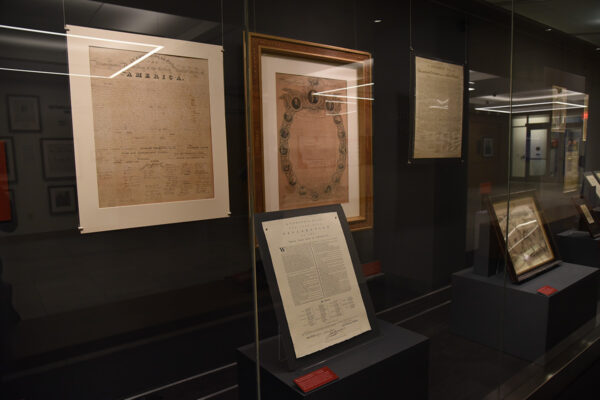
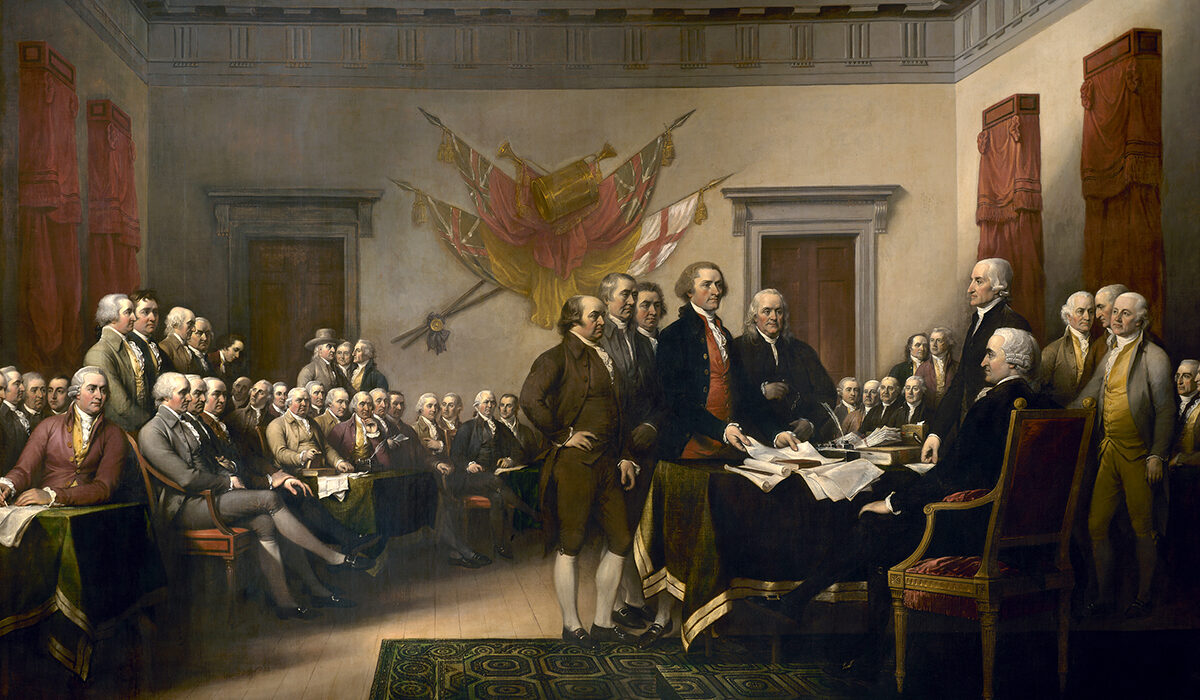
“As we return to 1776 from the vantage point of 2026, Jefferson’s Quran poses for us an uncomfortable but necessary question,” Ali said. “The Declaration tells us that all men are created equal and endowed with unalienable rights. Yet the person who penned those words enslaved other human beings and helped wage war against Muslim powers in North Africa.”
According to Ali, we could treat that story as one of hypocrisy. Or one could view this as an example of how the founders, in their better moments, laid down principles that were broader than their own practices.
“When Jefferson or Washington imagined Muslims as hypothetical citizens, they planted the seeds that would take generations to grow,” she said. “Even today, these seeds are still being contested. American Muslims have long been treated as suspect enemies, as alien to the nation, especially in the years since 9/11.
“And yet, American Muslims also now serve in Congress, and they hold local office. They serve in the military, teach in public schools and live out the role that Locke and Jefferson once described only in theory.”
According to Ali, Jefferson’s Quran doesn’t tell us what to think about Islam today, but it does confront the question of what the founders knew they couldn’t avoid: Will the promises of 1776 stop at the edge of our own religion, or will they extend, as Jefferson and his allies sometimes argued, to Muslims and beyond?
“On this anniversary of 1776, Jefferson’s Quran offers us this choice: We can treat the founding story as a closed story that belongs to one religious group, or we can treat it as this unfinished project whose promises can be widened again and again to match its own highest claims,” she said.
Tazeen Ali presented “Islam and the Founding Fathers” as part of the 2026 spring course “1776, Then and Now,” offered by the Danforth Center on Religion and Politics.