In Brief
- Center for Social Development research provided evidence supporting automatic enrollment in the federal child account policy.
- Researchers translated that evidence into policy recommendations that helped inform Trump Accounts’ design.
- Automatic account creation is a milestone, but ensuring families can access accounts and federal funds remains unfinished work.
Research from the WashU Brown School’s Center for Social Development (CSD) helped lay the groundwork for a major change to the federal government’s new Trump Accounts program: automatic account creation for eligible children, which the administration announced Sept. 29.
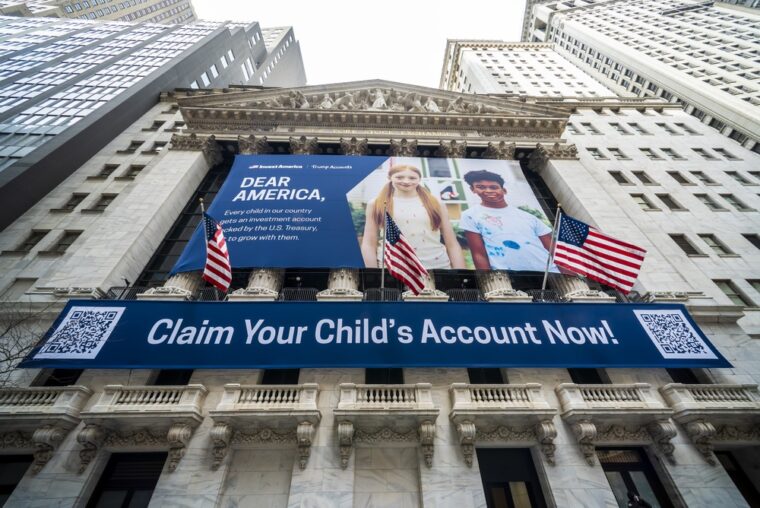
The U.S. Treasury Department and the Internal Revenue Service (IRS) established a process for automatically creating Trump Accounts for eligible children who don’t already have an account. The change makes account creation the default rather than requiring families to initiate the process. Families must still claim the account to unlock the seed money from the federal government.
For CSD researchers, the policy change is the latest development in nearly two decades of research and policy engagement on automatically opening savings accounts for children.
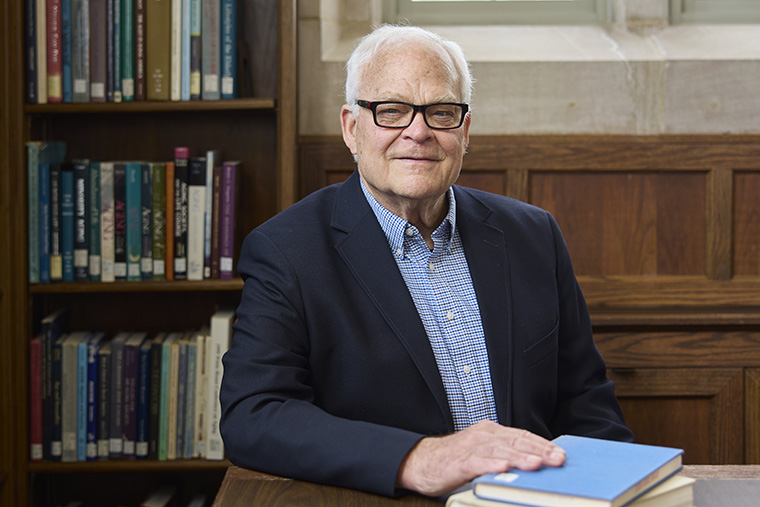
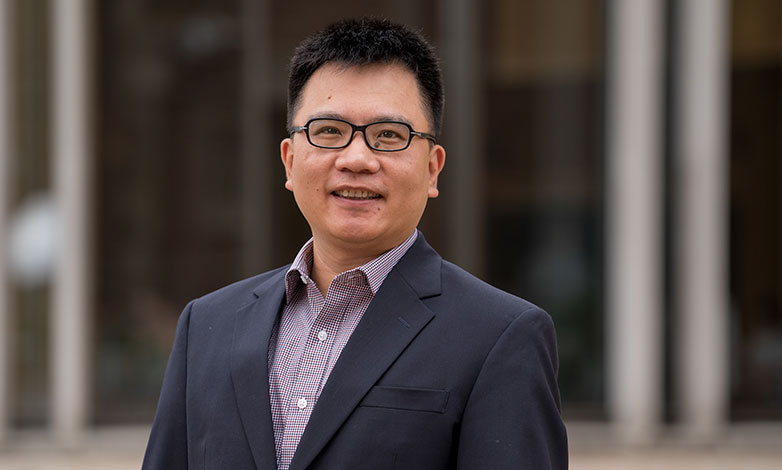
“CSD has been the leading source of evidence supporting automatic enrollment in Trump Accounts,” said Michael Sherraden, the George Warren Brown Distinguished University Professor at the Brown School and founding director of the CSD. “Jin (Huang, the Irving Louis Horowitz Professor in Social Policy at the Brown School and co-director of the CSD) led most of the policy briefs, and this evidence has played the dominant role in this policy decision by Treasury.”
Sherraden first proposed universal, progressive savings accounts beginning at birth in his landmark 1991 book, “Assets and the Poor: A New American Welfare Policy,” the policy vision that CSD later tested in SEED for Oklahoma Kids (SEED OK).
Huang said automatic enrollment is an important step, but more work is needed to ensure families can fully benefit from the program.
“This is great news and a move in the right direction,” he said. “It is an important design change since the law passed, but we still have important work to do to make sure all children can access both the accounts and the funds.”
Evidence from SEED for Oklahoma Kids
CSD’s work on the federal program builds on SEED for Oklahoma Kids, a policy experiment launched in 2007 that has followed children and families for 19 years.
SEED OK has support from the Charles Stewart Mott Foundation, Ford Foundation and other funders, in partnership with the Oklahoma state treasurer’s office.
SEED OK tested the effects of automatically opening and funding savings accounts for newborns. Every child in the treatment group received an automatically opened account with a $1,000 deposit.
After 19 years, 100% of children in the treatment group still held their accounts, compared with about 6% of children in the control group, Huang said.
The research helped establish automatic enrollment as a central feature of Child Development Account policies adopted by states around the country. Huang said programs using this model now account for more than 95% of early wealth-building accounts in the United States.
Treasury’s master trust structure for Trump Accounts also closely parallels the pooled account structure used in SEED OK and subsequent statewide Child Development Account programs, he said.
Research informed federal policy
After Congress enacted Trump Accounts in July 2025, CSD researchers began applying what they had learned through the SEED OK experiment to improve Trump Accounts.
Huang and his colleagues produced a series of policy briefs examining automatic enrollment and other design features of Trump Accounts. The briefs offered practical recommendations for implementing the federal program.
CSD also submitted public comments in response to two Treasury and IRS requests for input; participated in a public hearing; and met with Treasury officials to discuss policy design. The center worked with state treasurers’ offices, the Aspen Institute, the Urban Institute, the Washington Center for Equitable Growth and other key stakeholders to make the evidence-based case for automatic enrollment.
Sherraden also helped initiate discussions between the Social Security Administration and Treasury Department about using Social Security data to automatically identify and enroll children in Trump Accounts. Ray Boshara, senior policy adviser at CSD, has been a leading figure informing federal child account policy for decades, including the 401Kids Savings Act introduced in the Senate in 2024 and CSD’s engagement on Trump Accounts.
‘This evidence has played the dominant role in this policy decision by Treasury. Applied social research does not get better than this. Years of demonstration and evidence informing a key policy decision that is very positive for the country.’
— Michael Sherraden
More work remains
Automatic enrollment addresses a major barrier to participation, but Huang said it does not guarantee that every eligible child will benefit.
Families still must claim their accounts, and the $1,000 federal seed contribution for young children requires a separate election, he said.
“Creating the accounts automatically is real progress,” Huang said. “The next step is making sure every child receives all the funds automatically too, without depending on parents to take action, because that is where the lowest-income children are most likely to be left out.”
“I think this effort really illustrates CSD’s longstanding applied approach to social policy,” he said. “We conduct rigorous research, test ideas in real-world settings and bring evidence to policymakers. In the case of Trump Accounts, nearly two decades of research on Child Development Accounts helped inform a fundamental decision about how millions of children will gain access to an asset-building opportunity. I’m very proud of our entire team and the work we have accomplished.”