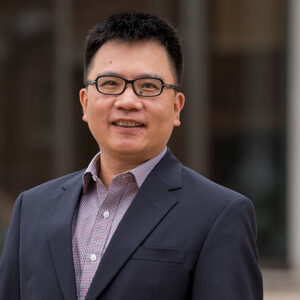
In addition to teaching, Huang is the co-director of the Center for Social Development and an internationally renowned expert in the development of social policies that support family and child well-being. His work centers on financial capability and asset building (FCAB) programs for disadvantaged populations, such as low-income children, children with disabilities, children of immigrants, and youth in transition to adulthood. Huang’s research aims for universal policies that offer financial capability and structured asset building for all.
Huang began his career as a practitioner working with people with disabilities in the United States and China, and that work continues in his research on family-focused interventions.
The Treasury Department should adopt automatic enrollment for Trump Accounts, and states should be partners in achieving it. All kids in, building wealth from day one, writes Jin Huang.
There is still time for the government to act to make Trump Accounts a successful driver of generational wealth for American families, write Jin Huang and Stephen Roll.
Jin Huang, Irving Louis Horowitz Professor of social policy at the Brown School and co-director of the Center for Social Development; and Stephen Roll, assistant professor in the Brown School and research director for the center
Now is the time for a prudent national investment to deliver full financial inclusion for all Americans. The reforms proposed here would leverage technology to provide basic financial services for everyone. The U.S. economy will recover more fully and grow stronger over time as a result.
Research from the WashU Brown School’s Center for Social Development helped lay the groundwork for a major change to the federal government’s new Trump Accounts program: automatic account creation for eligible children, which the administration announced Sept. 29.
Researchers at the Center for Social Development in the Brown School at Washington University in St. Louis are launching a new initiative to help shape the future of wealth-building policy in the United States, with a focus on giving children stronger financial foundations that can last a lifetime.
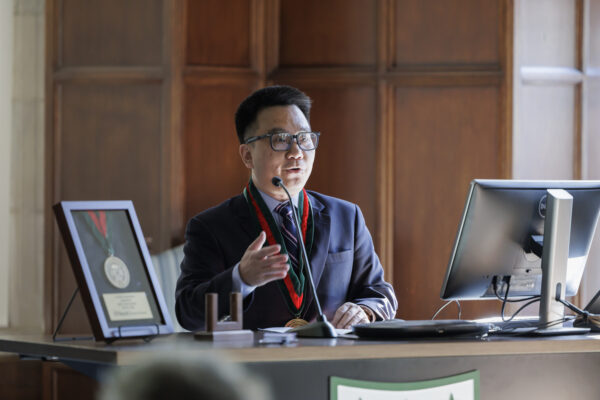
Jin Huang, an expert in the development of social policies that support family and child well-being, has been installed as the Irving Louis Horowitz Professor in Social Policy at the WashU Brown School.
Widespread promotion has started for so-called Trump Accounts, including an ad during the Super Bowl. The accounts allow parents to opt in to claim investment seed money of up to $1,000 for their children. But that opt-in part is problematic, say two experts on child development accounts at Washington University in St. Louis.
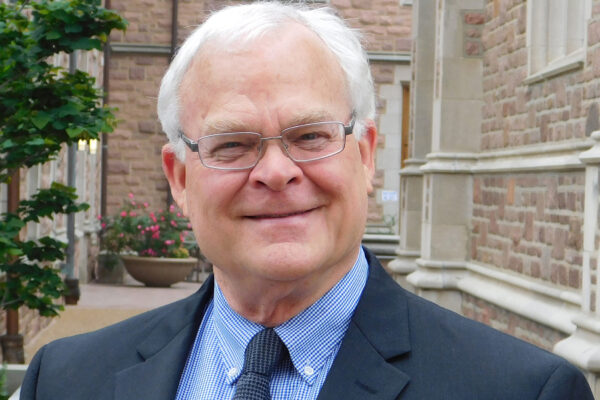
Michael Sherraden, the George Warren Brown Distinguished University Professor at WashU, has dedicated much of his research to asset building. His efforts helped lay the groundwork for a recent federal law to help children and families.
Using a “check-the-box” opt-in process to open federally funded Trump Accounts for children will likely exclude millions of eligible families — and undermine the program’s promise to promote lifelong asset building, finds a new policy brief from the Center for Social Development at Washington University in St. Louis.