In Brief
- Election misinformation is a persistent challenge around the world.
- AI-generated “pre-bunking” significantly reduced belief in false election claims.
- Authors note human experts remain essential for developing and refining interventions.
Artificial intelligence (AI) could help counter election misinformation at the same speed that false narratives spread, according to new research from Washington University in St. Louis and the California Institute of Technology.
The study, published in Royal Society Open Science, offers a scalable AI-assisted framework that could be quickly deployed to challenge election misinformation.
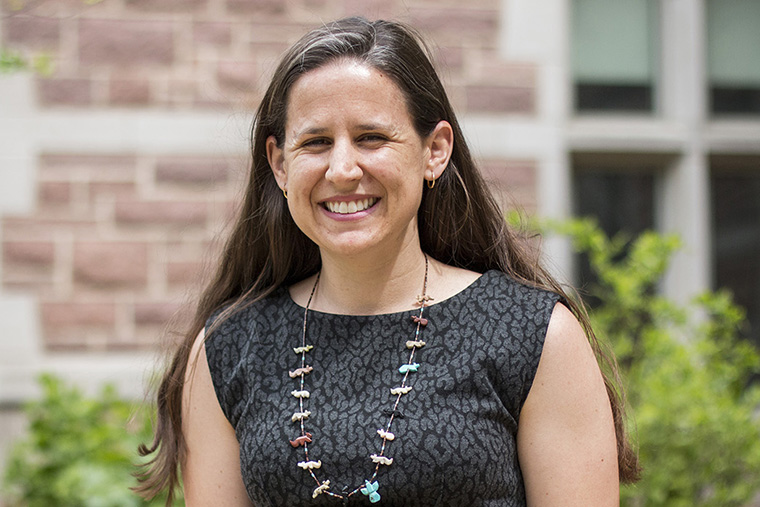
“Misinformation has become a persistent challenge for democracies around the world. From the Brexit referendum and the 2016 U.S. presidential election to elections in India, false and misleading information can make it harder for people to distinguish fact from fiction and participate in civic life,” said study co-author Betsy Sinclair, the Thomas F. Eagleton University Professor of Public Affairs and Political Science in WashU Arts & Sciences.
“Generative artificial intelligence has only made the problem worse. Large language models can produce vast amounts of convincing content quickly and cheaply, allowing false narratives to spread and evolve faster than traditional fact-checking efforts can keep up,” Sinclair said. “This led our research team to ask a simple question: What if we could use the technology driving the misinformation problem to help solve it?”
In the study of more than 4,200 U.S. registered voters, Sinclair and her team found AI-generated “pre-bunking” articles significantly reduced belief in false election claims — even after participants subsequently read persuasive articles promoting those claims. The effect remained one week later, although it was smaller.
“Pre-bunking” is based on the idea of inoculation. Rather than waiting for a false claim to spread and then trying to debunk it, people are exposed beforehand to a weakened version of the misinformation along with accurate information that helps them recognize and resist the claim when they encounter it later, Sinclair explained.
Previous research has demonstrated that the strategy works, but there’s a fundamental problem with traditional pre-bunking: scale. Creating a customized intervention for every new rumor requires significant human expertise and time. That’s not practical during an election cycle when rumors spread quickly.
Sinclair says that’s what makes this study so promising. According to their findings, once human experts had refined the instructions used to generate the articles, AI-generated interventions were no less effective than those that received additional human review.
About the research
The researchers conducted a preregistered, two-wave experiment before the 2024 U.S. general election. The first wave included 4,293 registered voters recruited through YouGov. Participants were randomly assigned to one of five election-related rumors involving voter fraud, voter rolls, election hacking, “blue shift” and voting machines.
Before reading a persuasive article promoting the assigned false claim, some participants received a short AI-generated pre-bunking article addressing the claim. Others received a neutral article about the effects of remote work on urban planning.
The misinformation articles were adapted from actual articles published by Breitbart and were designed to provide a strong test of the intervention.
The results were striking. Among participants who did not receive the pre-bunking article, confidence in the assigned election rumor increased by an average of 0.43 points on a 10-point scale after reading the misinformation article. By contrast, confidence in the rumor decreased slightly among participants who received the AI-generated pre-bunking article beforehand.
Overall, the pre-bunking reduced immediate confidence in the false claim by 0.55 points. One week later, the effect had declined to 0.17 points, a difference that is still statistically significant, the researchers found.
But the benefits of pre-bunking didn’t stop there. Researchers found the intervention also helped protect confidence in election administration.
Participants who read the misinformation without first receiving the pre-bunking articles showed a larger decline in confidence that votes would be accurately counted nationwide. Those who received the pre-bunking articles experienced a smaller decline. The researchers estimated an immediate increase of about 0.19 points in national election confidence on the 10-point scale.
The effect was particularly notable among people who entered the study with greater confidence in election misinformation.
One week after the intervention, the researchers found that the reduction in rumor belief was roughly 1 point among Republicans and ideological moderates — larger than the effect among Democrats and liberals, who generally began the study with lower levels of belief in the rumors.
“This finding was particularly reassuring because we worried that efforts to counter misinformation could produce a ‘backlash,’ causing people to become even more committed to a false claim when presented with information that challenges their beliefs,” Sinclair said.
“But that wasn’t the case. Rumor confidence did not increase among any partisan group as a result of our intervention, and even among Republicans.”
AI is a tool, not a replacement for human expertise
For the experiment, the researchers first used human experts to develop and refine a detailed prompt. They repeatedly generated AI responses, reviewed them and modified the prompt until it produced an effective pre-bunking article without requiring additional edits.
That refined prompt then was used to generate interventions for the other election rumors. The AI was supplied with only authoritative election-security information from the Cybersecurity and Infrastructure Security Agency.
The distinction is important, Sinclair said.
“Human expertise was not eliminated. Instead, it was moved to the front of the process. Once the prompt had been carefully developed, new interventions could be generated without reviewing each individual article,” she said.
“This could allow misinformation defenses to operate at machine speed — responding to emerging rumors during an election campaign as fast as they’re generated,” she added.
However, that the findings do not mean AI can automatically solve the misinformation problem, the authors cautioned.
The study has its limits: it tested five U.S. election-integrity rumors, relied on authoritative information from a single federal agency and used misinformation articles adapted from one partisan news outlet. The researchers also measured self-reported beliefs rather than behaviors such as sharing misinformation, voting or participating in protests.
Additionally, in the study, the boost in confidence in election administration did not persist for a full week, suggesting that broader skepticism about elections may require repeated “boosters” rather than a single intervention.
Still, the researchers say the results demonstrate a potentially powerful role for AI in combating misinformation.
Mitchell Linegar of Caltech, Sander van der Linden of the University of Cambridge and R. Michael Alvarez of Caltech co-authored the study with Sinclair.