WashU senior Cela Lopez is studying political science so, of course, she’s interested in politics and policy. But what she really cares about is how we think about those topics.
“What shapes our political identity? How have we been socialized to believe what we believe? Why do we act the way we do?” Lopez asked. “That’s political psychology. I didn’t know the name for it when I came here, but those are the questions I want to answer.”
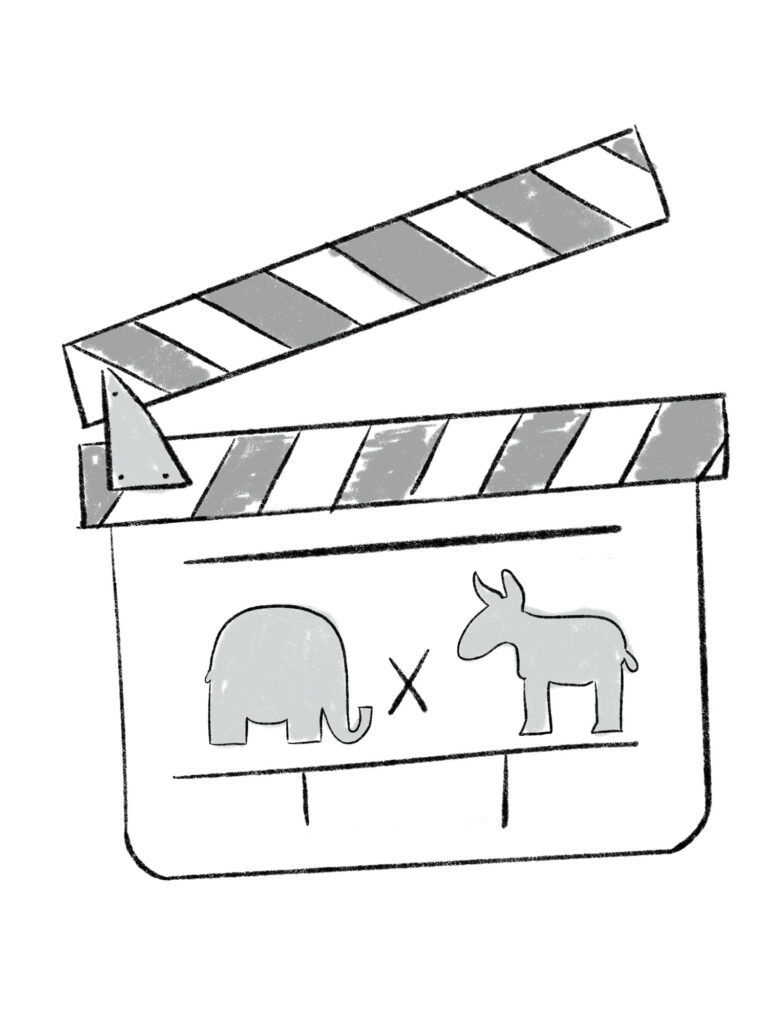
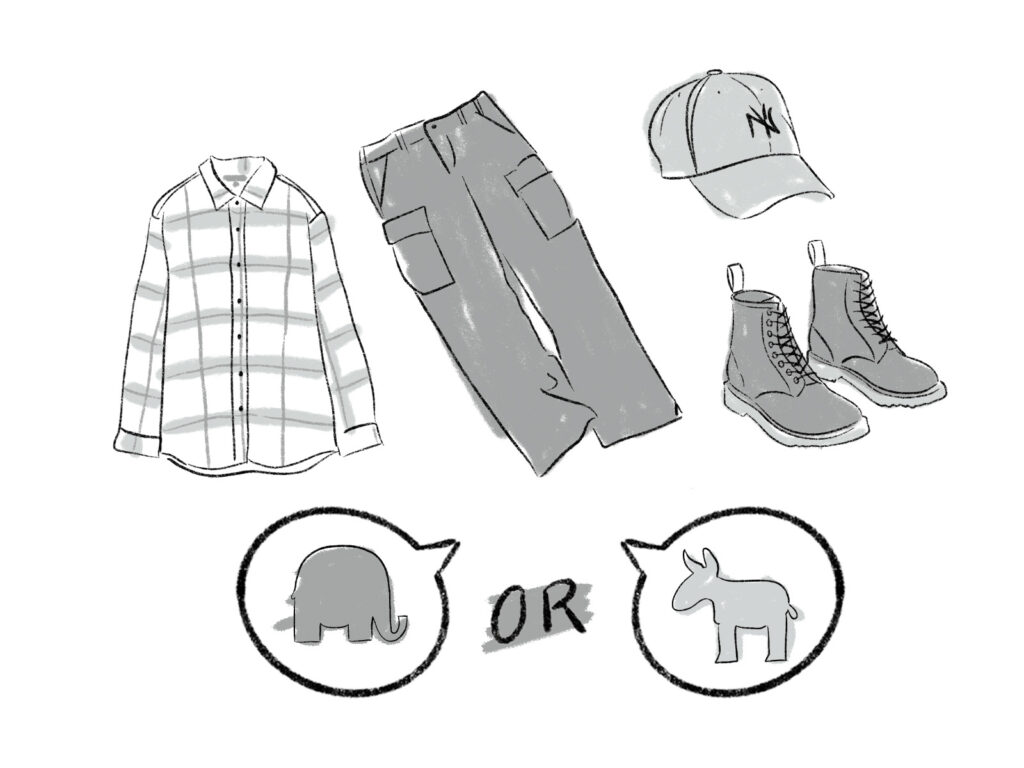
During her time at WashU, Lopez has conducted a number of independent research projects that explore the intersection of psychology, culture and politics. As a sophomore, she studied how low-income students, such as herself, engage in politics. In Mexico, she investigated how American expatriates and Oaxaca native residents perceive that city’s changing demographics. As a summer research scholar at Northwestern University, she analyzed how Democrats and Republicans take away different messages from the same movie. And now, with support from Taylor Carlson, an associate professor of political science in Arts & Sciences, Lopez is studying how we assume one another’s political partisanship based solely on clothing.
“When we enter a classroom, we all kind of scope out the room and think, ‘This person has a similar sense of style, maybe we have similar opinions.’ Or, ‘This person dresses differently from how I dress. I wonder what they’re going to say,’” said Lopez, who is majoring in both political science and American culture studies. “Consciously or not, we are all sending that signal.”
Lopez, who grew up in Galesburg, Ill., will continue her work in political psychology as a PhD student at Northwestern University. Here, she discusses how she developed her skills as a researcher and how she shares that knowledge as an ambassador for the Office of Undergraduate Student Research.
Did you come to WashU knowing that you wanted to pursue research?
Growing up, I always knew I wanted to get a PhD. My mom was the first person on either side of my family to go to graduate school, and she would talk about how that opened up the world to her. That made a big impression on me. So I wanted to find a college where I could do multidisciplinary research as an undergrad, and that was WashU. But I didn’t really know what that looked like until I met with Dr. Shady (Stephanie Shady, a lecturer in political science and associate director of graduate studies), one of my terrific mentors here. She started at the very beginning: “Do you like numbers or do you like words?” It was that basic. From there, I learned a lot of the steps and tools required to do good research — the difference between a research paper you write for class and a literature review, the difference between qualitative and quantitative research, how to conduct an interview, what is an IRB (institutional review board).
How did you get connected with the Office of Undergraduate Research?
I was a WUSA (WashU Student Associate), so I knew the Office of Undergraduate Research was a place where I could learn how to better communicate my research and help other researchers, especially researchers who come from backgrounds like mine. As a social sciences ambassador, I would meet one-on-one with students and talk to them about funding, summer research opportunities and how to reach out to an adviser. A lot of questions I got were logistical, but they could also be emotional because your research is important to you. I also would work with the other ambassadors to organize programs. We recently did research “speed dating,” where researchers were paired with people from different disciplines so they could practice communicating their very important, sometimes very complex, research and work on developing their research voice.
How would you define your research voice?
For me, it is really rooted in the idea of accessibility and ensuring that everyone, regardless of their level of education, can take something away from the work. Like after my summer experience at Northwestern, I did a presentation for my family and answered their questions. I didn’t want it to be, “Oh, you’re smart. We’re proud of you.” I wanted them to be engaged and learn something, too. Research is not just for academia; it’s for the world.