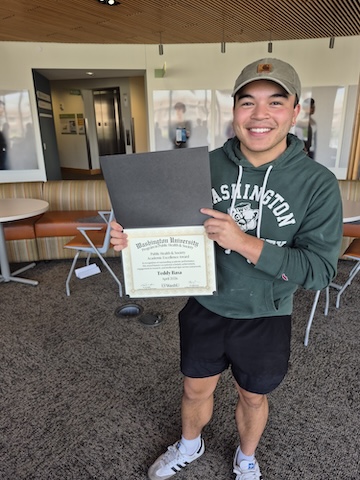
Public health is often associated with hospitals, disease outbreaks and government agencies. But health also is shaped by architecture — by sidewalks, green space, accessible design and the environments people move through every day. Teddy Basa, a rising junior at Washington University in St. Louis, is seeking to better understand those connections.
Basa arrived at WashU intending to study architecture. A new undergraduate program in public health soon began broadening the way he thought about design.
“I’ve always wanted to design for people,” says Basa, who is majoring in architecture and public health and society.
Public health courses pushed Basa to think more deeply about people with different needs and lived experiences — and how design can either support or limit well-being. Those insights changed the way he thinks about everything from hospital floor plans and walkable cities to community-centered redevelopment.
“There’s such a strong intersection between design and healthcare,” Basa says. “There are so many facets to it.”
That broad, interdisciplinary perspective sits at the center of Public Health & Society, a new, fast-growing undergraduate program housed in Arts & Sciences.
The program was developed in collaboration with WashU Bursky School of Public Health, which confers graduate-level degrees and offers students an accelerated pathway into a master’s in public health. A landmark $200 million gift from the Bursky Family Foundation, announced in May, will support the school’s expanding education and research efforts.
“This program is a major step forward for both Arts & Sciences and WashU,” says Feng Sheng Hu, PhD, the Richard G. Engelsmann Dean of WashU Arts & Sciences. “We are combining our world-class liberal arts curriculum with hands-on internships and field experiences to prepare students not just to learn about public health, but to get out there and make a difference.”
Health beyond the clinic
Since launching its minor in fall 2024 and adding a major in fall 2025, the program has quickly attracted student interest. Less than a year after its debut, the major has enrolled 84 students alongside 72 minors, while more than 650 students have taken related courses.
The rapid growth reflects a broader shift in how students understand health — not simply as medicine or biology, but as a set of social, environmental, economic and structural forces that shape daily life.
“Health outcomes are rarely random,” Lindsay Stark, DrPH, program co-director and professor of public health, says. “They follow patterns of gender, race, poverty and power. This program gives students the frameworks to see those patterns and understand pathways to intervene.”
Unlike many undergraduate public health programs housed entirely within schools of public health, Public Health & Society draws on disciplines spanning anthropology, psychology, business, environmental studies, natural sciences, policy, design and the humanities.
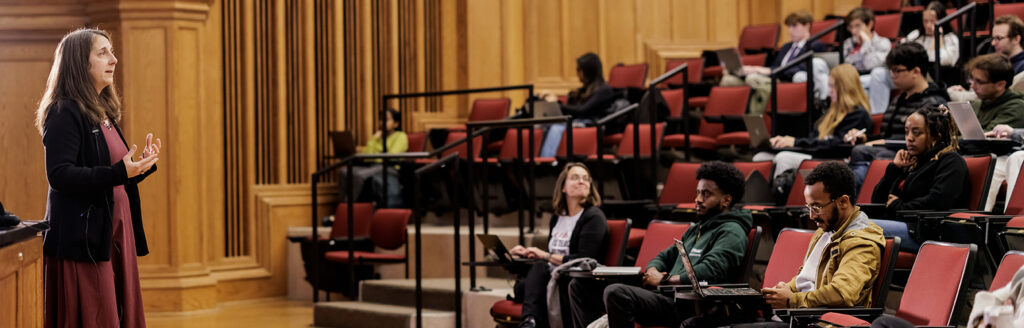
“Public health is ‘health for everybody,’ but that doesn’t mean everyone experiences health equally,” says T.R. Kidder, PhD, program co-director and the Edward S. and Tedi Macias Professor in the Department of Anthropology. “By rooting this program in Arts & Sciences, we give students tools to think critically about ethics, inequality and the broader forces that define well-being.”
Core courses are team-taught by faculty from Arts & Sciences and Bursky Public Health, while electives — more than 180 in total — allow students to customize their paths around specific interests. That flexibility encourages students to approach public health challenges through multiple perspectives, combining coursework across disciplines and exploring how public health intersects with fields such as entrepreneurship, food systems and climate science.
“The world is interdisciplinary,” Basa says. “The way that we approach the world isn’t in one finite direction.”
As a prospective student touring campus, Basa was struck by WashU’s emphasis on accessibility, including the ability to move throughout campus without relying on stairs — a detail that resonated with him.
Basa recently completed a course called “Design and Social Systems” in the Sam Fox School of Design & Visual Arts. The course partnered with Three Steps Home, a St. Louis medical respite center serving unhoused individuals recovering after hospitalization. Working alongside classmates, Basa helped redesign the organization’s logo, website and promotional materials while studying how design can support healing.
Basa hopes to continue exploring those intersections through an upcoming APEX (Advanced Practical EXperience in Public Health) capstone placement focused on community-based design and health. Public Health & Society requires students to complete 140 hours of field-based work with community organizations and research partners — an opportunity rarely required at the undergraduate level.
“I don’t look at anything now without making sure that it’s contextually aligned,” Basa says. “Making sure whatever you’re doing, you’re thinking about everybody, or you’re thinking about the context of where it is, how you’re doing it, why you’re doing it.”
72
Public Health & Society minors
84
Public Health & Society majors
180
Electives offered
650
Students have taken related courses
Understanding the barriers
That systems-oriented thinking increasingly appeals to students influenced by the COVID-19 pandemic, rising mental health concerns, growing awareness of health inequities and debates surrounding public trust, misinformation and access to care.
“Undergraduate education is a critical entry point for public health,” says Sandro Galea, MD, DrPH, the Margaret C. Ryan Dean of Bursky Public Health, the Eugene S. and Constance Kahn Distinguished Professor in Public Health, and the university’s vice provost for interdisciplinary initiatives. “It’s where students begin to understand how complex the drivers of health are — and how they can contribute to addressing them.”
For many students, those questions become personal.
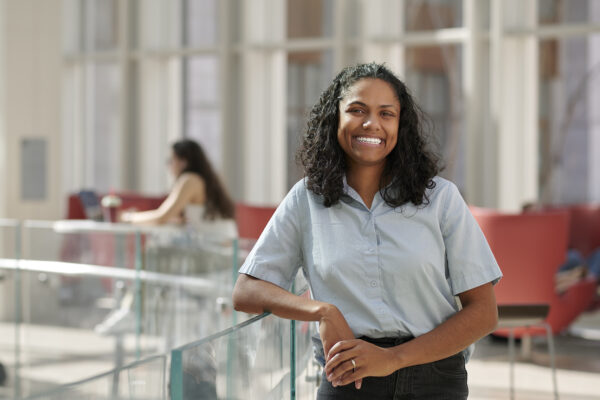
Growing up in a predominantly Hispanic community, Brianna Ayala, a rising senior, saw firsthand how gaps in access, education and care affected underserved populations. The experience shaped her interest in health disparities and her desire for a broader understanding of health beyond medicine.
“No other major fully aligned with what I was genuinely curious about,” says Ayala, a pre-med student majoring in public health and society. “I was looking for something that didn’t just focus on science or healthcare in isolation, but examined health within the context of diverse populations.”
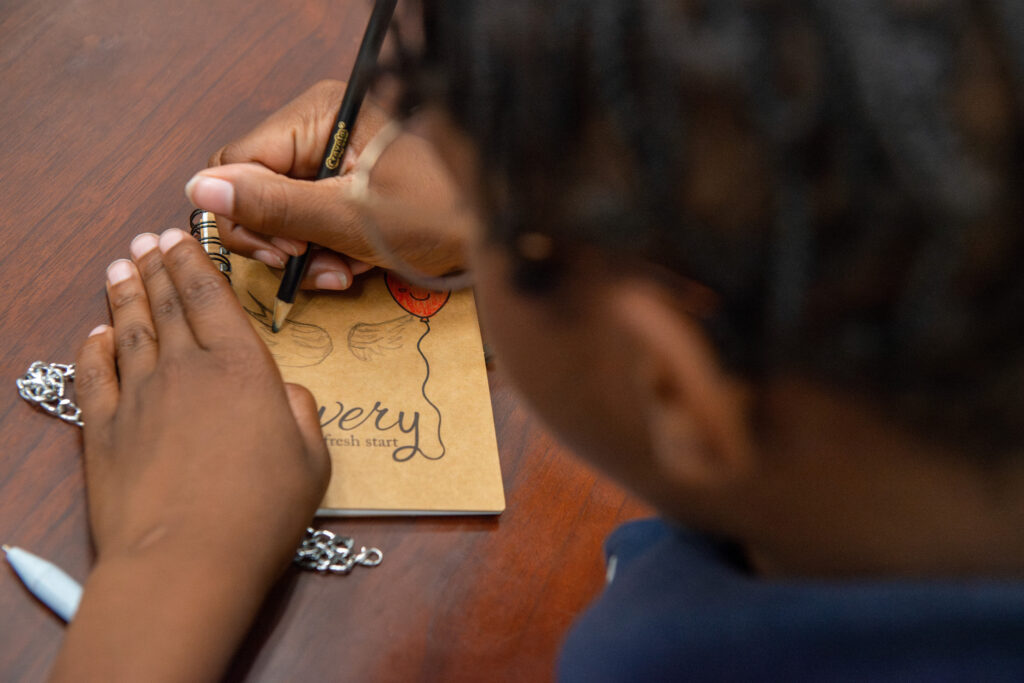
During her APEX placement at iFM Community Medicine, a St. Louis nonprofit organization serving uninsured and underserved communities, Ayala developed patient surveys and connected patients with educational materials and support services. She also helped expand an after-school program at the Youth and Family Center by incorporating journaling and expressive arts activities designed to support youth mental health and well-being.
As a Spanish speaker, Ayala worked directly with Spanish-speaking community members and also emphasized the importance of creating materials in languages people understand. She expanded outreach efforts by contacting more than 80 community organizations and participating in local events.
“You have to meet individuals and organizations where they are at,” Ayala says.“Treating a patient goes beyond addressing a health condition. It’s fully understanding their situation and the barriers they may face to fully be able to lead a healthy life.”
While Ayala focused on connecting patients with care, other students explored how public health guidance can become more accessible and easier to navigate.
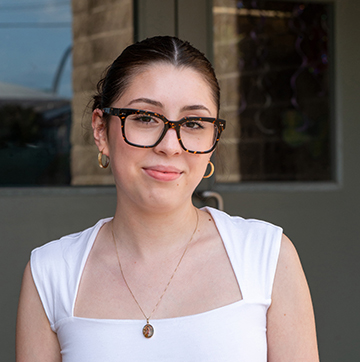
“I was looking for something that didn’t just focus on science or healthcare in isolation, but examined health within the context of diverse populations.”
– Brianna Ayala
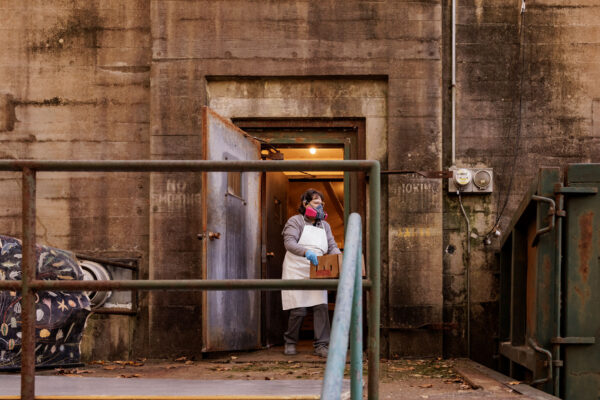
At Missouri’s Department of Health and Senior Services, recent graduate Faizan Noorani, AB ‘26, tackled a common public health challenge: helping family caregivers better navigate pain medication and opioid safety after surgery. “Imagine your loved one just came home from surgery with a new pain medication,” Noorani says. “Would you read a 12-page guide on best practices?”
He transformed lengthy materials into clear, readable handouts and infographics — developing a guide that emphasized safe care practices, risk awareness and support resources.
Noorani, who majored in philosophy-neuroscience-psychology and public health and society, says the experience reinforced a lesson central to public health communication. “A resource is only effective if it is clear enough and practical enough to use in day-to-day life,” he says.
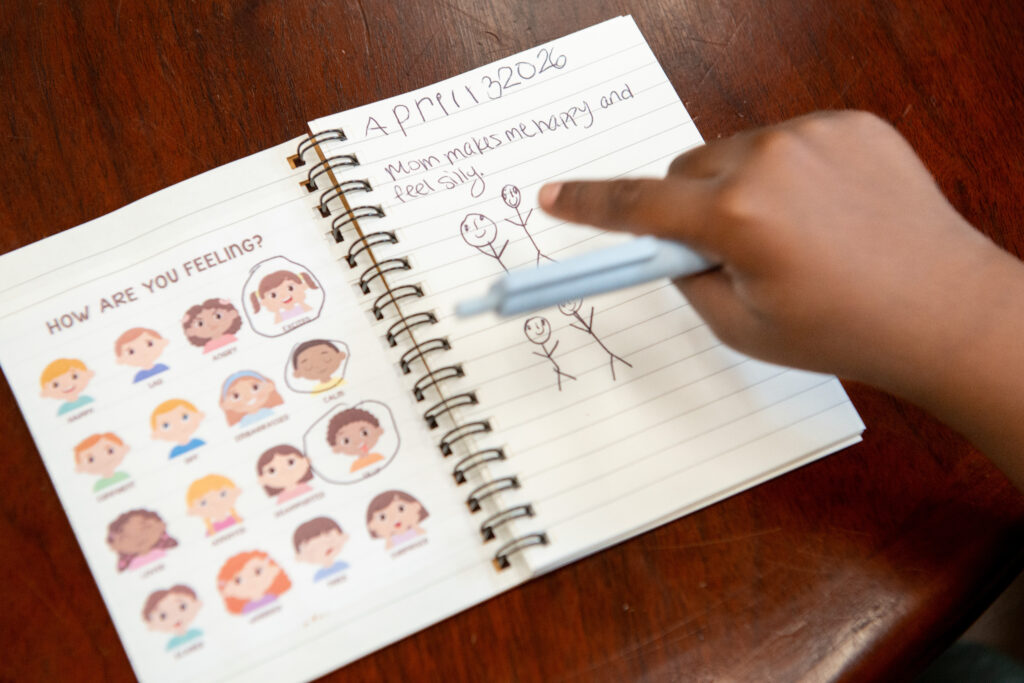
Faculty say immersive community experiences are central to the program’s philosophy.
“We require field experience at the undergraduate level, paired with structured reflection, so students can connect classroom learning to real-world practice,” Stark says. “That experience also emphasizes the ethical responsibilities of working in community settings.”
The systems behind care
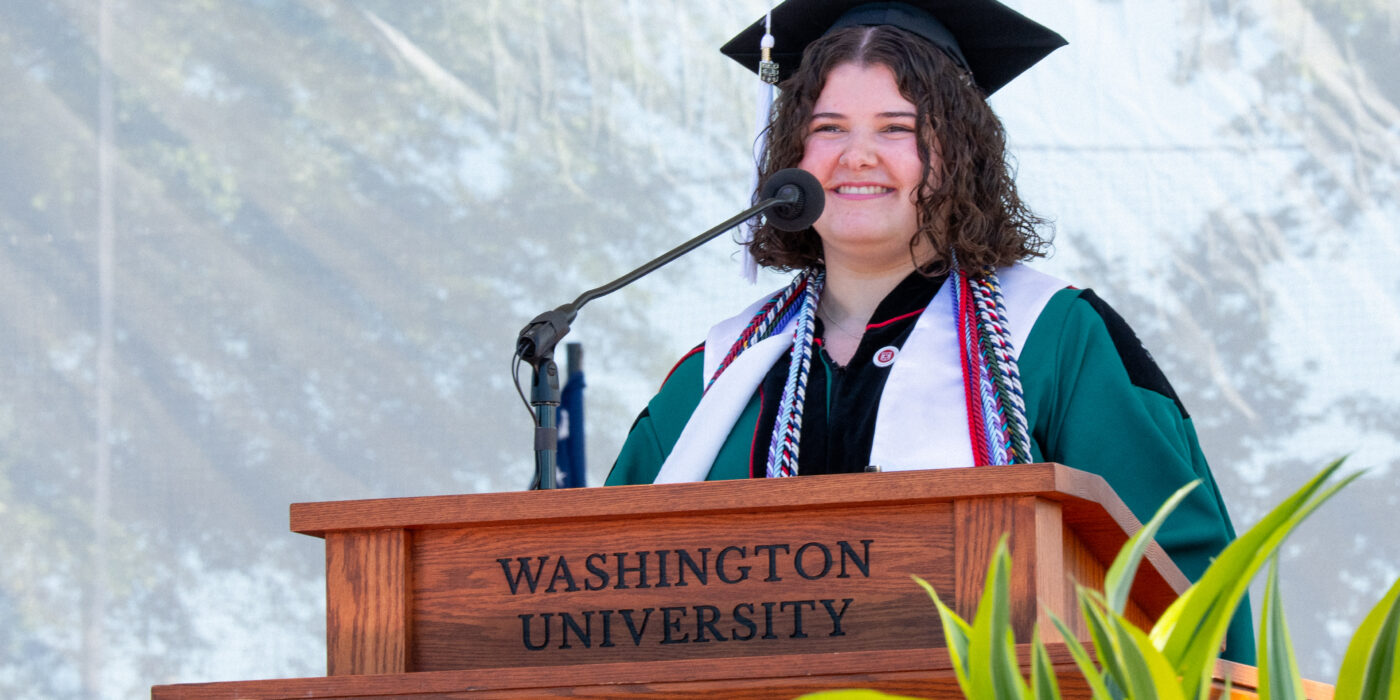
Mia Kouveliotes, AB ‘26, was drawn to public health through a different set of experiences.
Kouveliotes majored in anthropology, global health and environment, while minoring in psychological and brain sciences and public health and society. Next fall, she will attend the UNC Gillings School of Global Public Health in Chapel Hill, North Carolina, to pursue a master’s degree in public health with a concentration in health policy, and plans to possibly earn a PhD focused on mental health services, law and policy.
Her interest in systems-level mental health care emerged after working in an inpatient psychiatric unit.
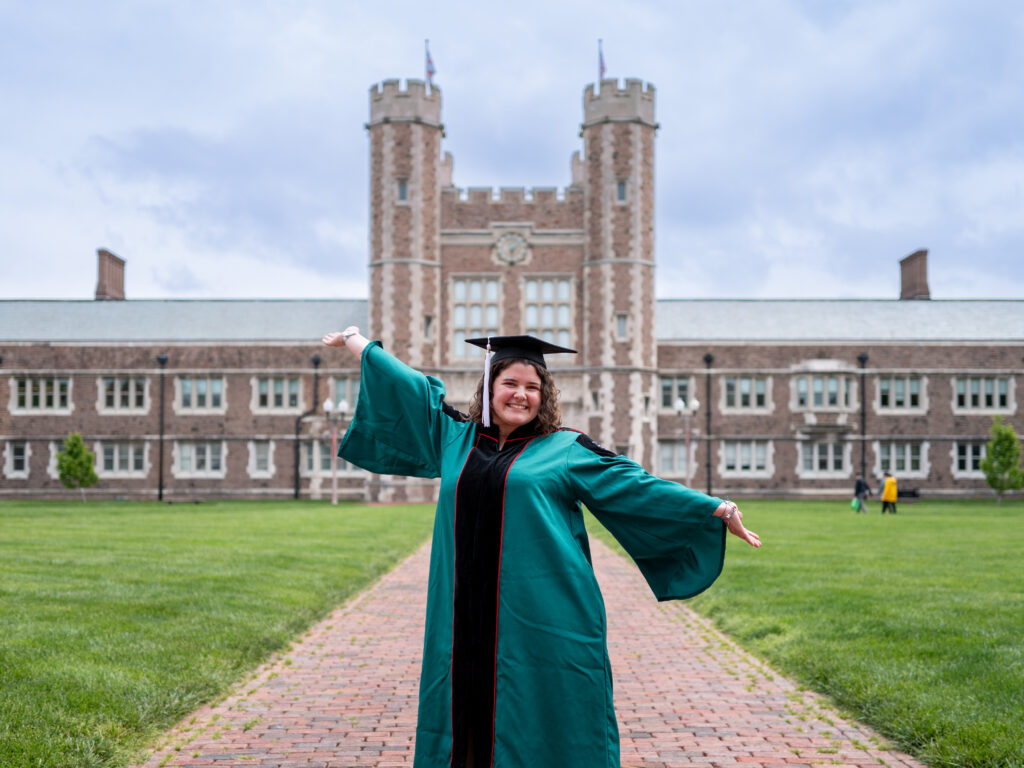
“I initially thought I wanted to pursue the clinician side of things,” Kouveliotes says. “But when I worked in the unit, I became more aware of systemic issues in mental health care and ethical concerns that can emerge during crises.”
The experience shifted her focus beyond individual treatment to the policies and systems shaping people’s lives before and after they enter care.
“Many of the reasons people were in care were socially rooted — tied to financial stress, work pressures and broader life circumstances,” she says. “I realized that treating a crisis is only one part of the equation. There’s an entire network of systems and experiences shaping someone’s life long before they enter care and long after they leave it.
“I explore how quality of care is impacted by mental health stigma and institutional policies that perpetuate that stigma,” she says.
Those questions ultimately come down, she says, to how patients are treated during some of the most vulnerable moments of their lives.
“When you’re in a mental health crisis, it’s probably the worst moment of your life, or one of the worst moments of your life,” Kouveliotes says. “And to be treated like a human in those moments — it can’t even be explained what the benefit of that is.”
When WashU launched Public Health & Society, Kouveliotes immediately saw it as a natural extension of the interdisciplinary education she had already begun building for herself through anthropology and psychological and brain sciences.
As one of the program’s student ambassadors, she helped shape curricular pathways and communicate its mission to prospective students. One of the most common conversations, she says, involves helping students understand that public health extends far beyond medicine.
“A lot of people don’t really understand how broad public health is and how it really applies to everything,” Kouveliotes says. “It could connect to engineering, art, business — nearly any discipline. You really can design your own major.”
Shaping what comes next
Even as public health faces political headwinds, workforce strain and funding uncertainty, several students say those challenges have only reinforced the importance of the work.
“We would not be a functioning society without public health,” Kouveliotes says. “And by admitting defeat or giving up on the path, that would be letting larger forces win.”
For Basa, public health reshaped the questions he brings into design work. “I think the world is a conversation,” he says. “Everything that I do should be a conversation.”
That idea — that health is shaped through systems, relationships, environments and communities — increasingly defines how students in the program think about both public health and their own futures.
“I think public health is valuable as either a primary or secondary major because it influences your perspective in whatever field you’re going into,” Basa says.
Kouveliotes says the work ultimately comes back to recognizing people’s humanity.
“Every human and every story matters,” she says.