The school is offering $10,000 scholarships to support affected professionals enrolled in the new AI for Business master’s program, while new corporate development offerings help organizations redesign work and reskill teams.
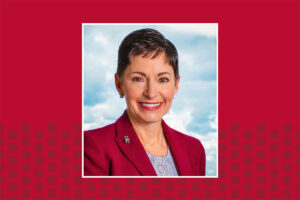
Penny Pennington, managing partner of Edward Jones, a St. Louis-based finanical services company, has been elected to serve as chair of the WashU Board of Trustees effective July 1. Pennington will be the first woman to hold the position.
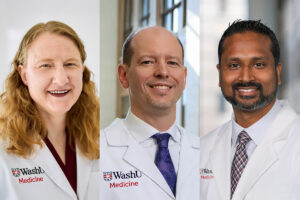
Three physician-scientists at WashU Medicine — neurologists Suzanne
Schindler and Christopher Smyser and otolaryngologist Sidharth Puram — have
been recognized by one of the nation’s oldest and most respected medical honor societies.
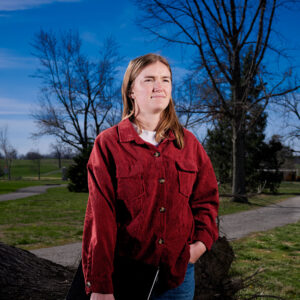
After an EF3 tornado ripped a milewide path through St. Louis and St. Louis County, Amanda Kesler, a master of landscape architecture candidate in the WashU Sam Fox School, combined aerial data and firsthand observation to map tree canopy damage.
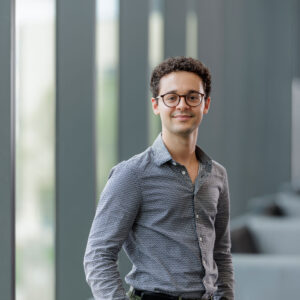
Goldwater Scholar and biology major Noah Kabbaj is on the front lines of research aimed at helping people overcome treatment-resistant mental health conditions, including severe depression. After graduating from WashU, Kabbaj plans to earn his PhD in neuroscience.
In celebration of Commencement, WashU Class Acts spotlights 2026 graduates who have engaged in meaningful research at WashU. They have created knowledge and mastered research skills — especially important at a time of funding cuts and public skepticism.
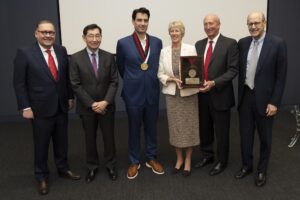
Nico Dosenbach, MD, PhD, is internationally recognized for his research in precision brain mapping and discovery of the network within the brain that links cognition with movement.