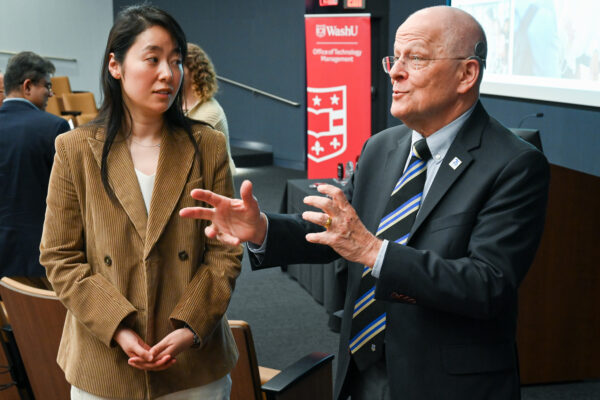
Colditz, Jiang receive Chancellor’s Award for Innovation and Entrepreneurship
At the WashU Office of Technology Management’s annual
Celebration of Inventors, WashU Medicine researchers Graham Colditz and Shu (Joy) Jiang were honored for developing and commercializing a technology to predict breast cancer risk.

Tool to predict crop instability to be developed at WashU, Arizona State
Nathan Jacobs, a computer scientist at WashU McKelvey Engineering, and collaborators plan to develop a geospatial artificial intelligence tool to find early signs of instability in crop production.
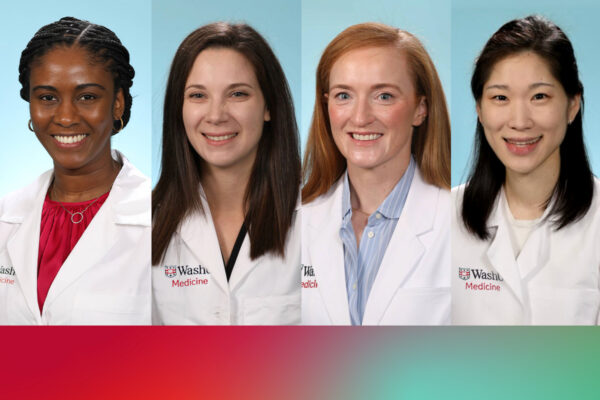
Four early-career physician-scientists selected as Dean’s Scholars
Four physician-scientists have been selected as Dean’s Scholars. The WashU Medicine program supports outstanding early-career faculty at WashU Medicine who bridge the gap between research and clinical care.
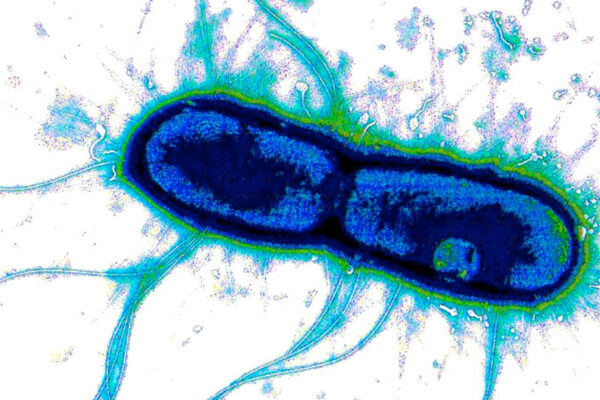
Researchers find a common weakness in major gut pathogens
The discovery by WashU Medicine scientists and their collaborators could lead to a single vaccine against E. coli, Shigella and other causes of severe diarrhea.

Weihl named inaugural Gabe Weil Professor
Conrad C. Weihl, MD, PhD, a leading expert in the genetic mechanisms of neuromuscular disorders such as muscular dystrophy, has been installed as the inaugural Gabe Weil Professor in the Department of Neurology at WashU Medicine.

Davidson receives distinguished mentor award
Nicholas O. Davidson, MD, DSc, chief of the Division of Gastroenterology at WashU Medicine, has been honored with the 2026 Distinguished Mentor Award from the American Gastroenterological Association.
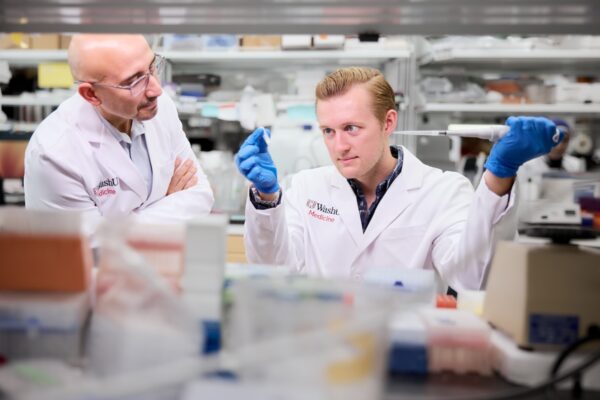
mRNA flu vaccine offers immune protection against wide array of influenza virus strains
WashU Medicine researchers have found that the shot from Moderna, currently under review by the FDA, could provide stronger and longer-lasting protection than the standard flu shot.

A life-saving union
Two WashU alumni prove their commitment to saving lives, to growing a business — and to one another.

NIH grant supports research on brain development after opioid exposure in the womb
A WashU Medicine researcher has received a $3.5 million grant from the National Institute on Drug Abuse to study long-term neurodevelopmental outcomes in mice exposed to oxycodone before birth.
A new generation of public health students
Through a new program called Public Health & Society, students are connecting health to design, policy and the experiences that shape everyday life.
Older Stories