In Brief
- Queer gerontology builds on decades of research examining LGBTQ+ aging and challenging conventional ideas about later life.
- Vanessa Fabbre’s five principles offer a framework emphasizing visibility, critical perspectives, reflexivity, collaboration and care.
- The approach also aims to foster supportive scholarly communities for researchers studying LGBTQ+ aging.
Queer gerontology has emerged from decades of research examining the experiences of LGBTQ+ people as they age. The field also draws on a number of approaches to gerontology that examine how social structures and power shape people’s lives.
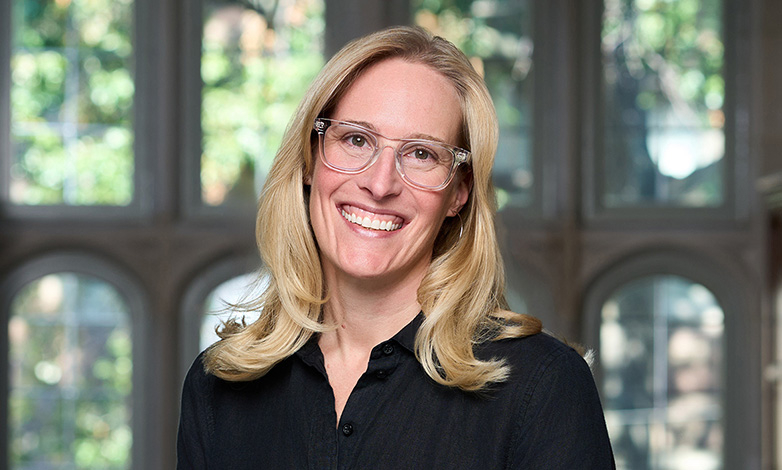
In a paper published last year in The Gerontologist, Vanessa Fabbre, an associate professor at the Brown School at Washington University in St. Louis, and colleagues articulated five principles to help guide queer gerontology. The principles emphasize deepening visibility and awareness; developing critical perspectives; practicing reflexivity; centering community and collaboration; and building scholarly communities grounded in care.
Fabbre spoke about the history of LGBTQ+ aging studies, what distinguishes queer gerontology and why supporting researchers who study LGBTQ+ aging is an important part of the work.
Is queer gerontology a new idea?
Queer gerontology builds upon several important historical traditions in gerontology. First, it stems from pioneering work in the mid-20th century that started looking at the lives of older gay men and lesbians, which then expanded to include more attention to the lives of bisexual, transgender and queer older adults. Second, it draws from important work in critical, feminist and emancipatory gerontology, where scholars seek to critique the societal-level forces that shape human lives, especially with an eye toward social justice and social transformation.
A queer approach is meant to do two things: sensitize us to the complexity of LGBTQ+ people’s lives as they age and challenge conventional approaches to gerontology that have not always taken social structure and power into account.
We wrote our article as a guide for how to bridge these two traditions and move our field forward, especially for emerging scholars. In fact, we often said to each other that we were writing the article we wish we’d had at the beginning of our careers!
How can queer gerontology make a difference in people’s lives?
Queer gerontology is intended to make a difference in the lives of both academics who study LGBTQ+ aging and, of course, in the lives of LGBTQ+ people as they age. For example, many academics who study LGBTQ+ aging have been hurt by the same social and political forces we study. And many of us have at times been stigmatized because of our choice of research topics and/or use of critical methodologies. This is especially true now in many political contexts around the world. Queer gerontology is meant to bring people together to promote rigorous scholarship, but also to promote our own well-being. One of my greatest hopes for queer gerontology is that it provides a sense of ‘home’ for scholars where they thrive in a community of caring colleagues.
Where does the field go from here?
The ultimate goal is that the practice of queer gerontology leads to useful and applicable scholarship that directly leads to the health and well-being of LGBTQ+ people as they age. For example, queer gerontology is founded on a commitment to intersectionality, which means that we take seriously the unique ways in which multiple identities and social positions in domains such as race, ethnicity, class and ability shape health and well-being over the life course. Historically, many of these intersections were ignored or not accounted for in conventional gerontological scholarship, which led to interventions and policies that were inappropriate or harmful for many older adults. We hope these principles will serve as a catalyst for dialogue, collaboration and community building as we strive to advance this field of scholarship.