In Brief
- As more job candidates use AI tools to write resumes and cover letters, it’s getting harder to stand out.
- Career experts say job seekers should focus on authenticity and highlight real experiences and accomplishments.
- Early networking, strong communication and problem-solving skills matter more than your major.
Recruiters call it the application avalanche. In the past five years, job applications have tripled as candidates use AI tools to draft resumes and cover letters. The result: everyone sounds like everyone else.

Casey Jenkerson, director of employer engagement at the WashU Center for Career Engagement, talks daily with employers who are frustrated by the phenomenon. That’s why she tells students to build their professional networks early; develop their skills as a communicator and collaborator; and to use their own voice, not Chat GPT’s, to share their experiences and accomplishments.
“There is a misconception that employers have handed talent acquisition over to AI,” Jenkerson said. “Yes, employers are using AI tools to pre-screen candidates, but the human element of talent acquisition is still important.”
Here, Jenkerson offers tips to job seekers trying to find work in this uncertain economy.
Is it appropriate to have AI write your resume or cover letter?
The issue isn’t whether an applicant uses AI, but how. A lot of very good candidates are getting overlooked not because they used AI to write their resume, but because all of these AI resumes sound the same.
What employers want is to hear the student’s voice. What impact have you accomplished in your work? What experiences have you had — in the classroom, as an intern or as a volunteer — that have helped you grow your skills as a communicator, a creative thinker or a leader? Tell that story in an authentic way. Yes, AI can help you analyze the job description and organize your thoughts, but it can’t replace authenticity.
The Federal Reserve reports that the unemployment rate for recent college graduates is 5.7%, which is higher than the unemployment rate for the general population. How have you helped WashU students succeed in this moment?
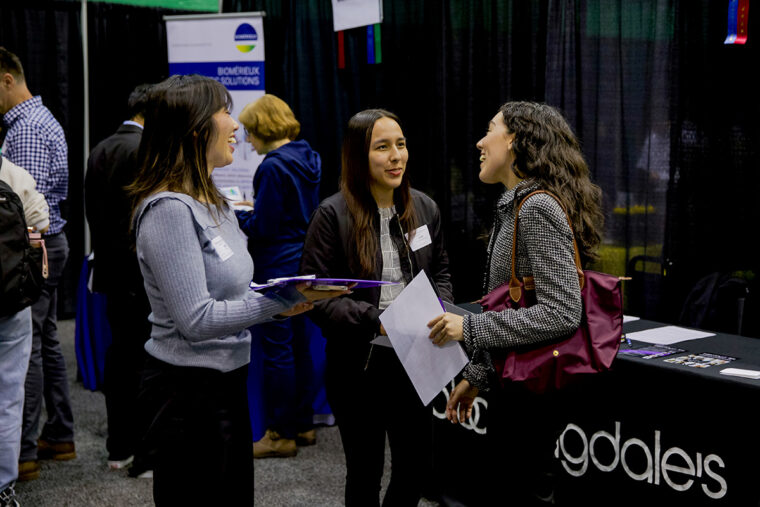
Recruitment for a position starts long before you apply to the job. At the Center for Career Engagement, we connect students to employer partners and alumni very early on. Often a first-year or a sophomore will meet a recruiter at our career expo and build a relationship that turns into an internship or job offer down the road.
That sort of early engagement has always been important, but is vital in this moment. Meet people in the field, whether through your alumni network or LinkedIn or some other avenue, and have a conversation. Learn about their industry, their career path, what they like about their work and what they might have done differently. These meaningful connections will serve you better than just hitting ‘submit and apply’ over and over again.
What tactics are definitely out of bounds for job seekers?
Some applicants will embed hidden text in white in their resumes as a way to get AI screeners to advance their application. Don’t do that. A lot of employers will automatically strike your application if they find out. Employers have told me that some applicants will have an AI chatbot help answer questions during an interview. I’ve had employers tell me they can see the applicants’ eyes moving across the screen. That’s another mistake.
With the arrival of AI, are some majors more valuable than others?
No. What employers are telling us is that they are focused on skills, not majors. Technical skills, of course, matter. But as AI starts to automate tasks and workflows streamline, employers are prioritizing good communicators and collaborators. We used to call these qualities ‘soft skills,’ but we now refer to them as essential skills. Can you communicate effectively, whether that’s by email, in person or over the phone? Can you build relationships with people in the office and collaborate with teams across the company? Can you solve problems and think critically and creatively? These skills are more important than ever.