Each year, some 2.5 million first-time students start college in the United States. All students have their own unique goals, histories and challenges, but many share the same questions: How can I make the most of this transformative experience? Where can I find resources to help me thrive socially, financially and academically? What steps must I take to stay healthy, physically and emotionally?
Here, leading experts from the WashU Division of Student Success and WashU faculty offer college students their expert advice.

Why first-year students should visit the campus career center
WashU career expert Norma Guerra Gaier explains why students should engage with their career center early and often; how career centers have evolved in this challenging economy; and why your major matters less than you think.
‘When students tell me they aren’t sure what they want to do after college, I tell them they’re in one of the best places they can be. That not-knowing, but being open to exploring with the resources and coaching available at college career centers, will help them figure out what possibilities await them.’
Norma Guerra Gaier
Finding ‘your people’ in college: A philosopher’s perspective

Countless incoming college students are wondering if they will find “their people” at college. Fannie Bialek, a WashU philosopher and friendship expert, tells students they might not know yet who “their people” are — and that’s a good thing.
‘Who you turn out feeling happiest around, most comfortable around and most yourself around may be very different from those you would consider today to be your people.’
Why students need to take charge of their healthcare in college

WashU clinical psychologist Kirk Dougher says new students need to learn how to manage stress, navigate the healthcare system and grow into a person who can handle what comes next. Parents can help by showing support while encouraging their child to take the lead in their own healthcare.
‘As parents, we need to know and be OK with the fact that our students are going to make mistakes. That is part of the growth process, and we need to be behind them in everything, but far enough back that they can do it on their own until they want to turn to us for help.’
Kirk Dougher
Financial tips for the new college student
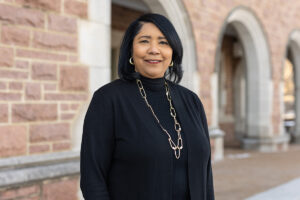
Beyond registering for classes and decorating their dorms, Andrea Stewart-Douglas, WashU’s director of student financial wellness programs, has another item for new college students’ to-do lists: Make a budget.
‘For some students, this is the first time that they will be making financial decisions and choices on their own, so it’s important to come prepared. It’s, of course, so much easier to spend money than to save it. But a budget will help you stay on track and meet your goals.’
Andrea Stewart-Douglas
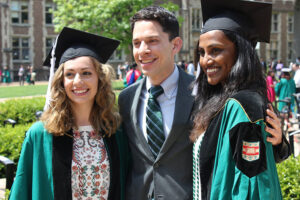
In this highly polarized world, the college transition can seem especially difficult. WashU happiness expert Tim Bono explains how students can set themselves up for success.
‘There is what we call the “suffering Olympics,” where students will talk about how little they’ve slept as if that is something to be proud of. But the research shows how foundational healthy behaviors like sleep are to success.’
Tim Bono

Don’t fret the ‘freshman 15’; make friends with food
Make peace with food. Honor your hunger. Reject a diet mentality. These are the important lessons that Rebecca Miller, director for nutrition and dietary wellness at WashU Dining Services, shares with new students.
‘Every semester, I meet new college students who believe that some foods are ‘bad’ or that they must adhere to rigid rules about when, what and how much to eat. That is, after all, what we’ve all been taught from birth. But I believe a more gentle, flexible approach to nutrition can lead to better health as well as an appreciation for our bodies.’
Rebecca Miller
Media: To arrange an interview with any of these experts, contact Diane Toroian Keaggy at diane.keaggy@wustl.edu or 314-974-4238.