During a 2011 interview, legendary civil rights leader Vincent Harding spoke with journalist Krista Tippett about encouraging young people “to find the elders … those folks who nobody else knows have lived such magnificent lives … and then sit with them and learn how to ask the right questions.”
Jason Green, AB ’03, an attorney, community organizer, entrepreneur and storyteller, took up such a mantle for more than a decade, beginning with his ailing 95-year-old grandmother and then with nearly 80 elders in his hometown of Gaithersburg, Maryland. He listened to their stories and, along with assistance from historians and student researchers, unearthed unknown family history. His new memoir, Too Precious to Lose: A Memoir of Family, Community, and Possibility (One World, 2026), bears witness to what he learned and shares how a radical embrace of community became the elders’ salvation, and his.
And the book couldn’t come at a more opportune time. “We are living through a particularly chaotic moment today,” Green says. “The book is an argument that the lessons embedded in historic communities like Quince Orchard — especially about how people came together in tumultuous times to build trust, share responsibility, and sustain connection — offer important guidance for how we should move forward.”
“The book is an argument that the lessons embedded in historic communities like Quince Orchard — especially about how people came together in tumultuous times to build trust, share responsibility, and sustain connection — offer important guidance for how we should move forward.”
— Jason Green
Green never planned to write a memoir. He was serving as an associate counsel in the Obama White House in 2013 when he learned of his grandmother’s hospitalization. After his mother encouraged him to visit, Green reflected deeply on all the time he’d lost with his family. He’d been busy studying political science and finance at WashU and then attending law school at Yale University while serving as national voter registration director for Sen. Barack Obama’s presidential campaign — ultimately joining President Obama’s White House staff.
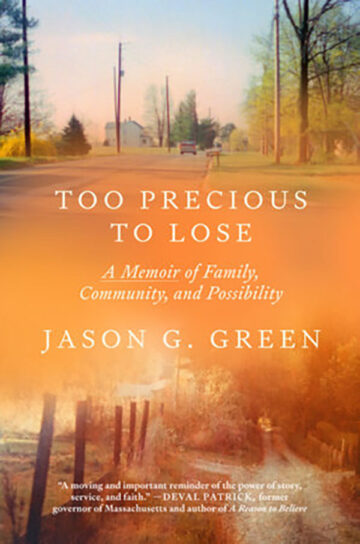
Too Precious to Lose
A Memoir of Family, Community, and Possibility
As he traveled the 30 miles from the White House to Asbury Methodist Village in Gaithersburg — a short distance from D.C., but a world removed — Green thought back to all the times his grandmother had taken him to that same facility when he was a child. Every Tuesday and Thursday after school, from the time he was 5, he’d accompany Ida “Pearl” Green on her volunteer visits to the unfamiliar world of a hospital, but he didn’t quite understand how he could help. He would later come to appreciate what she told him before their visits: “We’re not here to save someone,” she’d say. “We’re here to serve someone.”
“It was an introduction to what service can be, to what showing up and sitting witness can be,” Green says. “And so, it turned out that when I got my mother’s call about my grandmother, I said, ‘OK, God, I get it. You want me to come and sit with her in the same manner that I saw her sit with others. Give her that same gift of dignity, right? Hold the ice chips. Read the daily devotional. Whatever it is, be her distraction.’
“I thought that I was going to give a gift, not realizing what I was going to get,” he says.
Green left the White House in the spring of 2013. What he gained by devoting himself to his grandmother and others afterward was precious stories of a small rural community that had been transformed over centuries.
Before these discoveries, for example, Green knew that he’d grown up surrounded by love on Fellowship Lane, a dirt road dotted with houses filled with family, and that he’d attended Quince Orchard High School. But he didn’t know the origins of his school’s name nor the history of the area where he grew up.
“We tell our history in iconic moments,” Green says. “I knew that public schools were desegregated in Little Rock, Arkansas. But I never knew that my dad integrated the elementary school that I had attended for kindergarten.”
Nor did he know the backstory of Fairhaven United Methodist Church, where he’d been baptized. Fairhaven was founded when three other churches — two white and one Black — joined together in the late 1960s. All three had been struggling financially due to falling membership. Yet the timing of any merger — in the wake of the assassination of Dr. Martin Luther King Jr. — made the arrangement tenuous.
More from Jason Green
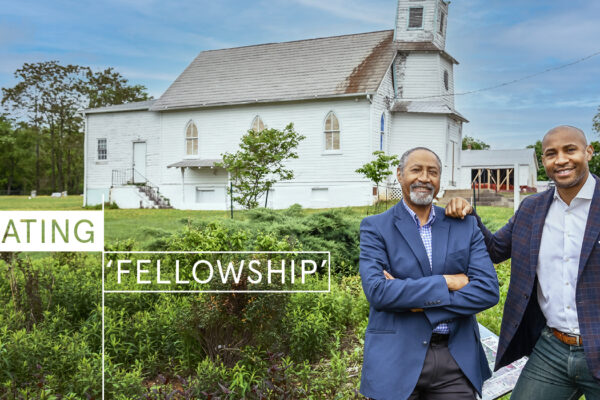
The 2022 WashU Magazine feature “Creating ‘Fellowship’” revealed more about Jason Green’s journey home, including how Green co-produced and directed the 2022 PBS documentary on the history of Quince Orchard and the formation of Fairhaven United Methodist Church called Finding Fellowship. The article also details the pivotal role WashU and the late James McLeod, vice chancellor for students and dean of the College of WashU Arts & Sciences, played in Green’s life. To learn more about the opening of Pleasant View historical site, visit pleasantviewsite.org/events. To learn more on what’s next for Green, visit jasongerardgreen.com.
Green knew that the old Black church, previously known as Pleasant View Methodist Episcopal Church, had been founded, along with the Quince Orchard Colored School and cemetery, by a group of Black men and women, including his great-great-grandparents in the late 1860s. But he didn’t know that many of these men and women had been formerly enslaved. Their stories of enslavement — and the fact that slavery and racial terror had existed at all in the region — had been lost to history. Another shocking revelation was that the land on which Fairhaven sat was the farmland previously owned by those who had enslaved Green’s family.
Too Precious to Lose tells all these stories and more. In it, Green asks: “What were the chances that the descendants of both enslaved and enslaver would one day build a church together? That the very land that once enslaved my family would become the ground where their descendants would build a sanctuary?”
“It seems so improbable when you put it down on paper,” Green says. “That it happened unknowingly, just by trying, stumbling, and praying their way toward something better.”
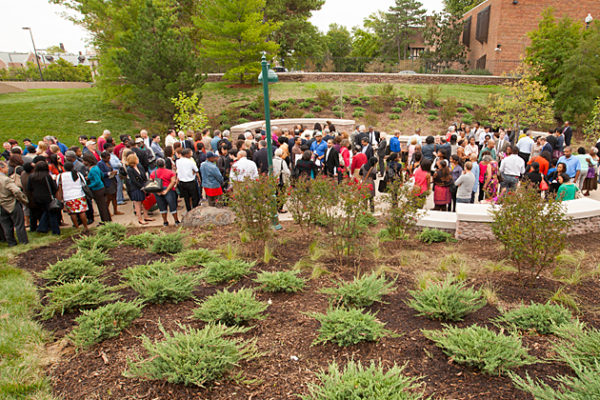
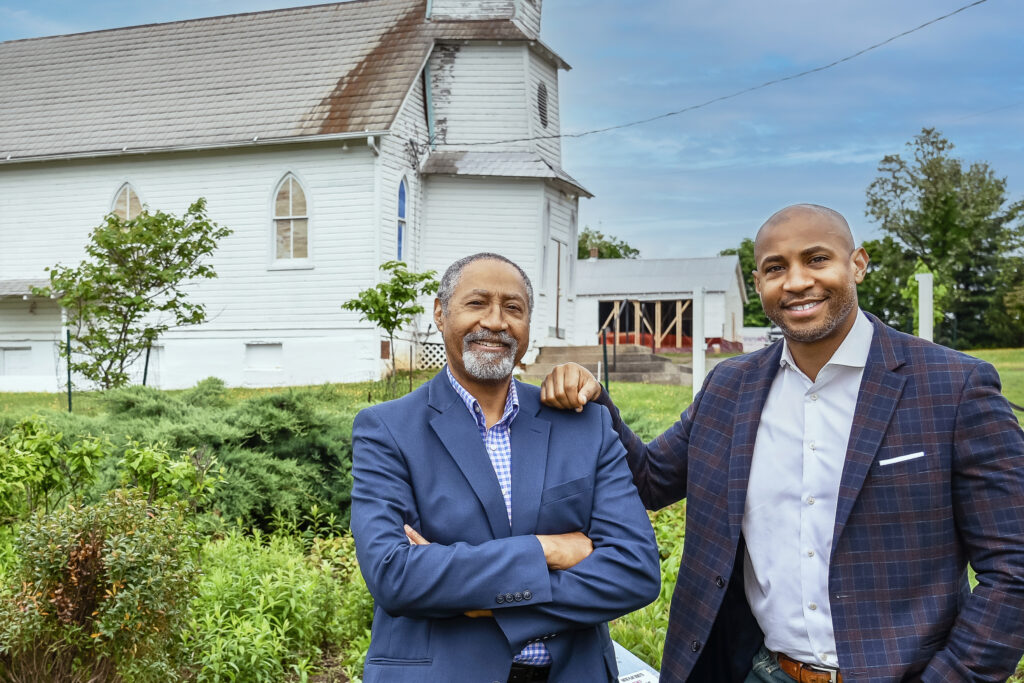
Green now serves as a trustee of the Pleasant View Historical Site, which after a restoration campaign will reopen on June 20. “At the end of the day, I am better because I sat with my grandmother,” Green says. “I’m better because she kicked me out of her hospital room and told me to go talk to 80 people out in the community. Better because I had to sit and hold a bunch of people’s stories that align with mine … and hold a bunch of people’s stories that don’t align with mine. And I had to figure out how to square those kinds of circles.”
In writing Too Precious to Lose, Green encourages all of us to engage in these types of conversations. “You’ll be better for that experience,” he says. “We’ll all be better.” It’s clear that for Green, the memoir is not simply about looking backward; it’s about recovering the lessons and shared commitments embedded in communities like the one that raised him — lessons he believes still have something to teach us about how we move forward together.