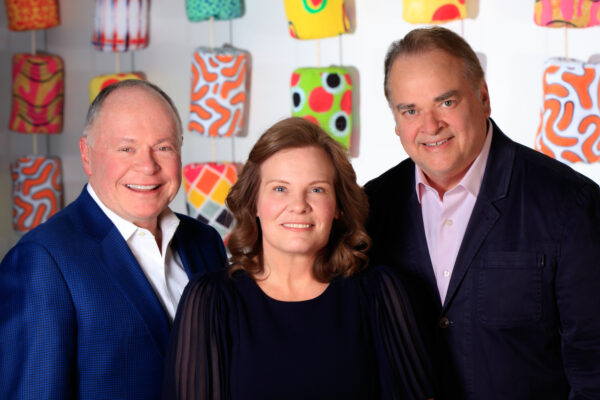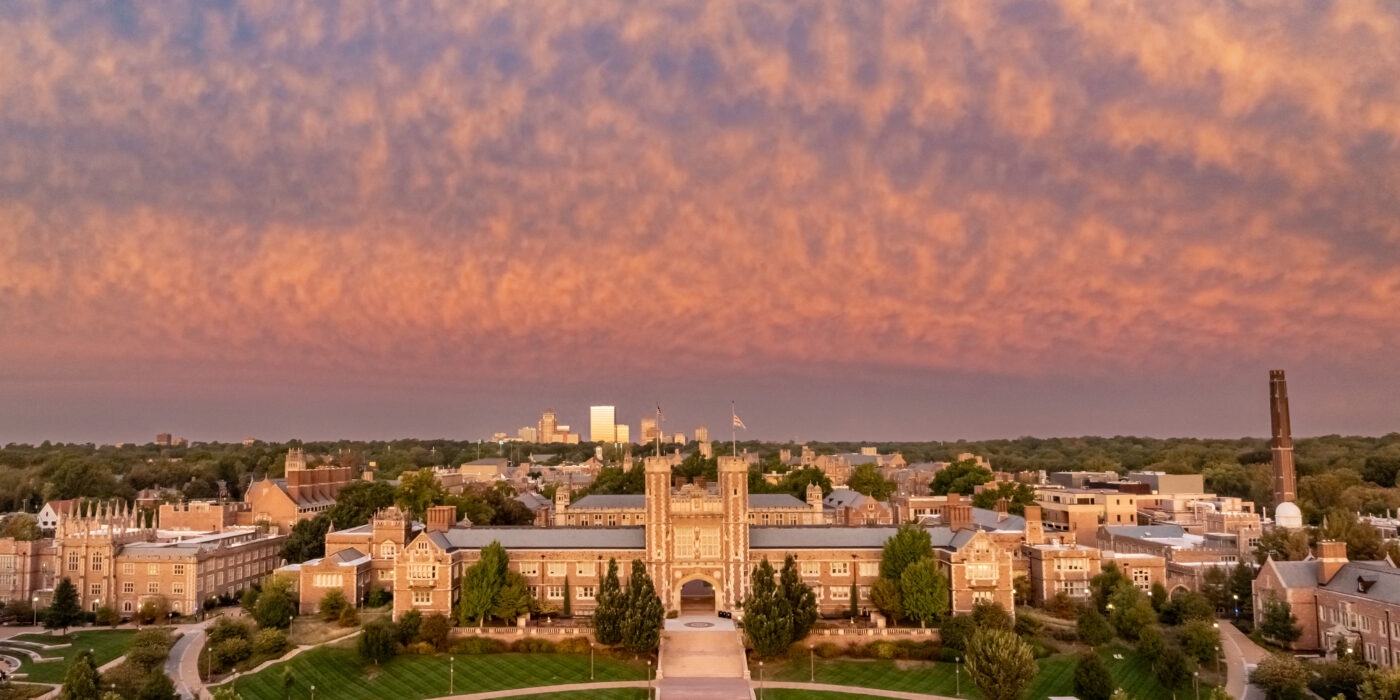
At a defining moment for public health in the United States, Washington University in St. Louis has received a $200 million commitment to fortify its newly established School of Public Health. The landmark investment, the largest in WashU history, will help the nation meet current and future public health challenges. The gift is being made by the Bursky Family Foundation, established by Andrew M. Bursky, chair of the WashU Board of Trustees, and his wife, Jane M. Bursky, both alumni and longtime supporters of the university. The school will be named the Andrew M. and Jane M. Bursky School of Public Health and is the first of its kind launched since the COVID-19 pandemic.
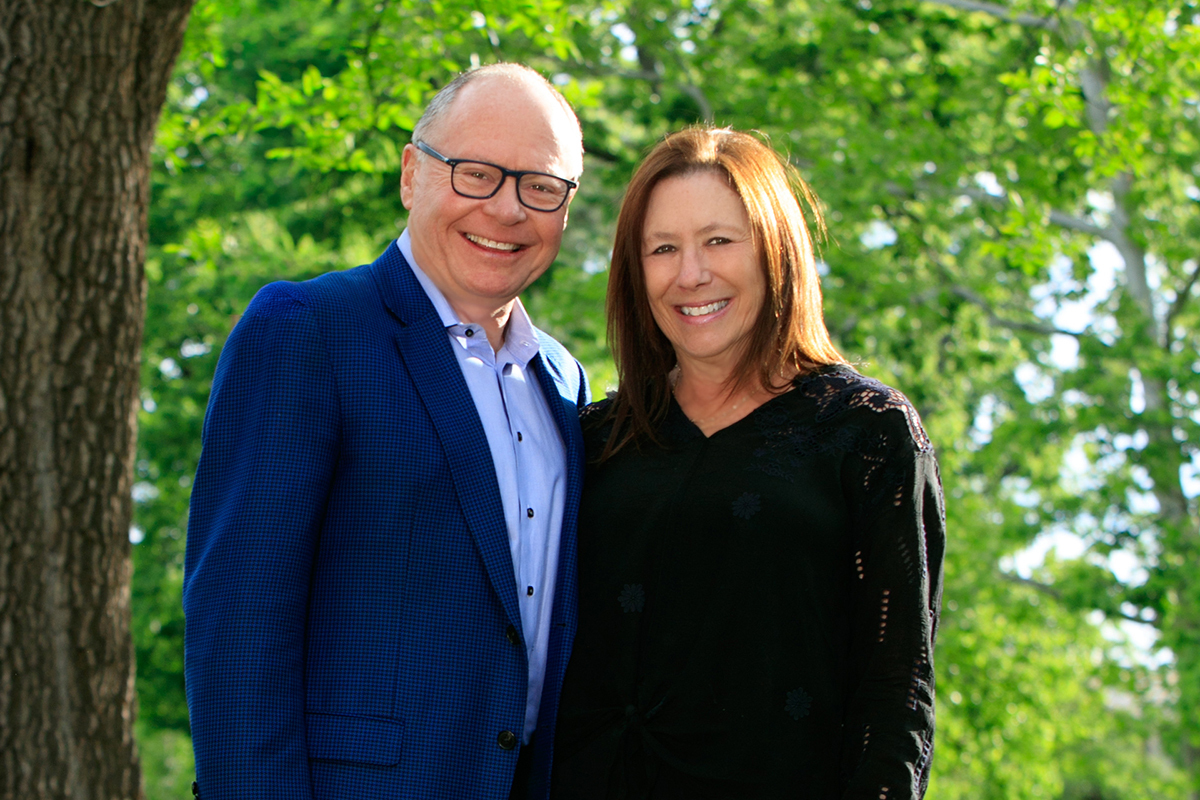
The Bursky Family Foundation’s gift, made through With You: The WashU Campaign, will drive immediate growth, including faculty hiring, scholarships and new research initiatives, while advancing a broader effort to rethink how public health is taught, studied and applied. It builds upon decades of philanthropic support by the Burskys, focusing squarely on accelerating discovery and translating research into real-world impact.
Launched in January 2025, WashU School of Public Health is being built in real time, influenced by a post-pandemic era and designed to address the conditions that affect how people live and stay healthy.
Public health is confronting a period of rapid change, shaped by emerging health threats, rising chronic disease, mental health challenges and persistent gaps in access to care. At the same time, advances in biomedical research, data science and communication are reshaping how communities understand and respond to health challenges in an increasingly interconnected world.
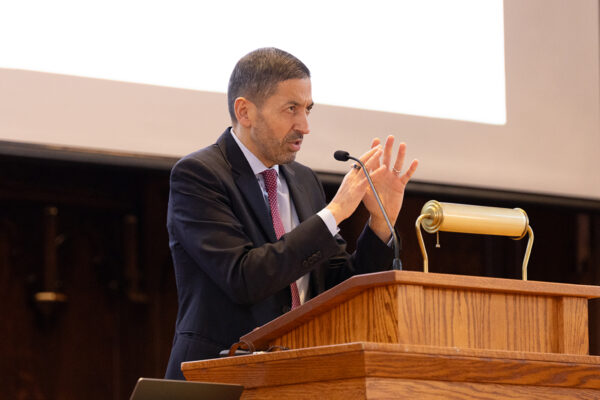
“This is exactly the moment to build one of the leading schools of public health in the country, and that is what this gift will allow us to do here at Washington University,” said Sandro Galea, MD, DrPH, the Margaret C. Ryan Dean of the School of Public Health and the Eugene S. and Constance Kahn Distinguished Professor in Public Health. “When the limits of our current systems are most visible, we have the greatest opportunity to build something stronger — a public health that is more responsive, more trusted and more compassionate.”
The Burskys also spoke to the importance of the moment.
“Washington University is an unquestioned academic leader in our shared challenge to study and deliver the very finest healthcare possible,” said Andrew Bursky. “It is here that we focus squarely on both cutting-edge research that will change the world tomorrow and delivering outcomes that improve people’s lives today. Our new School of Public Health is the next step in that transcendent mission. Jane and I are proud and honored to invest in and support this school, which we believe will serve as the model institution of its kind — at a moment in our country’s public health journey that calls for nothing less than our very best.”
Added Jane Bursky: “This extraordinary university has literally shaped our lives since the first moment we stepped on campus, and we remain committed to helping others feel that same impact. This new School of Public Health will do amazing, tangible good for so many people and we’re thrilled to play our part in making that a reality.”
Chancellor Andrew D. Martin emphasized the broader impact of the commitment.
“This gift positions Washington University to help define what public health can be in the years ahead,” Martin said. “By investing in the people, ideas and partnerships that drive discovery and impact, we are building a foundation for lasting progress — improving health for communities in St. Louis and around the world.”
The chancellor added that the commitment reflects the Burskys’ foresight in recognizing a critical inflection point for public health and the opportunity to act.
Built differently
Galea, an epidemiologist, physician, prolific author and one of the most cited social scientists in the world, was recruited to lead the school and help chart a different path. The school has laid a foundation to accelerate research, strengthen education and expand collaboration. It has recruited more than 150 primary and secondary faculty members and organized its work around science that stands to make a difference in improving the health of populations.
Health challenges rarely fit within neat boundaries. At the heart of its vision, the school has embedded both work that crosses typical disciplinary boundaries, and aspirations for local and global impact. This model draws on WashU’s interdisciplinary strengths, including collaboration with highly ranked WashU Medicine, and a public health foundation rooted in the WashU Brown School, with additional expertise in business, engineering and the built environment. Cross-functional research teams bring together diverse faculty in areas such as dissemination and implementation science, global health, policy, planetary health and health communication. One of these teams, the WashU Food and Agriculture Research Mission (FARM), reflects the region’s agricultural roots and is working to identify public health solutions for food production and providing safe and nutritious food that is accessible and affordable.
The Bursky School of Public Health is uniquely positioned in the center of the country, in an urban environment surrounded by a rural landscape. Working with existing and new partnerships, it will address public health issues facing much of the United States.
Based in St. Louis, a Democratic-leaning city in a predominantly Republican state, the school operates at the intersection of different political perspectives in ways few public health schools do.
This Midwestern context — where many of the nation’s most pressing health challenges are deeply felt — is viewed not as a constraint but as a strategic advantage: It requires the school to engage across differences, test ideas against competing viewpoints and develop solutions that resonate beyond any single political or geographic context.
It also reflects what Galea has described as “Purple Public Health” — the idea that public health cannot be red or blue but must engage people across the political spectrum to build trust and ensure solutions are understood and supported.
The school’s aptly named Purple Public Health Project is designed to put that idea into practice, bringing together different perspectives and developing new ways to communicate in a politically divided environment. The work includes monthly topic-driven discussions, podcasts, written analyses and practical tools to help public health leaders build broader understanding of the aspirations and methods of public health.
Turning vision into action
Building on that initial expansion, the Bursky Family Foundation commitment introduces a new model for public health impact and a new infrastructure to accelerate how public health evidence is translated into action at the school. Part of that infrastructure is a dedicated institute that will help bridge the gap between knowledge and real-world impact, which has never been wider and more consequential. The institute will comprise expert teams focused on data, evaluation, communication and partnerships that fuel implementation of public health solutions and accelerate scaling at the speed of relevance.
The school also will launch accelerated, focused efforts in emerging areas of public health concern, addressing complex challenges in the United States and globally. Success will be measured by lives improved, systems changed and solutions implemented in communities.
Reframing public health
Under Galea’s leadership, the school is advancing a vision that challenges long-held assumptions about how health is created and sustained.
Drawing on his experience as a physician, Galea has emphasized that improving health requires looking beyond clinical care to the conditions that shape people’s lives. Public health, he has argued, is not only about treating illness, but about building the systems and environments that help people stay healthy — from safe neighborhoods and access to nutritious food to social connection and economic stability.
That approach is grounded in a broader commitment to health equity. Galea has described a world divided between “health haves and health have-nots” as unsustainable and unacceptable, calling for a future in which everyone has the same opportunity for a healthy life. Central to that vision is the idea that public health must serve all communities and build trust across differences to be effective.
Across the school, that vision is taking shape in efforts that strengthen food systems, inform legislative policy, train the public health workforce and design environments that make healthy choices easier.
About the Burskys
Andrew M. Bursky and Jane M. Bursky, who met while attending WashU, live in Connecticut and have two children, Stephen Bursky and Jennifer Brauntuch, and six granddaughters. In 2006, Jennifer earned a bachelor’s degree from WashU. The family established the Bursky Family Foundation to elevate their philanthropic endeavors.
Andrew Bursky is co-founder and managing partner of Atlas Holdings LLC, a Connecticut-based private company operating in the manufacturing and distribution sectors. He earned a bachelor’s degree in economics from WashU Arts & Sciences, and bachelor’s and master’s degrees in chemical engineering from WashU McKelvey Engineering. He has served as chair of the university’s Board of Trustees since 2022, following service on the board and its executive committee. He is a member of the New York Regional Cabinet, a member of the Washington University Investment Management Company board and co-chair of With You: The WashU Campaign. Jane Bursky, also an Arts & Sciences graduate, earned a bachelor’s degree in French and has been an active partner in the couple’s philanthropic efforts.
In 2016, they established the Andrew M. and Jane M. Bursky Center for Human Immunology & Immunotherapy at WashU Medicine to advance research harnessing the immune system to fight disease. During the COVID-19 pandemic, they provided funding to support rapid-response research initiatives, helping accelerate critical work when traditional funding timelines could not respond quickly enough. The Burskys also provided seed funding for the Center for Vaccines & Immunity to Microbial Pathogens at WashU Medicine. Both Andy and Jane serve on the advisory board for the Bursky Center for Human Immunology & Immunotherapy.
In addition to their support for innovative health initiatives at WashU, they have provided significant support for scholarships at WashU, including the establishment of the Spirit of Washington University Scholarship, which provides a lifeline for students facing unexpected financial emergencies that threaten to curtail their education. In addition, they provided leadership support for the James E. McLeod Scholarship and the Andrew M. and Jane M. Bursky Danforth Scholarship — ensuring access to a WashU education is available to all promising students.