Catalina Bernabé Correa chose WashU for a lot of reasons — the distinguished program in biomedical engineering at McKelvey Engineering; the support for student entrepreneurs through the Skandalaris Center; and the wide range of co-curricular activities. WashU also offered Bernabé the opportunity to meet leading scientists from around the globe.
“Coming from a different country myself, I wanted to learn how people from different cultures communicate and work,” said Bernabé, who is from Spain and speaks Spanish, English, French and Chinese. “When people come to the lab with different perspectives and questions, that can lead to better science.”

Bernabé currently works with Ismael Seáñez, an assistant professor of biomedical engineering at WashU McKelvey Engineering, where she is studying different neuro-rehabilitation strategies for individuals with spinal cord injuries. Outside of the Seáñez lab, Bernabé is developing a pedal box for WashU Racing’s new Formula SAE race car. She also serves as co-chair of public relations for the WashU chapter of Engineers Without Borders, which is designing improvements to a primary school in Bulubandi, Uganda. In addition, Bernabé and McKelvey Engineering classmates Cristina Lopez Miranda and Taryn Sager are working on a sensor that monitors inflammation in individuals with endometriosis. Somehow, she also is learning hip-hop.
“I’ve danced flamenco and ballet all of my life, so it’s been so fun to learn something new that isn’t related to engineering,” Bernabé said.
After graduation, Bernabé will remain at McKelvey Engineering to earn her graduate degree in engineering management. She then plans to pursue a career in neural engineering.
“That is where my passion is because there is always something new to learn about the brain,” Bernabé said.
How did you get connected to the Seáñez lab?
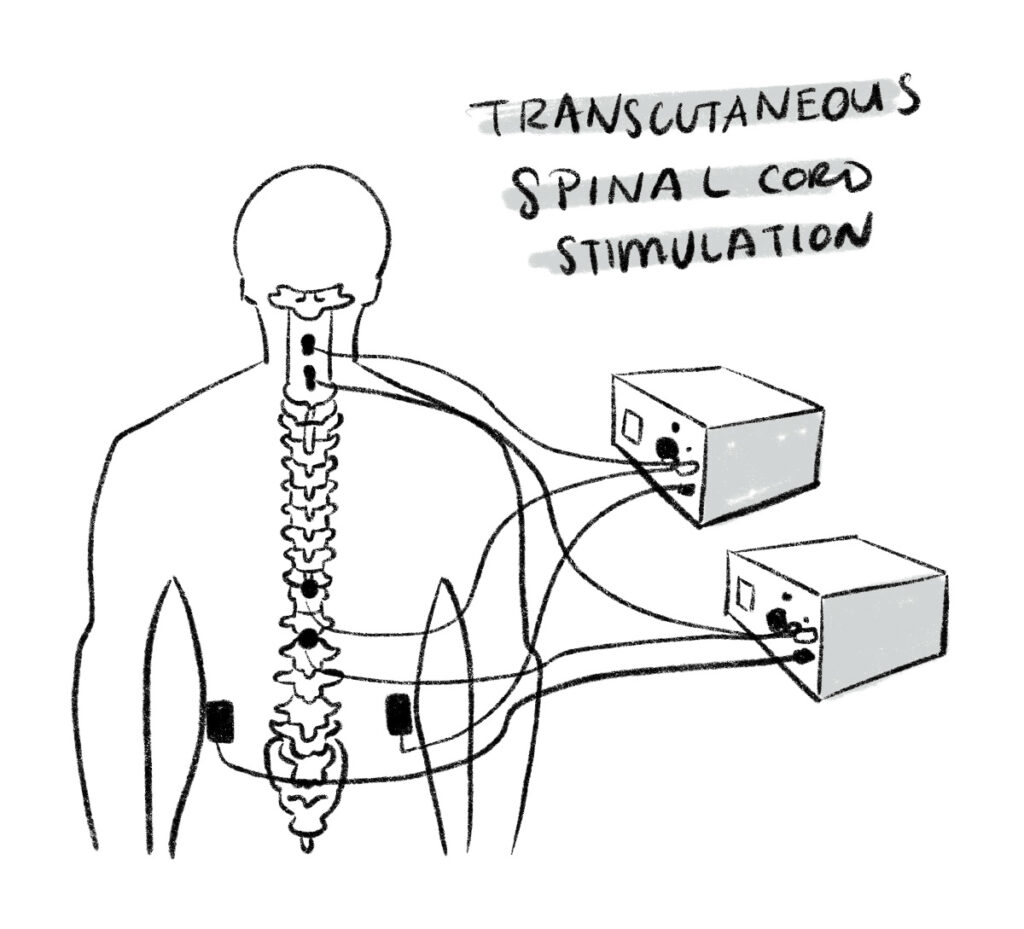
Dr. Seáñez presented his research on rehabilitation to my biomedical engineering class, including how transcutaneous spinal cord stimulation and training could help improve neuroplasticity in participants with spinal cord injuries. I thought his work was super-interesting, so I emailed him, basically saying, “Hey, I think you are doing amazing research and I would be interested in working in your lab.” He responded immediately. For me, this is an area we really need to think about. Many people in my family, and many of our friends, are passionate about motorcycles. I got my first motorcycle at 18. But many people in the motorcycling world are affected by these traumatic injuries, so this research seemed very linked to me.
What does a typical day look like for you?
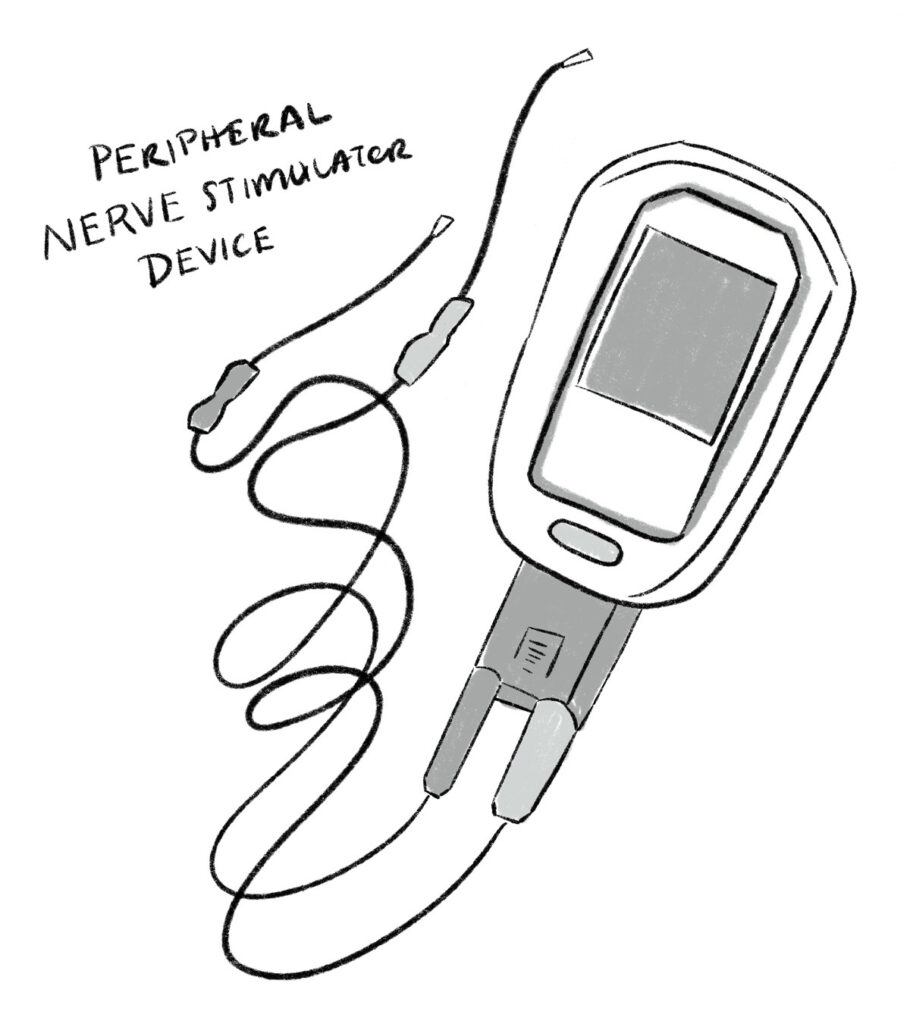
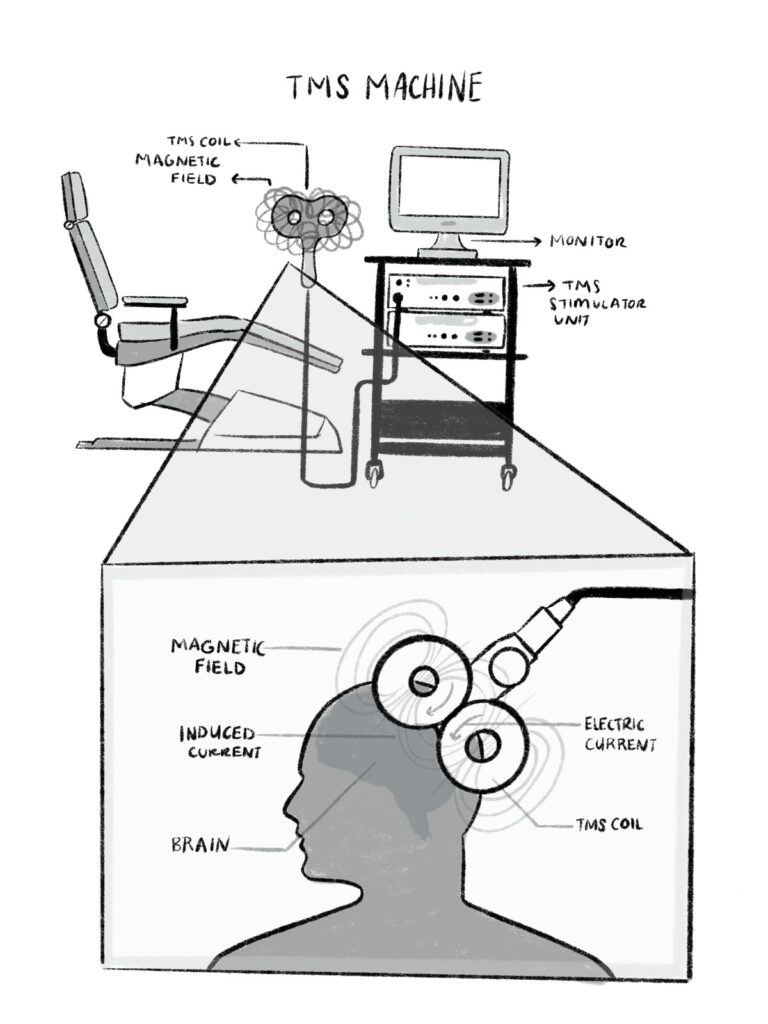
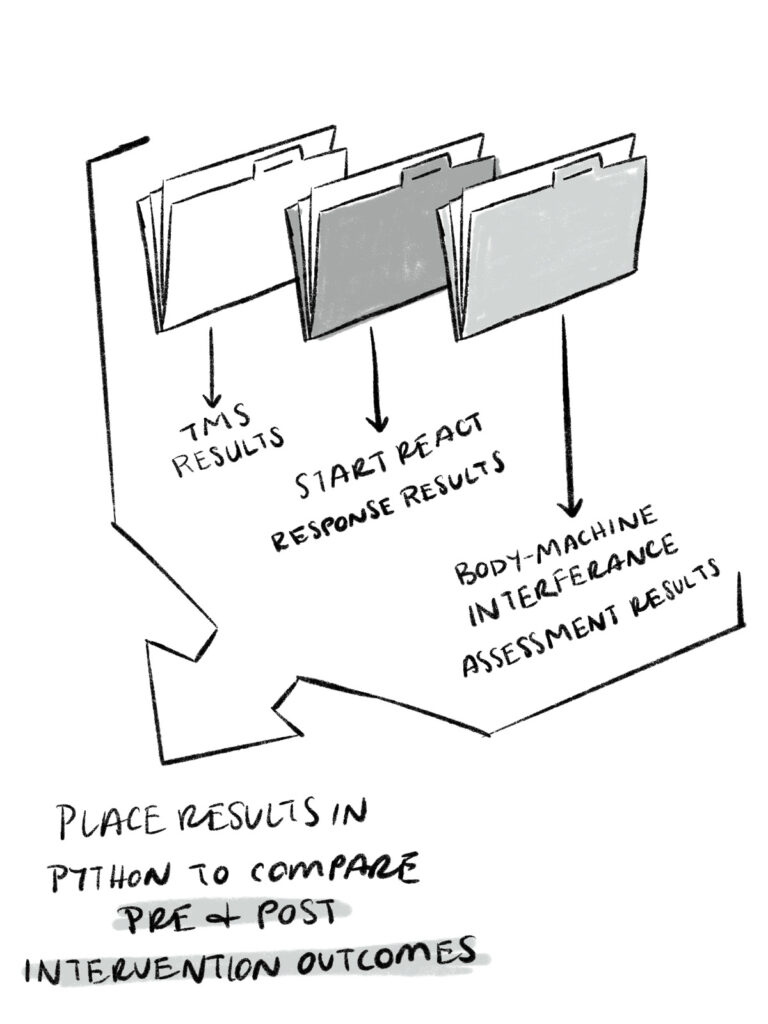
I perform different nerve evaluations and then analyze those results using (coding programs) Python and MATLAB. For a new participant, we’ll place electrodes on their backs and stomachs and gather their muscle responses to different amplitudes of stimulation. Then the actual training starts. We place them in a BioDex Chair with their right leg up on the foot rest and do a series of randomized evaluations. In one, we evaluate their reaction to different audio cues. For another, we’ll place a coil on their head and send a magnetic impulse into the primary motor cortex to see how the leg responds. For the third evaluation, we place two electrodes behind the knee at the popliteal fossa to target the common peroneal nerve to see changes of the local spinal networks. Other days, there is training with no stimulation. What we want to see is if spinal stimulation with the training helps to improve their motor response.
Why do you like working in a lab?
In a lab, you get to integrate different skills that you have — the data analysis, the programming and debugging, the planning — “How do I plan the experiment? Will this work with the regulations?” — and the lab discussions: “OK, what am I actually getting here? What is this leading to?”
I also have really enjoyed working directly with participants, which not everyone has the opportunity to do. I feel that it has made me a better scientist. At first, it can be a bit scary for the participants: “Why are you putting a TMS coil on my head?” But I make sure at every point that they are comfortable. It’s very important to make the participants feel welcome and that they are part of the lab, which they truly are.