In Brief
- Stronger reading skills help teens better spot misinformation, which is especially important for lower-income students.
- The study found that many high school students share false information online.
- Schools can help by teaching reading comprehension and verification strategies, such as lateral reading, before teens reach voting age.
Students with stronger reading skills are better able to spot misinformation online — and those skills may be especially important for teenagers from disadvantaged backgrounds, according to a new study from the Brown School at Washington University in St. Louis.
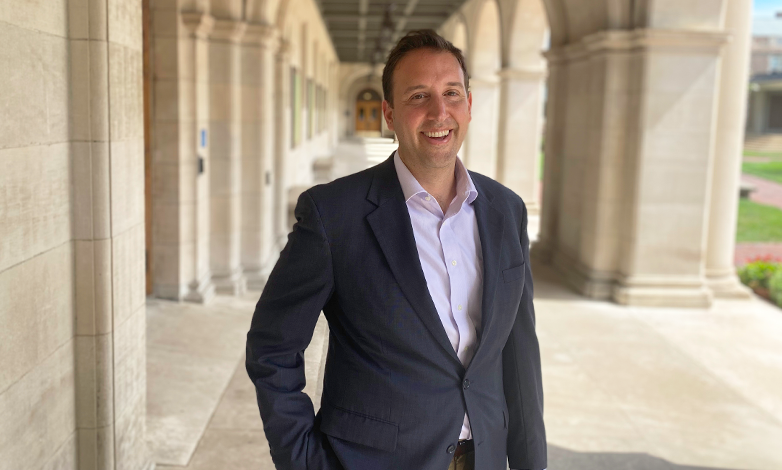
“Reading skills matter most for disadvantaged students,” said Jason Jabbari, an assistant professor at the Brown School and co-author of the study. “The misinformation resistance gap between rich and poor students is largest among weaker readers and shrinks considerably among strong readers.”
The study, “‘Reading between the lies’: Reading achievement, socioeconomic inequality, and adolescents’ resistance to misinformation,” was published in September in the journal Social Science Research.
It analyzed data from 232,901 teenagers in 49 countries who participated in the 2022 Programme for International Student Assessment. Jabbari and his co-author, Mobarak Hossain of the London School of Economics and Political Science, looked at how students evaluate and share online information, including whether they check accuracy, compare sources and share information they know to be false.
The study suggests that reading skills may help narrow socioeconomic gaps in students’ ability to resist misinformation, Jabbari said.
Reading skills may reduce the gap
Students from higher socioeconomic backgrounds were generally better at resisting misinformation than their lower-socioeconomic-status peers. But the link between reading achievement and misinformation resistance was strongest among disadvantaged students.
Stronger reading skills gave students with fewer resources a greater advantage, the study found.
“Reading skills could play a compensatory role here,” Jabbari said. “Students from more advantaged families often have other supports, like parents who discuss the news, access to credible sources and norms that encourage skepticism, while lower-income students may be less likely to have those supports and may face increased exposure to misinformation. As a result, the ability to comprehend, compare and evaluate texts may carry more weight for low-income students.”
The study suggests that strengthening literacy skills could be an important way to reduce misinformation and its unequal effects, Jabbari said.
Nearly one-third shared false information
The study also shows how difficult it can be for teenagers to navigate misinformation, even when they report using some basic verification strategies.
Nearly one-third of students in the study said they had shared made-up information without flagging it as such. Many students reported comparing sources or checking information, but those habits didn’t always prevent them from sharing misinformation.
“We looked at how roughly hundreds of thousands of students handle information online, such as whether they compare sources, check accuracy before sharing, or pass along things they know are made up,” Jabbari said. “Most students report some basic checking habits, but many still trust what they read or share unverified content.”
Jabbari said teenagers’ online behavior is shaped not only by their ability to evaluate information, but also by their social environment.
Schools can strengthen verification habits
The findings point to schools as an important place to help students navigate misinformation.
“First, building reading comprehension itself matters, especially for lower-income students, who appear to benefit most from stronger reading skills,” Jabbari said.
He also pointed to explicit strategies such as lateral reading, in which students leave a website and consult other sources rather than judging a page’s credibility by its appearance. Other approaches include “prebunking,” game-based interventions and prompts that encourage people to consider accuracy before sharing information.
Fifteen-year-olds are a particularly important group to reach, Jabbari said, because they are increasingly navigating online information independently while still being accessible through schools.
“This means we can still reach nearly all of them through classroom instruction before they enter adulthood and begin major milestones, like voting,” he said.