A new WashU report examining environmental racism in St. Louis offers updated data and a series of recommendations aimed at addressing longstanding disparities in health, housing and environmental conditions across the region.
The report is an update to a 2019 analysis. The new edition incorporates newer data and expands the scope of the earlier research. For example, the 2019 report examined childhood asthma, while the updated analysis also looks at asthma among adults. It also includes new data visualizations that illustrate how environmental conditions and health outcomes intersect across neighborhoods.
“We wanted to ensure that the updated report incorporated the latest available data and that it reflected what we have learned from the community over the last six years,” said Elizabeth Hubertz, director of the Interdisciplinary Environmental Clinic at Washington University in St. Louis School of Law.
In addition, while the 2019 report largely documented environmental disparities, the new version also focuses on solutions.
“The earlier report was largely descriptive, using a combination of public data and interviews with community members to catalogue environmental racism in St. Louis. This report is both descriptive and prescriptive,” said Eric Conners, a postdoctoral fellow in the clinic and a contributing author of the report. “It still documents how environmental racism manifests in St. Louis, but it also provides evidence-based, actionable recommendations for addressing those problems.”
The report also features “Community Spotlights” highlighting organizations working on environmental justice issues in St. Louis and includes a resource guide for residents seeking assistance or ways to get involved.
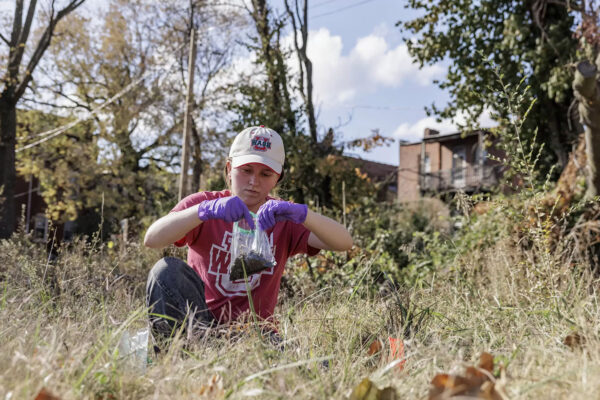
Among the recommendations, the report calls for improvements to how environmental health data are collected and shared. For example, it recommends updating Missouri’s environmental public health tracking database more frequently. It also suggests testing soils and surfaces in public areas where children gather if contamination is likely.
To address asthma and air quality, the report recommends that schools adopt the AirNow Air Quality Flag Program and calls for increasing air quality monitoring devices in the city.
Other recommendations include addressing the causes of illegal dumping; educating homeowners about beneficiary deeds to help reduce vacancy; supporting community-owned grocery stores in underserved areas; and improving data collection on mold complaints in rental housing.
The report also highlights how natural disasters can worsen inequalities. St. Louis neighborhoods with older housing and fewer resources may face greater damage and slower recovery after severe weather, such as the May 2025 tornado.
“Natural disasters often exacerbate preexisting inequality,” Conners said. “We can’t prevent the next tornado or flood, but we can strengthen the resilience of vulnerable communities.”
Even without strong federal support, Conners said cities and states can make meaningful progress. Residents can take action by contacting local officials, joining neighborhood organizations and reporting environmental problems such as illegal dumping or housing hazards, he added.
“A lot of the relevant action happens at the local and state level,” he said.