The Industrial Revolution fueled the growth of modern cities as people flooded urban areas in search of new opportunities and a better quality of life. But, over the last several decades, that dream has become further out of reach for millions of people as government-backed urban development projects and an influx of wealthier residents have made cities unaffordable, driving out poor and working-class residents.
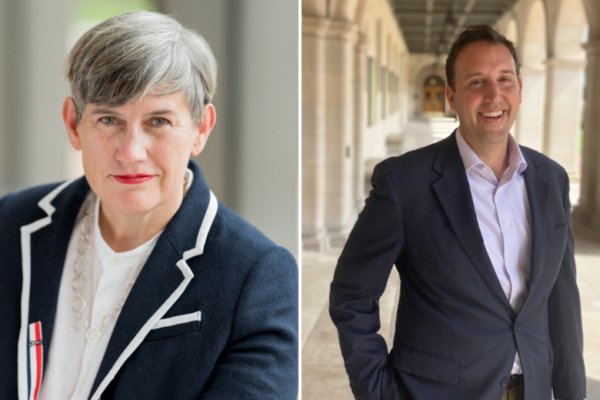
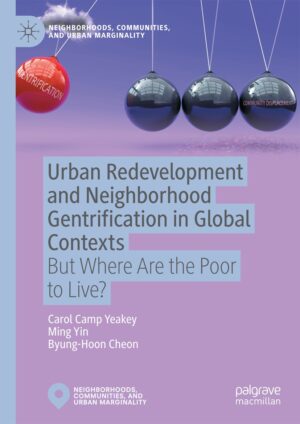
In their new book, “Urban Redevelopment and Neighborhood Gentrification in Global Contexts: But Where are the Poor to Live?” Carol Camp Yeakey, the Marshall S. Snow Professor of Arts & Sciences at Washington University in St. Louis, and her former students, Ming Yin and Byung-Hoon Cheon, delve into the multifaceted and often contentious issues of urban redevelopment and neighborhood gentrification. Using comparative urbanism as their lens, the authors examine the socio-economic and political ramifications of neighborhood gentrification in three prominent global cities—New York, London, and Seoul, South Korea — since the 2007-09 Great Recession.
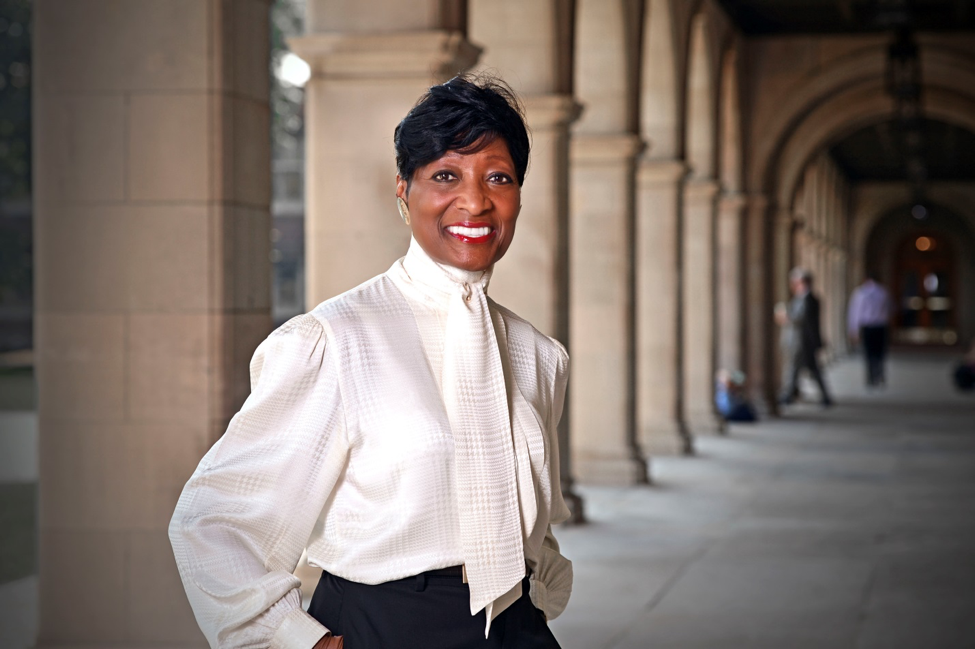
“We chose neighborhoods in New York City, London and Seoul because of the prominence of these cities as growth engines in the finance, insurance and real estate industries and their standing as global cities experiencing rapid urbanization and globalization,” explained Camp Yeakey, who also serves as a professor of public health in the School of Public Health, and was the inaugural director of WashU’s interdisciplinary program in urban studies and Center on Urban Research and Public Policy.
“One of the factors in compiling this research was to uncover the various global approaches to gentrification and how they differed in terms of time and place, policy approaches, special interest group involvement and differing local, national, political and economic contexts,” she said.
Through their research, the authors observed that competitive global market forces have rapidly accelerated the pace and intensity of neighborhood transformation in these urban areas and in other global cities since the Great Recession.
A tale of three cities
Among the three cities studied, Cheon said Seoul stood out for its uniquely accelerated pace of transformation and the intensity of the historical displacement.
“Unlike London and New York, whose gentrification has progressed over a longer timeline of global economic change, Seoul experienced rapid redevelopment within a compressed timeframe, often through state-led projects that reshaped entire districts within a single generation. This created a cityscape where past and present co-exist in layers, and where many residents still carry memories of eviction, redevelopment pressures and fractured communities,” said Cheon, who earned a bachelor’s degree in urban studies from WashU in 2018 and is a senior investment analyst at Tishman Speyer in Seoul.
In comparison, London has gone through several waves of gentrification. The most recent phase — which the authors call super-gentrification or hyper-gentrification — is driven by global elites and transnational capital. It has created a cascading effect, said Yin, who earned a doctorate in education from WashU in 2018 and today works as a senior research statistician at Education Northwest.
“Many of the middle-class, relatively better-off gentrifiers who moved in during earlier waves are now being pushed outward as new international gentrifiers arrive,” Yin said. “Their relocation to the urban periphery then drives up housing costs in those areas, which displaces lower-income residents who had already been forced to move there, ultimately pushing many of them out of London entirely.
Finally, New York’s patterns reflect entrenched racialized displacement, legacy rent policies and a long history of neighborhood reinvestment cycles. Here, university-led expansion serves as a primary gentrifier, revealing urban redevelopment patterns initiated by universities since the founding of Oxford University centuries ago, Camp Yeakey said.
Despite the diverse socio-political contexts and differing approaches to urban redevelopment across the three cities, the authors observed common trends, including rising land values, displacement of low-income households and policy frameworks favoring market-driven outcomes, in New York, London and Seoul.
“What surprised me most was how persistent these dynamics were even when contextual factors diverged, for example, different welfare systems, housing markets and regulatory regimes,” Cheon said. “This suggests that gentrification is no longer a strictly local process, but an internationally reproduced urban condition shaped by broader economic logics.”
There were also signs of the often-overlooked “invisible wounds” created when economically distressed families and their children are displaced through eminent domain or other redevelopment processes. Camp Yeakey said the emotional trauma these families experience can lead to lifelong public health consequences, commonly referred to as “root shock.”
And yet, another pattern that emerged was the resilience and resistance local communities showed.
“In neighborhoods throughout London, Seoul and New York City, community members are actively fighting back to keep their homes and communities. They’re fighting for more than just a place to live. They’re fighting for a space where they feel they belong,” Yin said.
Who loses?
According to Camp Yeakey, most gentrification studies address the question of who benefits from urban redevelopment and neighborhood gentrification. This book adds another: Who loses? While gentrification often leads to urban redevelopment and increased economic activity, it also results in the displacement of marginalized communities.
“When redevelopment happens without regulation, it overlooks the people who rely on that community for their livelihoods and their sense of home. That’s where the government needs to step in,” Yin said.
‘In short, gentrification reshapes who has access to opportunity, how labor markets function, how communities maintain cohesion and how cities retain historical continuity. It transforms the urban environments in ways that ultimately affect everyone, not just those directly displaced.’
Byung-Hoon Cheon
Gentrification is often framed as a challenge affecting only the poor. However, the consequences of gentrification ripple across the entire urban social structure, Cheon said. For middle-income families, gentrification leads to higher rent, reduced access to central locations and increased competition in and around school districts and transportation hubs. Existing small businesses face escalating costs and shortened lease terms. Over time, community services decrease. Even affluent residents, who may initially benefit from upgraded amenities, eventually confront a more homogenized urban environment that loses cultural diversity, social resilience and local character.
“In short, gentrification reshapes who has access to opportunity, how labor markets function, how communities maintain cohesion and how cities retain historical continuity. It transforms the urban environments in ways that ultimately affect everyone, not just those directly displaced,” Cheon said.
Global problems require international solutions
Throughout the book, through comparative analyses, the authors examine the various policy approaches employed by the three case-study cities and their effectiveness. They argue that urban redevelopment should not come at the expense of equity and inclusivity, and they advocate for policies that prioritize affordable housing, community participation in planning processes and equitable economic development.
However, local and national efforts will not be enough to mitigate the damage gentrification has inflicted on cities worldwide. The authors say the market forces driving gentrification are interdependent and, therefore, demand a coordinated global response.
The book concludes by providing global examples of communities challenging the results of urban redevelopment and neighborhood gentrification, and examines the obstacles ahead for large urban cities across the globe, as prime assets in the new global economy. These challenges include widening inequality, technological innovation through artificial intelligence, climate change, legal and illegal immigration, public health and the pace of urbanization.
The authors hope their research will provide policymakers, urban planners and others with a critical analysis of the economic, social and political dimensions of urban redevelopment and neighborhood gentrification and challenge them to consider the ethical implications of these processes, for the good of all.