Nominations are being accepted for the Jane and Whitney Harris St. Louis Community Service Award, which honors a couple for extraordinary contributions to the culture and welfare of the St. Louis area. Nominations are due by Nov. 30.
Farshid Guilak, professor of orthopedic surgery at Washington University School of Medicine in St. Louis, has been chosen to receive this year’s Senior Scientist Award from the Tissue Engineering and Regenerative Medicine Society.
Award-winning actor and St. Louis native John Goodman will be the keynote speaker for Washington University in St. Louis’ annual Founders Day celebration Saturday, Nov. 2, at St. Louis Union Station Hotel. During the event to celebrate the university’s founding in 1853, distinguished alumni, faculty and supporters are honored.
The university’s United Way campaign is underway. Visit the campaign website to make a donation or learn more about opportunities to volunteer in the local community.
Nobel laureate Kip Thorne will visit Washington University to deliver a public talk on Thursday, Nov. 7. Thorne’s work in theoretical physics examines gravitational waves, the Big Bang and what these phenomena tell us about the dynamics of the universe.
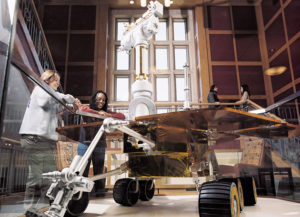
The team that worked on the Mars exploration rovers Spirit and Opportunity received the Distinguished Science Award from the Huntsville, Ala., chapter of the National Space Club. The award recognizes outstanding contributions in research and discovery that expand knowledge and understanding of space. Raymond Arvidson, the James S. McDonnell Distinguished University Professor in Arts & Sciences, is the mission’s deputy principal investigator.
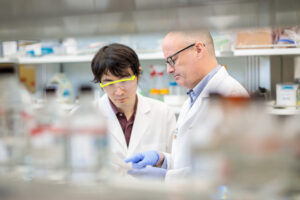
Nephrologist Benjamin Humphreys, MD, PhD, director of the Division of Nephrology at the School of Medicine, is a leading innovator in kidney research. Humphreys seeks to find better treatments to prevent kidney failure, a potentially fatal condition affecting 37 million Americans.
Policy responses to school shootings have not prevented them from happening more frequently, but restorative justice has the potential to avert bad behavior and school shootings, finds a new study from Washington University in St. Louis.
WashU graduate and undergraduate students are encouraged to submit their ideas for the Africa Pitch Competition. Business ventures and ideas with a clear benefit in Africa are welcome to apply. The deadline is Nov. 15.