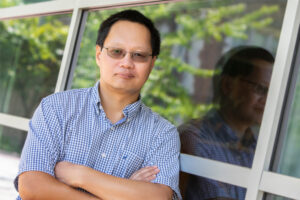
Jianjun Guan at the McKelvey School of Engineering was awarded a four-year $1.8 million grant from the National Institutes of Health (NIH) to develop a new dressing for chronic wounds in people with diabetes.
Senior Amanda Sherman is back to ambush — ahem, interview — Washington University in St. Louis students (and a WashU canine) about the new academic year.
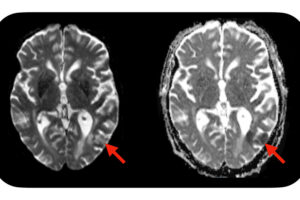
A new study from Washington University School of Medicine suggests a simple blood test — administered before CAR-T cell treatment is initiated — may identify which patients are predisposed to developing neurotoxic side effects after CAR-T cell therapy, which is used to treat several cancers.
Three faculty from the Brown School and School of Medicine at Washington University in St. Louis have received a seven-year $6.1 million grant from the National Institutes of Health (NIH) for a project aimed at improving the health of mothers and children in the St. Louis region.
Dallas-based artist Tamara Johnson will serve as the Sam Fox School’s next Henry L. and Natalie E. Freund Teaching Fellow. Designed to promote the creation and exhibition of contemporary art, the appointment is sponsored in collaboration with the Saint Louis Art Museum, which will present a solo exhibition of Johnson’s work in fall 2023.
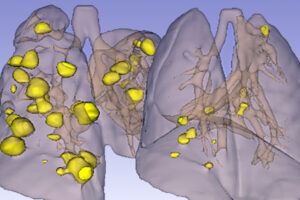
An experimental combination of two drugs halts the progression of small cell lung cancer, the deadliest form of lung cancer, according to a study in mice from researchers at Washington University School of Medicine in St. Louis and colleagues.
The Black Rep will launch its 46th season with “The African Company Presents Richard III.” The story, based on true events, chronicles the popular success of William Brown’s African Grove Theatre, established in New York in 1821, and the malicious campaign to shut it down.
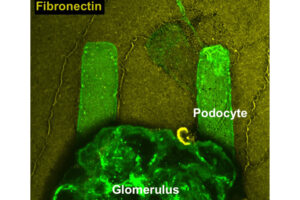
Research from the McKelvey School of Engineering and School of Medicine aims to overcome a critical barrier in kidney disease research with a new way to culture specific kidney cells.
Louis Woodhams and Phil Bayly’s team at the McKelvey School of Engineering built a model to better understand how certain cilia — tiny, hairlike structures throughout our body — beat.