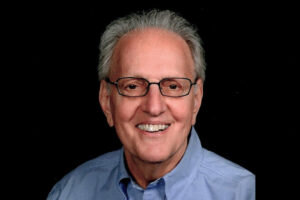
Ruth Levinsohn Siteman, a graduate and longtime benefactor of Washington University in St. Louis, died peacefully at home in St. Louis, surrounded by her family, Thursday, June 13, 2024. She was 92.
A study by researchers at Washington University School of Medicine in St. Louis shows that people with COVID-19 who used cannabis were more likely to be hospitalized and require intensive care than those who did not use the drug.
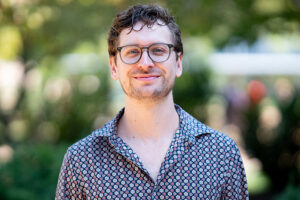
New research by Hannah Birnbaum, assistant professor of organizational behavior at Olin Business School, suggests that when people view voting as a duty to others — rather than to themselves — they’re more likely to feel an obligation to vote.
Louisiana’s recent legislation requiring the display of the Ten Commandments in every public school classroom is likely unconstitutional under the current framework of the Establishment Clause, said an expert on law and religion at Washington University in St. Louis.
Researchers at McKelvey School of Engineering at Washington University in St. Louis have developed a vastly more productive way to convert carbon dioxide into useful materials and compounds.
Yiannis Kantaros, an assistant professor at the McKelvey School of Engineering at Washington University, has received a five-year $591,457 Faculty Early Career Development (CAREER) Award from the National Science Foundation to address limitations to robot autonomy.
Brooklyn, N.Y.-based architect Adare Brown has been selected as winner of the 2023-24 James Harrison Steedman Memorial Fellowship in Architecture. Established in 1926, the biannual $75,000 prize, which supports research through international travel, is among the largest such fellowships in the United States.
As psychedelic-assisted therapy gains mainstream acceptance, the role of social workers, who provide a significant portion of mental health services in the United States, will become increasingly important in this emerging field, says an expert on mental health in the Brown School.
Researchers at Washington University School of Medicine in St. Louis have found that safety interventions — such as walkers, grab bars, ramps and other home modifications — allow many stroke survivors to keep living independently in their homes and may reduce their risk of death.